%20%20--%3E%0A%3Csvg%20version%3D%221.1%22%20id%3D%22Layer_1%22%20xmlns%3D%22http%3A%2F%2Fwww.w3.org%2F2000%2Fsvg%22%20xmlns%3Axlink%3D%22http%3A%2F%2Fwww.w3.org%2F1999%2Fxlink%22%20x%3D%220px%22%20y%3D%220px%22%0A%09%20viewBox%3D%220%200%20684.6%2068.1%22%20style%3D%22enable-background%3Anew%200%200%20684.6%2068.1%3B%22%20xml%3Aspace%3D%22preserve%22%3E%0A%3Cg%3E%0A%09%3Cpath%20d%3D%22M444.1%2C29.3h-17.4v14.5h17.4V29.3z%20M36.4%2C68.1l29.3-50.8V0H50.4L32.9%2C36.8L15.5%2C0H0v68.1h16.7V45.8l12.4%2C22.3H36.4z%0A%09%09%20M49.1%2C68.1h16.6V23.4L49.1%2C52.1V68.1z%20M76.6%2C68.1h45V53.8H93.3V41.6h21V27.1h-21V14.8h28.3V0.1h-45V68.1z%20M175.6%2C68.1h17.3v-68%0A%09%09h-16.5v40.3L150%2C0.1h-17.6v68h16.7V27.7L175.6%2C68.1z%20M235.8%2C14.8h15.4V0.1h-47.4v14.7H219v53.2h16.8V14.8z%20M290.3%2C45.9h-17.1%0A%09%09l7.5-15.6h2L290.3%2C45.9z%20M298.7%2C68.1h18l-32.2-68h-5.7l-32%2C68h18l3.3-7.1h27.1L298.7%2C68.1z%20M325.2%2C68.1h46.2V53.8h-29.6V0.1h-16.7%0A%09%09V68.1z%20M423.7%2C14.8h27.2V0.1H407v68h16.7V14.8z%20M462%2C68.1h46.2V53.8h-29.6V0.1H462V68.1z%20M564.8%2C34.1c0%2C10.7-7.2%2C19.2-18.5%2C19.2%0A%09%09c-11.4%2C0-18.5-8.5-18.5-19.2s7.1-19.2%2C18.5-19.2C557.6%2C14.9%2C564.8%2C23.4%2C564.8%2C34.1%20M580.6%2C34.1c0-19-14.2-34-34.3-34%0A%09%09c-20.2%2C0-34.3%2C15-34.3%2C34c0%2C19%2C14.1%2C34%2C34.3%2C34C566.4%2C68.1%2C580.6%2C53.1%2C580.6%2C34.1%20M604.8%2C20.5c0-4.1%2C3.3-6.2%2C6.7-6.2%0A%09%09c4.4%2C0%2C6.6%2C3%2C6.6%2C6.6h14.7C631.8%2C9.1%2C625.1%2C0.1%2C611%2C0.1c-12%2C0-21.7%2C9.3-21.7%2C20.6c0%2C10.9%2C5.9%2C15.9%2C16.7%2C19.8%0A%09%09c5.2%2C1.8%2C11.5%2C3.2%2C11.5%2C8c0%2C3.3-2.4%2C5.5-6.4%2C5.5c-3.6%2C0-6.6-3-6.6-6.7h-15.2c0%2C11.5%2C7.9%2C20.8%2C21.8%2C20.8c12%2C0%2C21.6-9.3%2C21.6-20.6%0A%09%09c0-10-5.3-16.4-16.7-19.8C610.6%2C26.1%2C604.8%2C25.3%2C604.8%2C20.5%20M670%2C20.9h14.7C683.8%2C9.1%2C677.1%2C0.1%2C663%2C0.1c-12%2C0-21.7%2C9.3-21.7%2C20.6%0A%09%09c0%2C10.9%2C5.9%2C15.9%2C16.7%2C19.8c5.2%2C1.8%2C11.5%2C3.2%2C11.5%2C8c0%2C3.3-2.4%2C5.5-6.4%2C5.5c-3.6%2C0-6.6-3-6.6-6.7h-15.2c0%2C11.5%2C7.9%2C20.8%2C21.8%2C20.8%0A%09%09c12%2C0%2C21.6-9.3%2C21.6-20.6c0-10-5.3-16.4-16.7-19.8c-5.4-1.6-11.3-2.4-11.3-7.2c0-4.1%2C3.3-6.2%2C6.7-6.2C667.7%2C14.4%2C670%2C17.3%2C670%2C20.9%0A%09%09%22%2F%3E%0A%3C%2Fg%3E%0A%3C%2Fsvg%3E%0A)

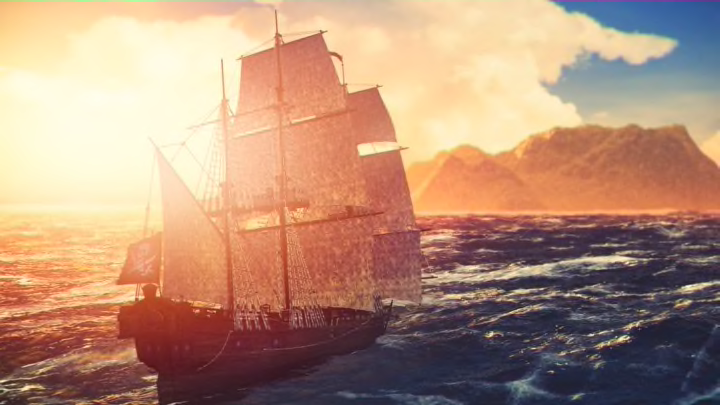
Somali pirates, who wield automatic weapons and attack unsuspecting victims from speedboats, are changing the way we think about pirates and pirate ships. While the most successful captains in pirate lore commanded ships that were smaller, faster, and less ornate than Disney's fictitious Black Pearl, Blackbeard didn't make his fortune in a rowboat either. Here's a look at six of the more famous pirate ships in history.
1. Adventure Galley
Captained by Scottish sailor William Kidd, the 287-ton, three-mast Adventure Galley was launched along the Thames River in 1695. As part of a venture planned by New York Colonel Robert Livingston to curb attacks against British ships in the East Indies, Kidd was instructed to hunt down pirates and enemy French ships and steal their treasure and goods. To facilitate the mission, which was funded primarily by prominent English noblemen, the Adventure Galley was outfitted with 34 guns and 23 oars for maneuvering the ship in calm winds. Pirate hunting, it turned out, wasn't easy. Kidd had agreed to pay back the investment if he didn't return any treasure, and when finding pirates proved too difficult, he resorted to attacking allied ships. Kidd abandoned the Adventure Galley, which had developed a rotten hull, off the coast of Madagascar in 1698. He hoped to receive a pardon from Livingston in New York, but was returned to London, found guilty of piracy, and executed in 1701.
2. Queen Anne's Revenge
English pirate Edward Teach, more commonly known as Blackbeard, captured the Concorde, a French-owned slave ship, in the West Indies in 1717 and made the vessel his flagship. Slave ships, which often featured a central partition to protect the crew against a slave uprising, made good pirate ships because they were built for speed. Blackbeard added 26 guns to the vessel, which already boasted 14, making the renamed Queen Anne's Revenge one of the most powerful ships in American waters. In May 1718, Blackbeard blockaded the port of Charleston. After looting five merchant vessels, he ran the Queen Anne's Revenge ashore on Topsail Inlet, and the ship suffered extensive damage when it slammed into the submerged sandbar. Given that Blackbeard knew the area well "he had sailed off the same coast the year before "many historians believe he wrecked the Queen Anne's Revenge deliberately in hopes of killing off some of his crew and increasing his share of the fortune. The ship was discovered in 1997 off the coast of Beaufort, North Carolina, and marine archaeologists have been bringing up treasure from its remains ever since.
3. Fancy
In May 1694, while stationed aboard the privateer Charles II off the coast of Spain, Henry Avery plotted a mutiny that would launch his new and short-lived career as a pirate. Following the successful takeover, Avery, who was a former Royal Navy midshipman, renamed the ship the Fancy and set out with his newly liberated crew to seek a fortune. Avery steered the Fancy, which boasted nearly 50 guns and a crew of 150, to the island of Johanna off the Cape of Good Hope. There, the ship was cleaned and restructured to increase her speed. Avery and his crew terrorized ships in the Indian Ocean until late 1695, when they set sail for the Bahamas, enormous fortune in tow, for an early retirement. Governor Nicholas Trott offered refuge in exchange for treasure, including 1,000 pounds of ivory tusks, and Avery also presented Trott with the Fancy. While several of his men were later captured and sentenced to death, Avery vanished and died a free and wealthy man.
4. Whydah
The Whydah was believed to hold treasure from more than 50 ships when it sank in a storm off the coast of Cape Cod on April 26, 1717. Professional treasure hunter Barry Clifford discovered the ship in 1984 and has since recovered more than 100,000 artifacts from the site. The Whydah was originally launched from London as a slave ship in 1715; the name was derived from the West African port of Ouidah in present day Benin. While navigating the Windward Passage between Cuba and Hispaniola on its second voyage, the Whydah was overrun by pirates led by "Black Sam" Bellamy, who claimed the vessel as his flagship. Bellamy and his crew sailed north along the eastern coastline of the American colonies when they ran into a Nor'easter. The boat slammed into a sandbar, split, and sank. Of the ship's 146-man crew, only two survived.
5. Royal Fortune(s)
If Bartholomew Roberts fathered any children during his adventures on the high seas, he may or may not have named all of them Royal Fortune. In July 1720, Roberts captured a French brigantine off the coast of Newfoundland. He outfitted the naval frigate with 26 cannons, renamed her the Good Fortune and headed south for the Caribbean, where the ship was repaired and renamed the Royal Fortune. Soon after, Roberts captured a French warship operated by the Governor of Martinique, renamed her the Royal Fortune and made the ship his new flagship. Roberts then set sail for West Africa, where he captured the Onslow, renamed her the Royal Fortune, and, well, you know the rest. Roberts died, and the final Royal Fortune sank, on February 10, 1722, in an attack by the British warship HMS Swallow.
6. CSS Alabama
Though technically a warship, the most destructive Confederate raider in history is worthy of a mention here. According to Stephen Fox's biography of the Alabama's captain, Ralph Semmes, the ship's destructive reputation once led the New York Herald to refer to Semmes as "A Pirate on the High Seas." Built in 1862 by Henry Laird, whose family's company also built 40 ships for the Royal Navy, the Alabama was designed for speed and deception. The ship was 220 feet long and 32 feet wide with room for 350 tons of coal. The Alabama's forward pivot gun fired 100-pound shells and the wheel of the ship was inscribed with a Confederate motto: "Help Yourself and God Will Help You." Semmes, who sailed under the veil of a Union or British flag, helped himself to any enemy ship that came into view. When Semmes seized control of another ship, he would lower his camouflage flag and raise a Confederate one. At its most destructive, the Alabama was burning an average of one Union ship every three days. The Alabama was sunk by the Union ship Kearsarge off the Normandy coast on June 19, 1864, and discovered by a French sonar ship in 1984.