%20%20--%3E%0A%3Csvg%20version%3D%221.1%22%20id%3D%22Layer_1%22%20xmlns%3D%22http%3A%2F%2Fwww.w3.org%2F2000%2Fsvg%22%20xmlns%3Axlink%3D%22http%3A%2F%2Fwww.w3.org%2F1999%2Fxlink%22%20x%3D%220px%22%20y%3D%220px%22%0A%09%20viewBox%3D%220%200%20684.6%2068.1%22%20style%3D%22enable-background%3Anew%200%200%20684.6%2068.1%3B%22%20xml%3Aspace%3D%22preserve%22%3E%0A%3Cg%3E%0A%09%3Cpath%20d%3D%22M444.1%2C29.3h-17.4v14.5h17.4V29.3z%20M36.4%2C68.1l29.3-50.8V0H50.4L32.9%2C36.8L15.5%2C0H0v68.1h16.7V45.8l12.4%2C22.3H36.4z%0A%09%09%20M49.1%2C68.1h16.6V23.4L49.1%2C52.1V68.1z%20M76.6%2C68.1h45V53.8H93.3V41.6h21V27.1h-21V14.8h28.3V0.1h-45V68.1z%20M175.6%2C68.1h17.3v-68%0A%09%09h-16.5v40.3L150%2C0.1h-17.6v68h16.7V27.7L175.6%2C68.1z%20M235.8%2C14.8h15.4V0.1h-47.4v14.7H219v53.2h16.8V14.8z%20M290.3%2C45.9h-17.1%0A%09%09l7.5-15.6h2L290.3%2C45.9z%20M298.7%2C68.1h18l-32.2-68h-5.7l-32%2C68h18l3.3-7.1h27.1L298.7%2C68.1z%20M325.2%2C68.1h46.2V53.8h-29.6V0.1h-16.7%0A%09%09V68.1z%20M423.7%2C14.8h27.2V0.1H407v68h16.7V14.8z%20M462%2C68.1h46.2V53.8h-29.6V0.1H462V68.1z%20M564.8%2C34.1c0%2C10.7-7.2%2C19.2-18.5%2C19.2%0A%09%09c-11.4%2C0-18.5-8.5-18.5-19.2s7.1-19.2%2C18.5-19.2C557.6%2C14.9%2C564.8%2C23.4%2C564.8%2C34.1%20M580.6%2C34.1c0-19-14.2-34-34.3-34%0A%09%09c-20.2%2C0-34.3%2C15-34.3%2C34c0%2C19%2C14.1%2C34%2C34.3%2C34C566.4%2C68.1%2C580.6%2C53.1%2C580.6%2C34.1%20M604.8%2C20.5c0-4.1%2C3.3-6.2%2C6.7-6.2%0A%09%09c4.4%2C0%2C6.6%2C3%2C6.6%2C6.6h14.7C631.8%2C9.1%2C625.1%2C0.1%2C611%2C0.1c-12%2C0-21.7%2C9.3-21.7%2C20.6c0%2C10.9%2C5.9%2C15.9%2C16.7%2C19.8%0A%09%09c5.2%2C1.8%2C11.5%2C3.2%2C11.5%2C8c0%2C3.3-2.4%2C5.5-6.4%2C5.5c-3.6%2C0-6.6-3-6.6-6.7h-15.2c0%2C11.5%2C7.9%2C20.8%2C21.8%2C20.8c12%2C0%2C21.6-9.3%2C21.6-20.6%0A%09%09c0-10-5.3-16.4-16.7-19.8C610.6%2C26.1%2C604.8%2C25.3%2C604.8%2C20.5%20M670%2C20.9h14.7C683.8%2C9.1%2C677.1%2C0.1%2C663%2C0.1c-12%2C0-21.7%2C9.3-21.7%2C20.6%0A%09%09c0%2C10.9%2C5.9%2C15.9%2C16.7%2C19.8c5.2%2C1.8%2C11.5%2C3.2%2C11.5%2C8c0%2C3.3-2.4%2C5.5-6.4%2C5.5c-3.6%2C0-6.6-3-6.6-6.7h-15.2c0%2C11.5%2C7.9%2C20.8%2C21.8%2C20.8%0A%09%09c12%2C0%2C21.6-9.3%2C21.6-20.6c0-10-5.3-16.4-16.7-19.8c-5.4-1.6-11.3-2.4-11.3-7.2c0-4.1%2C3.3-6.2%2C6.7-6.2C667.7%2C14.4%2C670%2C17.3%2C670%2C20.9%0A%09%09%22%2F%3E%0A%3C%2Fg%3E%0A%3C%2Fsvg%3E%0A)

Plants are a crucial part of the environment, but in many ways they're frustratingly delicate. In the event of a major environmental or political crisis, they can't exactly hop on a plane to get away from the trouble, so we've got to take care of them. Governments around the world have started to realize that there could be a potentially devastating loss of biodiversity (not to mention nourishing crops) if certain species of plants fell victim to some sort of extinction event.
To avoid this sort of dire situation, many governments have created seed bank facilities that store seeds as a safeguard against any potential loss. Botanists collect the seeds, dry them, and preserve them in a freezer. Many properly stored seeds are viable for decades or even centuries; in 2005 researchers grew a Judean date palm from a 2,000-year-old seed found in the tomb of the biblical king Herod the Great. The concept of preserving biodiversity in seed banks has really caught on; there are around 1400 of them worldwide.
Preserving the Preserves
All of this preservation may sound great, but what if the seed banks themselves are destroyed? After all, if some environmental or nuclear event wipes out a country's plants, it could well take the seed banks with it. It's not an altogether unreasonable threat: in recent years, looters destroyed seed banks in Iraq and Afghanistan, while one in the Philippines fell victim to a typhoon.
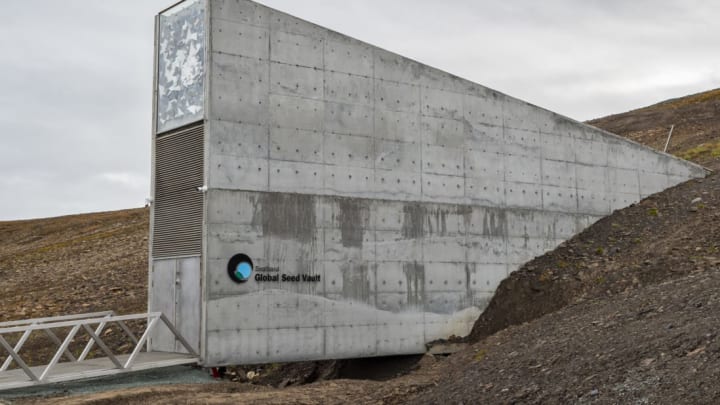
Luckily, our Norwegian friends have thought of just these sorts of pitfalls. In 2006, the government of Norway began construction on the Svalbard Global Seed Vault on Spitsbergen, an island in the Arctic Circle. The vault is designed to hold backup copies of seeds stored in seed banks around the world, so if anything happens to an individual bank, the seeds themselves aren't lost forever.
What makes the Global Seed Vault so sure it can safeguard these backups? For starters, it's not just some building perched on a Norwegian island; it's more of a Fort Knox for seeds. The vault is located 400 feet under the permafrost surface of a sandstone mountain, which should enable it to survive both earthquakes and bomb blasts. The vault may be full of envelopes of seeds rather than precious metals, but that doesn't mean security is lax. Supposedly no single person knows all the codes necessary to gain entrance to the vault. The vault has an array of sophisticated cooling equipment to keep the seeds at -0.4 degrees Fahrenheit, but since the surrounding soil is so cold, even if these artificial measures fail the seeds should remain relatively safe. Countries maintain ownership of any seeds they submit; the vault simply places them in safekeeping and allows depositors to control access to their seeds. [Photo courtesy of The Daily Green.]
The Global Seed Vault has been operational since last February, and so far it seems to be serving its purpose. The vault has received inaugural shipments of 100 million seeds from over 100 countries and funding from such luminaries as the Bill & Melinda Gates foundation, so it's getting a good deal of international support.
Even with these large initial shipments, though, the vault is far from full. It's designed to hold 4.5 million samples of 500 seeds apiece. At full capacity, the vault will contain more than two billion seeds in a bomb-proof, climate-controlled environment well above sea level. Who knows what could happen to humans in the coming centuries, but you've got to feel pretty secure that our seeds are safe.
You can pick up mental_floss wherever brilliant/lots of magazines are sold. Or you could just subscribe.