%20%20--%3E%0A%3Csvg%20version%3D%221.1%22%20id%3D%22Layer_1%22%20xmlns%3D%22http%3A%2F%2Fwww.w3.org%2F2000%2Fsvg%22%20xmlns%3Axlink%3D%22http%3A%2F%2Fwww.w3.org%2F1999%2Fxlink%22%20x%3D%220px%22%20y%3D%220px%22%0A%09%20viewBox%3D%220%200%20684.6%2068.1%22%20style%3D%22enable-background%3Anew%200%200%20684.6%2068.1%3B%22%20xml%3Aspace%3D%22preserve%22%3E%0A%3Cg%3E%0A%09%3Cpath%20d%3D%22M444.1%2C29.3h-17.4v14.5h17.4V29.3z%20M36.4%2C68.1l29.3-50.8V0H50.4L32.9%2C36.8L15.5%2C0H0v68.1h16.7V45.8l12.4%2C22.3H36.4z%0A%09%09%20M49.1%2C68.1h16.6V23.4L49.1%2C52.1V68.1z%20M76.6%2C68.1h45V53.8H93.3V41.6h21V27.1h-21V14.8h28.3V0.1h-45V68.1z%20M175.6%2C68.1h17.3v-68%0A%09%09h-16.5v40.3L150%2C0.1h-17.6v68h16.7V27.7L175.6%2C68.1z%20M235.8%2C14.8h15.4V0.1h-47.4v14.7H219v53.2h16.8V14.8z%20M290.3%2C45.9h-17.1%0A%09%09l7.5-15.6h2L290.3%2C45.9z%20M298.7%2C68.1h18l-32.2-68h-5.7l-32%2C68h18l3.3-7.1h27.1L298.7%2C68.1z%20M325.2%2C68.1h46.2V53.8h-29.6V0.1h-16.7%0A%09%09V68.1z%20M423.7%2C14.8h27.2V0.1H407v68h16.7V14.8z%20M462%2C68.1h46.2V53.8h-29.6V0.1H462V68.1z%20M564.8%2C34.1c0%2C10.7-7.2%2C19.2-18.5%2C19.2%0A%09%09c-11.4%2C0-18.5-8.5-18.5-19.2s7.1-19.2%2C18.5-19.2C557.6%2C14.9%2C564.8%2C23.4%2C564.8%2C34.1%20M580.6%2C34.1c0-19-14.2-34-34.3-34%0A%09%09c-20.2%2C0-34.3%2C15-34.3%2C34c0%2C19%2C14.1%2C34%2C34.3%2C34C566.4%2C68.1%2C580.6%2C53.1%2C580.6%2C34.1%20M604.8%2C20.5c0-4.1%2C3.3-6.2%2C6.7-6.2%0A%09%09c4.4%2C0%2C6.6%2C3%2C6.6%2C6.6h14.7C631.8%2C9.1%2C625.1%2C0.1%2C611%2C0.1c-12%2C0-21.7%2C9.3-21.7%2C20.6c0%2C10.9%2C5.9%2C15.9%2C16.7%2C19.8%0A%09%09c5.2%2C1.8%2C11.5%2C3.2%2C11.5%2C8c0%2C3.3-2.4%2C5.5-6.4%2C5.5c-3.6%2C0-6.6-3-6.6-6.7h-15.2c0%2C11.5%2C7.9%2C20.8%2C21.8%2C20.8c12%2C0%2C21.6-9.3%2C21.6-20.6%0A%09%09c0-10-5.3-16.4-16.7-19.8C610.6%2C26.1%2C604.8%2C25.3%2C604.8%2C20.5%20M670%2C20.9h14.7C683.8%2C9.1%2C677.1%2C0.1%2C663%2C0.1c-12%2C0-21.7%2C9.3-21.7%2C20.6%0A%09%09c0%2C10.9%2C5.9%2C15.9%2C16.7%2C19.8c5.2%2C1.8%2C11.5%2C3.2%2C11.5%2C8c0%2C3.3-2.4%2C5.5-6.4%2C5.5c-3.6%2C0-6.6-3-6.6-6.7h-15.2c0%2C11.5%2C7.9%2C20.8%2C21.8%2C20.8%0A%09%09c12%2C0%2C21.6-9.3%2C21.6-20.6c0-10-5.3-16.4-16.7-19.8c-5.4-1.6-11.3-2.4-11.3-7.2c0-4.1%2C3.3-6.2%2C6.7-6.2C667.7%2C14.4%2C670%2C17.3%2C670%2C20.9%0A%09%09%22%2F%3E%0A%3C%2Fg%3E%0A%3C%2Fsvg%3E%0A)

Theresienstadt concentration camp, or Terezín as it was usually called, was an oddity—even by Nazi standards. It was used as a transit camp, before carting people off to Auschwitz. But more than that, they used it as propaganda, the "model Jewish settlement"—the beautiful, special place where Jews would be resettled under Hitler's plan, before he went full-steam ahead with "The Final Solution." As such, people placed in Terezín were given privileges that the others were not. Concerts, theater, books to read—even opera.
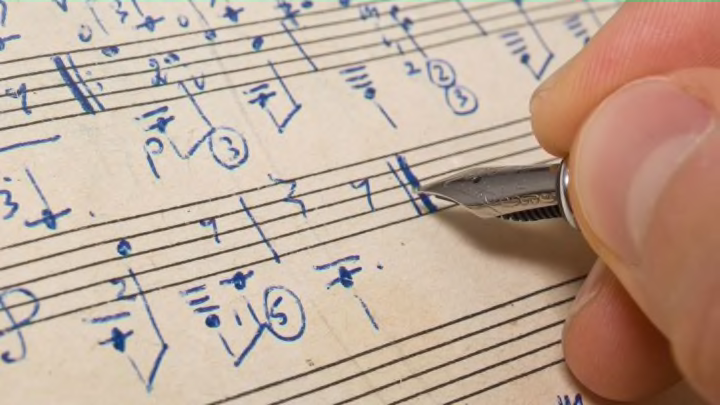
The words opera and Holocaust very rarely make their way into the same conversation, let alone the same sentence. It is difficult to imagine, then, that an Austrian composer and pianist by the name of Viktor Ullmann not only contemplated the great operatic tradition while imprisoned in Terezín, but was actually able to compose one. Scribbled on the back of camp records and lists of prisoners to be sent to the gas chambers, Ullmann penned a work called The Emperor of Atlantis, which is largely about life and death having lost their meaning.
And while both the composer and the librettist, Peter Kien, were ultimately murdered in Auschwitz, the score was miraculously smuggled out and resurfaced in London before ultimately receiving its premiere some 30 years later in Amsterdam. We don't have any excerpts of the piece, but we do have another piece Ullmann wrote, and others by four more composers who were part of the unusual, sadly surreal musical scene at Terezín.
1. GIDEON KLEIN
Gideon Klein was studying music in Prague when the Nazis closed all institutions of higher learning in the occupied Czech territories. He was sent to Terezín in December, 1941, but was then sent to Auschwitz and ultimately to Fürstengrube, where he was murdered in the gas chambers.
2. KAREL ŠVENK
Karel Švenk was an actor, director, writer, and composer before the war. Svenk was one of the artists who helped mount many productions at Terezín, including an all-male cabaret. He was murdered in 1945.
3. ERWIN SCHULHOFF

Erwin Schulhoff studied piano with Debussy for a short spell. He was even awarded the Mendelssohn Prize in 1913 for his piano achievements and won the same prize as a composer some years following WWI. He was sent to Terezín in 1941 and then Wülzburg, where he died in August, 1942.
4. PAVEL HAAS
Haas was sent to Terezín in 1941, and composed several pieces during his stay, although only three of them have been preserved. One of them, "Study for String Orchestra," was immortalized when a performance, in the presence of the composer, was included in the Nazi propaganda film, Der Führer schenkt den Jüden eine Stadt. Haas died in Auschwitz on October 17, 1944.
5. VIKTOR ULLMANN

Viktor Ullmann kept very busy at Terezín. Besides composing and accompanying, he also penned critiques of some of the musical events that Klein and others put on. In 1944 he was deported Birkenau at Auschwitz, where he was killed in the gas chambers.