%20%20--%3E%0A%3Csvg%20version%3D%221.1%22%20id%3D%22Layer_1%22%20xmlns%3D%22http%3A%2F%2Fwww.w3.org%2F2000%2Fsvg%22%20xmlns%3Axlink%3D%22http%3A%2F%2Fwww.w3.org%2F1999%2Fxlink%22%20x%3D%220px%22%20y%3D%220px%22%0A%09%20viewBox%3D%220%200%20684.6%2068.1%22%20style%3D%22enable-background%3Anew%200%200%20684.6%2068.1%3B%22%20xml%3Aspace%3D%22preserve%22%3E%0A%3Cg%3E%0A%09%3Cpath%20d%3D%22M444.1%2C29.3h-17.4v14.5h17.4V29.3z%20M36.4%2C68.1l29.3-50.8V0H50.4L32.9%2C36.8L15.5%2C0H0v68.1h16.7V45.8l12.4%2C22.3H36.4z%0A%09%09%20M49.1%2C68.1h16.6V23.4L49.1%2C52.1V68.1z%20M76.6%2C68.1h45V53.8H93.3V41.6h21V27.1h-21V14.8h28.3V0.1h-45V68.1z%20M175.6%2C68.1h17.3v-68%0A%09%09h-16.5v40.3L150%2C0.1h-17.6v68h16.7V27.7L175.6%2C68.1z%20M235.8%2C14.8h15.4V0.1h-47.4v14.7H219v53.2h16.8V14.8z%20M290.3%2C45.9h-17.1%0A%09%09l7.5-15.6h2L290.3%2C45.9z%20M298.7%2C68.1h18l-32.2-68h-5.7l-32%2C68h18l3.3-7.1h27.1L298.7%2C68.1z%20M325.2%2C68.1h46.2V53.8h-29.6V0.1h-16.7%0A%09%09V68.1z%20M423.7%2C14.8h27.2V0.1H407v68h16.7V14.8z%20M462%2C68.1h46.2V53.8h-29.6V0.1H462V68.1z%20M564.8%2C34.1c0%2C10.7-7.2%2C19.2-18.5%2C19.2%0A%09%09c-11.4%2C0-18.5-8.5-18.5-19.2s7.1-19.2%2C18.5-19.2C557.6%2C14.9%2C564.8%2C23.4%2C564.8%2C34.1%20M580.6%2C34.1c0-19-14.2-34-34.3-34%0A%09%09c-20.2%2C0-34.3%2C15-34.3%2C34c0%2C19%2C14.1%2C34%2C34.3%2C34C566.4%2C68.1%2C580.6%2C53.1%2C580.6%2C34.1%20M604.8%2C20.5c0-4.1%2C3.3-6.2%2C6.7-6.2%0A%09%09c4.4%2C0%2C6.6%2C3%2C6.6%2C6.6h14.7C631.8%2C9.1%2C625.1%2C0.1%2C611%2C0.1c-12%2C0-21.7%2C9.3-21.7%2C20.6c0%2C10.9%2C5.9%2C15.9%2C16.7%2C19.8%0A%09%09c5.2%2C1.8%2C11.5%2C3.2%2C11.5%2C8c0%2C3.3-2.4%2C5.5-6.4%2C5.5c-3.6%2C0-6.6-3-6.6-6.7h-15.2c0%2C11.5%2C7.9%2C20.8%2C21.8%2C20.8c12%2C0%2C21.6-9.3%2C21.6-20.6%0A%09%09c0-10-5.3-16.4-16.7-19.8C610.6%2C26.1%2C604.8%2C25.3%2C604.8%2C20.5%20M670%2C20.9h14.7C683.8%2C9.1%2C677.1%2C0.1%2C663%2C0.1c-12%2C0-21.7%2C9.3-21.7%2C20.6%0A%09%09c0%2C10.9%2C5.9%2C15.9%2C16.7%2C19.8c5.2%2C1.8%2C11.5%2C3.2%2C11.5%2C8c0%2C3.3-2.4%2C5.5-6.4%2C5.5c-3.6%2C0-6.6-3-6.6-6.7h-15.2c0%2C11.5%2C7.9%2C20.8%2C21.8%2C20.8%0A%09%09c12%2C0%2C21.6-9.3%2C21.6-20.6c0-10-5.3-16.4-16.7-19.8c-5.4-1.6-11.3-2.4-11.3-7.2c0-4.1%2C3.3-6.2%2C6.7-6.2C667.7%2C14.4%2C670%2C17.3%2C670%2C20.9%0A%09%09%22%2F%3E%0A%3C%2Fg%3E%0A%3C%2Fsvg%3E%0A)

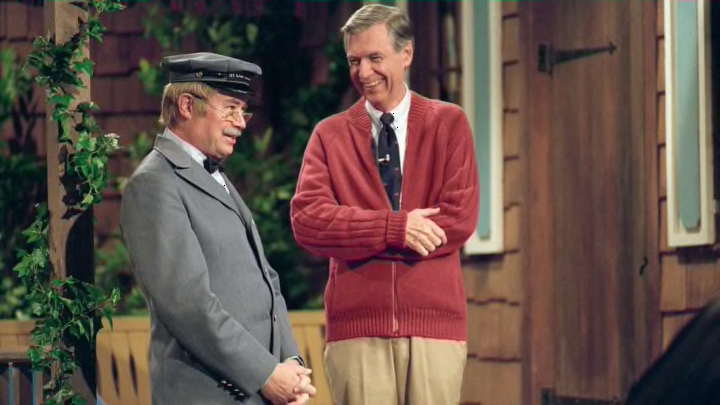
In 1984, a landmark case laid down a controversial law regarding technology and copyright infringement. Here's a look back at the "Betamax Case," including the role Fred Rogers played in the Supreme Court's decision.
For many years in the pre-DVD/Blu-ray, pre-streaming era, the Betamax—Sony’s prototype videotape player-recorder—was a punch line. A piece of technology that was quickly superseded by VHS and the VCR, it limped along in the shadows for two decades. And yet, it was the Betamax that gave its name to a court case that has played a pivotal role in both technological progress and copyright law over the last 30-plus years.
Like many other cool electronic products, the Betamax came from Japan. In late 1975, it was introduced to the U.S. by Sony, who touted its ability to “time-shift” television programming. In an era when most viewers still had to get up off the couch to change channels manually, this innovation was as futuristic as it sounded. Record a TV show right off the air? Are you kidding?
If the public was wowed by the idea, the major entertainment corporations were not. Universal Studios and Walt Disney Productions filed a lawsuit in 1976 to halt the sale of the Betamax, claiming that film and TV producers would lose millions of dollars from unauthorized duplication and distribution of their copyrighted content.
When the case finally went to trial in 1979, the U. S. District Court ruled in favor of Sony, stating that taping programs for entertainment or time-shifting was fair use, and did not infringe on copyright. Further, there was no proof that the practice did any economic harm to the television or motion picture industry.
But Universal, unhappy with the verdict, appealed in 1981, and the ruling was reversed. Keep in mind that up until the arrival of the Betamax, movie studios had received a cut of the box office or fee whenever one of their films was shown. Now suddenly here was a rapidly expanding scenario that undermined that structure. And in this scenario was the seed of much that would follow over the next 34 years, right through today’s ongoing battles over illegal streaming sites.
MISTER ROGERS GOES TO WASHINGTON
With large sums of money and copyright ownership at stake, the Betamax case arrived at the Supreme Court in 1983. By this point, nearly 50 percent of all homes in America had a VCR (VHS replaced Betamax, mainly because its tapes had longer recording capability) and sales of videocassettes were competing with theatrical box office. Universal Studios vs. Sony Corporation of America, nicknamed the “Betamax Case,” was argued for a year. It was a trial of extremes. On one hand, you had Jack Valenti, the head of the Motion Picture Association of America, yelling about the “savagery and ravages” of the VCR, and claiming that "the VCR is to the American film producer and the American public as the Boston strangler is to the woman home alone." On the other, you had the testimony from Fred Rogers. Defending the VCR, he said:
"I have always felt that with the advent of all of this new technology that allows people to tape the 'Neighborhood' off-the-air ... they then become much more active in the programming of their family’s television life. Very frankly, I am opposed to people being programmed by others. My whole approach in broadcasting has always been ‘You are an important person just the way you are. You can make healthy decisions’ ... I just feel that anything that allows a person to be more active in the control of his or her life, in a healthy way, is important."
The Supreme Court ruled in favor of Sony and cited Rogers's comments: "He testified that he had absolutely no objection to home taping for noncommercial use and expressed the opinion that it is a real service to families to be able to record children's programs and to show them at appropriate times."
The decision set two major precedents. The first upheld the original decision—that recording a broadcast program for later viewing is fair use. The second was, and still is, controversial—that the manufacturer of a device or technology that can be used for copyright infringement but also has “substantial non-infringing uses” can’t be held liable for copyright violations by those who use it. It’s kind of technology’s version of “don’t shoot the messenger.”
The same points of law would reemerge two decades later in cases against file-sharing sites Napster and Grokster (in the latter, the Supreme Court ruled unanimously against them for trading copyrighted material). Of course, despite the popularity of legal movie and TV streaming sites like Netflix and Hulu, file sharing continues. Whether it can be, or should be, stopped is a subject for another day. But it’s worth remembering that all the manufacturers of technology capable of copyright infringing (from computers to iPhones to DVRs) continue to sell their wares without fear of lawsuits because of the once-laughed-at Betamax.
To discover more about the fascinating life of Fred Rogers, check out Won't You Be My Neighbor?, the new documentary from Focus Features, which arrives in theaters on June 8, 2018.