%20%20--%3E%0A%3Csvg%20version%3D%221.1%22%20id%3D%22Layer_1%22%20xmlns%3D%22http%3A%2F%2Fwww.w3.org%2F2000%2Fsvg%22%20xmlns%3Axlink%3D%22http%3A%2F%2Fwww.w3.org%2F1999%2Fxlink%22%20x%3D%220px%22%20y%3D%220px%22%0A%09%20viewBox%3D%220%200%20684.6%2068.1%22%20style%3D%22enable-background%3Anew%200%200%20684.6%2068.1%3B%22%20xml%3Aspace%3D%22preserve%22%3E%0A%3Cg%3E%0A%09%3Cpath%20d%3D%22M444.1%2C29.3h-17.4v14.5h17.4V29.3z%20M36.4%2C68.1l29.3-50.8V0H50.4L32.9%2C36.8L15.5%2C0H0v68.1h16.7V45.8l12.4%2C22.3H36.4z%0A%09%09%20M49.1%2C68.1h16.6V23.4L49.1%2C52.1V68.1z%20M76.6%2C68.1h45V53.8H93.3V41.6h21V27.1h-21V14.8h28.3V0.1h-45V68.1z%20M175.6%2C68.1h17.3v-68%0A%09%09h-16.5v40.3L150%2C0.1h-17.6v68h16.7V27.7L175.6%2C68.1z%20M235.8%2C14.8h15.4V0.1h-47.4v14.7H219v53.2h16.8V14.8z%20M290.3%2C45.9h-17.1%0A%09%09l7.5-15.6h2L290.3%2C45.9z%20M298.7%2C68.1h18l-32.2-68h-5.7l-32%2C68h18l3.3-7.1h27.1L298.7%2C68.1z%20M325.2%2C68.1h46.2V53.8h-29.6V0.1h-16.7%0A%09%09V68.1z%20M423.7%2C14.8h27.2V0.1H407v68h16.7V14.8z%20M462%2C68.1h46.2V53.8h-29.6V0.1H462V68.1z%20M564.8%2C34.1c0%2C10.7-7.2%2C19.2-18.5%2C19.2%0A%09%09c-11.4%2C0-18.5-8.5-18.5-19.2s7.1-19.2%2C18.5-19.2C557.6%2C14.9%2C564.8%2C23.4%2C564.8%2C34.1%20M580.6%2C34.1c0-19-14.2-34-34.3-34%0A%09%09c-20.2%2C0-34.3%2C15-34.3%2C34c0%2C19%2C14.1%2C34%2C34.3%2C34C566.4%2C68.1%2C580.6%2C53.1%2C580.6%2C34.1%20M604.8%2C20.5c0-4.1%2C3.3-6.2%2C6.7-6.2%0A%09%09c4.4%2C0%2C6.6%2C3%2C6.6%2C6.6h14.7C631.8%2C9.1%2C625.1%2C0.1%2C611%2C0.1c-12%2C0-21.7%2C9.3-21.7%2C20.6c0%2C10.9%2C5.9%2C15.9%2C16.7%2C19.8%0A%09%09c5.2%2C1.8%2C11.5%2C3.2%2C11.5%2C8c0%2C3.3-2.4%2C5.5-6.4%2C5.5c-3.6%2C0-6.6-3-6.6-6.7h-15.2c0%2C11.5%2C7.9%2C20.8%2C21.8%2C20.8c12%2C0%2C21.6-9.3%2C21.6-20.6%0A%09%09c0-10-5.3-16.4-16.7-19.8C610.6%2C26.1%2C604.8%2C25.3%2C604.8%2C20.5%20M670%2C20.9h14.7C683.8%2C9.1%2C677.1%2C0.1%2C663%2C0.1c-12%2C0-21.7%2C9.3-21.7%2C20.6%0A%09%09c0%2C10.9%2C5.9%2C15.9%2C16.7%2C19.8c5.2%2C1.8%2C11.5%2C3.2%2C11.5%2C8c0%2C3.3-2.4%2C5.5-6.4%2C5.5c-3.6%2C0-6.6-3-6.6-6.7h-15.2c0%2C11.5%2C7.9%2C20.8%2C21.8%2C20.8%0A%09%09c12%2C0%2C21.6-9.3%2C21.6-20.6c0-10-5.3-16.4-16.7-19.8c-5.4-1.6-11.3-2.4-11.3-7.2c0-4.1%2C3.3-6.2%2C6.7-6.2C667.7%2C14.4%2C670%2C17.3%2C670%2C20.9%0A%09%09%22%2F%3E%0A%3C%2Fg%3E%0A%3C%2Fsvg%3E%0A)

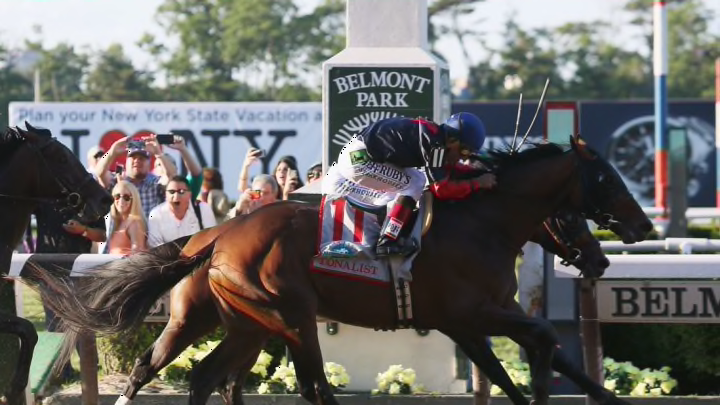
After American Pharoah ran away with both the Kentucky Derby and the Preakness, racing fans have been clamoring that this might finally be the year we get to see another Triple Crown winner. The Belmont Stakes, the venerable race and final jewel in the Triple Crown, has dashed the hopes of more than a few highly touted contenders, but what makes the race so special? Here are some answers to our favorite Belmont questions.
Why is it called the Belmont Stakes?
August Belmont, a wealthy businessman, provided the financial backing for the first running of the race in 1867. (The Belmont is the oldest of the three Triple Crown races. The Preakness wasn't run until 1873, and the Kentucky Derby didn't start until 1875.) The race was originally run at the Bronx's Jerome Park Racetrack, but it moved to Morris Park Racecourse in 1890 before finally settling at its current home of Belmont Park in 1905. (Interestingly, one of Belmont's partners was Leonard Jerome, grandfather of Winston Churchill.) These first races would have looked odd to modern racing fans; until 1921 the race was run in the English fashion of having the horses circle the track clockwise.
The filly Ruthless took the first running of the race, earning her owners $1,850 after winning by a head. Her win was exceedingly unusual, though; only 22 fillies have attempted the race in its history. Only three have claimed the victor's carnations: Ruthless, Tanya in 1905, and 2007 winner Rags to Riches.
So the race has been run continuously since 1867?
Getty Images
Not quite. In the early 20th century, the New York state legislature passed anti-betting laws, a step that severely hampered a gambling-based industry. As a result, Belmont Park closed down, and the race wasn't run in 1911 or 1912. Luckily, gaming-minded heads eventually prevailed, and the race resumed its normal schedule with Prince Eugene's 1913 win.
What makes it so tough?
As you might have noticed, it's not uncommon for a horse to win the Kentucky Derby and the Preakness, only to wear out in the Belmont. The race is held at a grueling distance, a mile and a half (12 furlongs) compared to 10 furlongs for the Kentucky Derby and 9.5 furlongs for the Preakness. The extra distance may not sound like a lot, but it makes it tricky to win all three races. The race was originally even longer, though; from 1867-1873 it was run at 13 furlongs.
Only 11 horses have claimed the Triple Crown, and none has done it since Affirmed triumphed in 1978. Many have gotten close, though. Charismatic came achingly close in 1999 when he led in the final furlong, only to break his leg and fall back into third. Since 2000, War Emblem, Funny Cide, Smarty Jones, Big Brown, and California Chrome have all gotten two-thirds of the way to the Triple Crown, only to fall short in the Belmont, while in 2012 I'll Have Another won the Derby and the Preakness before having to be scratched from the Belmont because of tendonitis.
Who was the race's biggest winner?
Secretariat's run in 1973 pretty much speaks for itself. It set the world record for a mile and a half dirt race at 2:24, and impressively blew the rest of the field out of the water. "Big Red," as he was nicknamed, sped across the finish line a full 31 lengths ahead of his closest pursuer. The run was so impressive that thousands of people who had bet on Secretariat to win never cashed their tickets, choosing instead to keep them as a memento of the dominant performance. Watch it for yourself above.
What's the official drink of the race?
iStock
Although the Belmont is the oldest of the three Triple Crown races, its signature drink does not have a storied history. From the 1970s through the 1997 race, spectators drank the White Carnation, a concoction of vodka, peach schnapps, orange juice, soda water, and cream.
Fans weren't crazy about drinking a creamy cocktail on hot June days, so organizers commissioned a new cocktail starting with the 1998 race. The Belmont Breeze, which was invented by celebrated mixologist and "the King of Cocktails" Dale DeGroff, became the official tipple of the Belmont Stakes. The drink eschewed the relative simplicity of the Derby's mint julep and the Preakness' Black-Eyed Susan in favor of a modern rendition of a whiskey punch. DeGroff's original recipe included a mixture of blended whiskey, Harveys Bristol Cream Sherry, fresh lemon juice, simple syrup, fresh orange juice, and cranberry juice shaken together and topped with 7 Up and soda, then garnished with strawberry, a lemon piece, and a sprig of mint. The result is a refreshing, if complicated, summer drink.
The Belmont Breeze never really caught on, either, so in 2011 the Belmont once again refreshed its liquor cabinet. The result was the Belmont Jewel, a cocktail of bourbon, lemonade, and pomegranate juice served on ice. It might not challenge the mint julep's popularity, but it sounds refreshing enough.
Are there any other relatively recent traditions?
Indeed there are. Since 1997, the crowd has belted out "New York, New York" during the race's post parade. Prior to that, the race's song was "Sidewalks of New York." The tradition of a post parade isn't new at all, though. In fact, the common sight of seeing horses trot in front of the grandstand on their way to the post was first seen in the United States at the 14th running of the Belmont Stakes in 1880.
What does the winner get?
Getty Images
If American Pharoah takes the Triple Crown, he will get all sorts of great loot, including a place in racing's pantheon of greats and a rumored $4 million bonus on stallion rights that have supposedly already sold for $9.8 million. Every winner gets to wear the race's trademark blanket of white carnations and receives the race's impressive trophy. The trophy, which was designed by Tiffany, is an 18-inch tall silver bowl topped with a sculpture of Fenian, the winner of the third Belmont. Sculptures of three other horses support the trophy's base. This trio of Eclipse, Matchem, and Herod were all champion 18th-century thoroughbreds who are considered to be "foundation" horses since they appear in the pedigree of so many modern thoroughbreds. The Belmont family donated the trophy, which has been given to every winner since 1926. This year's winner also gets a $800,000 cut of the event's $1.5 million purse.