%20%20--%3E%0A%3Csvg%20version%3D%221.1%22%20id%3D%22Layer_1%22%20xmlns%3D%22http%3A%2F%2Fwww.w3.org%2F2000%2Fsvg%22%20xmlns%3Axlink%3D%22http%3A%2F%2Fwww.w3.org%2F1999%2Fxlink%22%20x%3D%220px%22%20y%3D%220px%22%0A%09%20viewBox%3D%220%200%20684.6%2068.1%22%20style%3D%22enable-background%3Anew%200%200%20684.6%2068.1%3B%22%20xml%3Aspace%3D%22preserve%22%3E%0A%3Cg%3E%0A%09%3Cpath%20d%3D%22M444.1%2C29.3h-17.4v14.5h17.4V29.3z%20M36.4%2C68.1l29.3-50.8V0H50.4L32.9%2C36.8L15.5%2C0H0v68.1h16.7V45.8l12.4%2C22.3H36.4z%0A%09%09%20M49.1%2C68.1h16.6V23.4L49.1%2C52.1V68.1z%20M76.6%2C68.1h45V53.8H93.3V41.6h21V27.1h-21V14.8h28.3V0.1h-45V68.1z%20M175.6%2C68.1h17.3v-68%0A%09%09h-16.5v40.3L150%2C0.1h-17.6v68h16.7V27.7L175.6%2C68.1z%20M235.8%2C14.8h15.4V0.1h-47.4v14.7H219v53.2h16.8V14.8z%20M290.3%2C45.9h-17.1%0A%09%09l7.5-15.6h2L290.3%2C45.9z%20M298.7%2C68.1h18l-32.2-68h-5.7l-32%2C68h18l3.3-7.1h27.1L298.7%2C68.1z%20M325.2%2C68.1h46.2V53.8h-29.6V0.1h-16.7%0A%09%09V68.1z%20M423.7%2C14.8h27.2V0.1H407v68h16.7V14.8z%20M462%2C68.1h46.2V53.8h-29.6V0.1H462V68.1z%20M564.8%2C34.1c0%2C10.7-7.2%2C19.2-18.5%2C19.2%0A%09%09c-11.4%2C0-18.5-8.5-18.5-19.2s7.1-19.2%2C18.5-19.2C557.6%2C14.9%2C564.8%2C23.4%2C564.8%2C34.1%20M580.6%2C34.1c0-19-14.2-34-34.3-34%0A%09%09c-20.2%2C0-34.3%2C15-34.3%2C34c0%2C19%2C14.1%2C34%2C34.3%2C34C566.4%2C68.1%2C580.6%2C53.1%2C580.6%2C34.1%20M604.8%2C20.5c0-4.1%2C3.3-6.2%2C6.7-6.2%0A%09%09c4.4%2C0%2C6.6%2C3%2C6.6%2C6.6h14.7C631.8%2C9.1%2C625.1%2C0.1%2C611%2C0.1c-12%2C0-21.7%2C9.3-21.7%2C20.6c0%2C10.9%2C5.9%2C15.9%2C16.7%2C19.8%0A%09%09c5.2%2C1.8%2C11.5%2C3.2%2C11.5%2C8c0%2C3.3-2.4%2C5.5-6.4%2C5.5c-3.6%2C0-6.6-3-6.6-6.7h-15.2c0%2C11.5%2C7.9%2C20.8%2C21.8%2C20.8c12%2C0%2C21.6-9.3%2C21.6-20.6%0A%09%09c0-10-5.3-16.4-16.7-19.8C610.6%2C26.1%2C604.8%2C25.3%2C604.8%2C20.5%20M670%2C20.9h14.7C683.8%2C9.1%2C677.1%2C0.1%2C663%2C0.1c-12%2C0-21.7%2C9.3-21.7%2C20.6%0A%09%09c0%2C10.9%2C5.9%2C15.9%2C16.7%2C19.8c5.2%2C1.8%2C11.5%2C3.2%2C11.5%2C8c0%2C3.3-2.4%2C5.5-6.4%2C5.5c-3.6%2C0-6.6-3-6.6-6.7h-15.2c0%2C11.5%2C7.9%2C20.8%2C21.8%2C20.8%0A%09%09c12%2C0%2C21.6-9.3%2C21.6-20.6c0-10-5.3-16.4-16.7-19.8c-5.4-1.6-11.3-2.4-11.3-7.2c0-4.1%2C3.3-6.2%2C6.7-6.2C667.7%2C14.4%2C670%2C17.3%2C670%2C20.9%0A%09%09%22%2F%3E%0A%3C%2Fg%3E%0A%3C%2Fsvg%3E%0A)

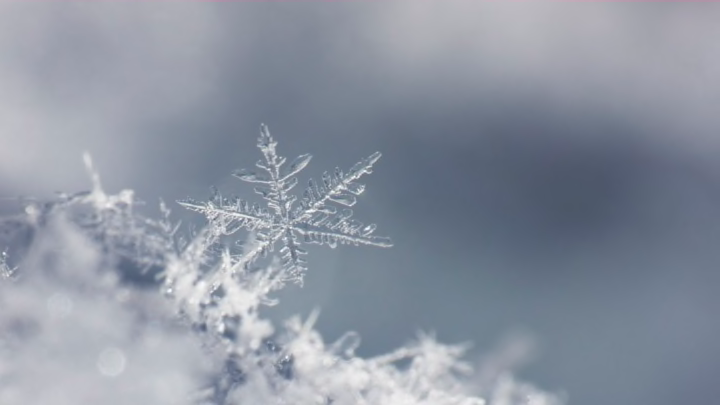
Up in the winter sky, water vapor in a cloud condenses into a droplet and freezes into a tiny bit of ice, with the water molecules bonding together as a hexagonal crystalline lattice with a six-fold symmetry. As water vapor condenses on its surfaces, the ice crystal grows into a hexagonal prism. As the crystal gets larger and larger, branches begin to form at the corners of the hexagon. When the crystal is heavy enough, it falls through the atmosphere toward the ground, where we call it a snowflake.
Many of those snowflakes have fallen onto the small town of Jericho, Vermont, the home of Wilson Alwyn Bentley. As a teenager, Bentley became interested in snowflakes, and he attempted to draw them while looking at them through a microscope his mother had given him. He found that he couldn't get the complex structures of the flakes down on paper before they melted, so he attached a camera to a microscope using an adjustable bellows mechanism and photographed his first snowflake on January 15, 1885.
Over the next few decades, Bentley continued to study snowflakes, taking 5,381 photographs of them and developing a system to categorize over 80 different flake types and shapes. In 1920, he became a Fellow of the American Meteorological Society and was awarded the Society's first research grant ($25). Bentley sometimes told people that he had never seen two snowflakes that looked alike and published several magazine articles arguing that no two flakes are identical. That idea stuck in the public imagination, which brings us to today's question: was he right?
Scientists have discovered that as an ice crystal gets blown around in the air while it grows, the environmental conditions it is exposed to and the timing of the exposure determine the shape of the snowflake. With different factors determining the snowflake's shape, and that shape changing as the growing snowflake moves through different conditions, you get a lot of variety in snowflake shape. Here's a handy little graph from a Caltech physics professor that shows which shapes occur in which conditions:
If two growing snowflakes are exposed to the same temperatures and humidity and water saturation levels at the exact same time (live out the exact same lives, if you will), they may look exactly alike at the macroscopic level. In fact, in 1988, the Nancy Knight was studying snowflakes as part of her work with the National Center for Atmospheric Research and found two identical snowflakes of the hollow column type in a Wisconsin snowstorm.
But Caltech physics professor and snowflake expert Kenneth Libbrecht (the man who made the above graph) points out that if you look at any two flakes "“ even seemingly identical ones "“ on the atomic level, you'll find numbers of water molecules and different layouts of those molecules (most water molecules contain an oxygen atom of 16O, but one molecule in every 500 has an 18O). One thing you won't find? Two snowflakes that are exactly alike.
If you've got a burning question that you'd like to see answered here, shoot me an email at flossymatt (at) gmail.com. Twitter users can also make nice with me and ask me questions there. Be sure to give me your name and location (and a link, if you want) so I can give you a little shout out.