%20%20--%3E%0A%3Csvg%20version%3D%221.1%22%20id%3D%22Layer_1%22%20xmlns%3D%22http%3A%2F%2Fwww.w3.org%2F2000%2Fsvg%22%20xmlns%3Axlink%3D%22http%3A%2F%2Fwww.w3.org%2F1999%2Fxlink%22%20x%3D%220px%22%20y%3D%220px%22%0A%09%20viewBox%3D%220%200%20684.6%2068.1%22%20style%3D%22enable-background%3Anew%200%200%20684.6%2068.1%3B%22%20xml%3Aspace%3D%22preserve%22%3E%0A%3Cg%3E%0A%09%3Cpath%20d%3D%22M444.1%2C29.3h-17.4v14.5h17.4V29.3z%20M36.4%2C68.1l29.3-50.8V0H50.4L32.9%2C36.8L15.5%2C0H0v68.1h16.7V45.8l12.4%2C22.3H36.4z%0A%09%09%20M49.1%2C68.1h16.6V23.4L49.1%2C52.1V68.1z%20M76.6%2C68.1h45V53.8H93.3V41.6h21V27.1h-21V14.8h28.3V0.1h-45V68.1z%20M175.6%2C68.1h17.3v-68%0A%09%09h-16.5v40.3L150%2C0.1h-17.6v68h16.7V27.7L175.6%2C68.1z%20M235.8%2C14.8h15.4V0.1h-47.4v14.7H219v53.2h16.8V14.8z%20M290.3%2C45.9h-17.1%0A%09%09l7.5-15.6h2L290.3%2C45.9z%20M298.7%2C68.1h18l-32.2-68h-5.7l-32%2C68h18l3.3-7.1h27.1L298.7%2C68.1z%20M325.2%2C68.1h46.2V53.8h-29.6V0.1h-16.7%0A%09%09V68.1z%20M423.7%2C14.8h27.2V0.1H407v68h16.7V14.8z%20M462%2C68.1h46.2V53.8h-29.6V0.1H462V68.1z%20M564.8%2C34.1c0%2C10.7-7.2%2C19.2-18.5%2C19.2%0A%09%09c-11.4%2C0-18.5-8.5-18.5-19.2s7.1-19.2%2C18.5-19.2C557.6%2C14.9%2C564.8%2C23.4%2C564.8%2C34.1%20M580.6%2C34.1c0-19-14.2-34-34.3-34%0A%09%09c-20.2%2C0-34.3%2C15-34.3%2C34c0%2C19%2C14.1%2C34%2C34.3%2C34C566.4%2C68.1%2C580.6%2C53.1%2C580.6%2C34.1%20M604.8%2C20.5c0-4.1%2C3.3-6.2%2C6.7-6.2%0A%09%09c4.4%2C0%2C6.6%2C3%2C6.6%2C6.6h14.7C631.8%2C9.1%2C625.1%2C0.1%2C611%2C0.1c-12%2C0-21.7%2C9.3-21.7%2C20.6c0%2C10.9%2C5.9%2C15.9%2C16.7%2C19.8%0A%09%09c5.2%2C1.8%2C11.5%2C3.2%2C11.5%2C8c0%2C3.3-2.4%2C5.5-6.4%2C5.5c-3.6%2C0-6.6-3-6.6-6.7h-15.2c0%2C11.5%2C7.9%2C20.8%2C21.8%2C20.8c12%2C0%2C21.6-9.3%2C21.6-20.6%0A%09%09c0-10-5.3-16.4-16.7-19.8C610.6%2C26.1%2C604.8%2C25.3%2C604.8%2C20.5%20M670%2C20.9h14.7C683.8%2C9.1%2C677.1%2C0.1%2C663%2C0.1c-12%2C0-21.7%2C9.3-21.7%2C20.6%0A%09%09c0%2C10.9%2C5.9%2C15.9%2C16.7%2C19.8c5.2%2C1.8%2C11.5%2C3.2%2C11.5%2C8c0%2C3.3-2.4%2C5.5-6.4%2C5.5c-3.6%2C0-6.6-3-6.6-6.7h-15.2c0%2C11.5%2C7.9%2C20.8%2C21.8%2C20.8%0A%09%09c12%2C0%2C21.6-9.3%2C21.6-20.6c0-10-5.3-16.4-16.7-19.8c-5.4-1.6-11.3-2.4-11.3-7.2c0-4.1%2C3.3-6.2%2C6.7-6.2C667.7%2C14.4%2C670%2C17.3%2C670%2C20.9%0A%09%09%22%2F%3E%0A%3C%2Fg%3E%0A%3C%2Fsvg%3E%0A)

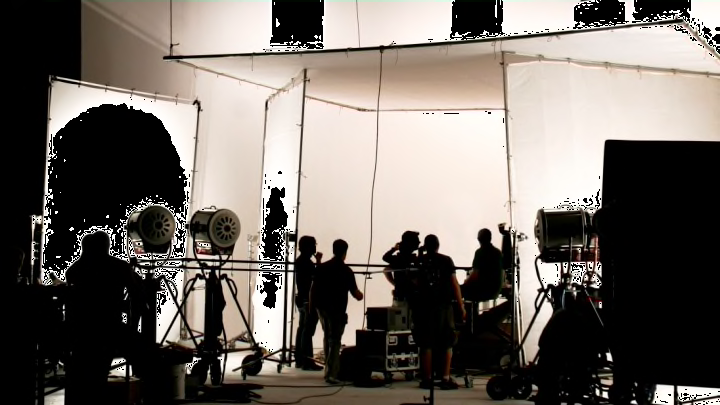
Ever wonder what all those strange credits are when they roll by at the end of a film? I used to, until I moved to LA, where I started meeting Best Boys and Dolly Grips with their kids when I took my son to the playground—yes, Hollywood, where you meet Gaffers and Armourers at your average Saturday night house party.
So I started asking questions, and here's what I've learned:
1. Boom Operator
No, this job has nothing to do with explosives or pyrotechnics. The boom referred to is a long pole with a mic attached to it--the mic that picks up all the dialogue the actors are saying. The boom allows the mic operator to move with the action and stay out of the camera's field of vision.
2. Armourer
Now this job does deal with explosives, of a sort. The armourer's specialty is firearms, which, when used as a prop, requires a special handler. War movies and cops movies sometimes need several armourers to keep track of all the firearms, which, even though filled with blanks, can still be quite dangerous. (Remember Jon-Erik Hexum? Anyone? Anyone?)
3. Gaffer
Though the gaffer manages the entire electrical department, all the guys who run cables and hang lights, his main responsibility is mounting and positioning lights and lighting rigs.
4. Grip
Grips are sort of like worker bees. They do lots of different things, like moving set pieces, scenery, and pushing cameras on dollies for follow-shots. But the grip's main job is lighting. They set up filters in front of the lights and position sun blocks to keep natural light from ruining a scene.
5. Key Grip
This guy runs the Grips dept and assists the Gaffer. He usually knows his team well and will contract out the same people for each film or production he's hired to work on.
6. Best Boy
This guy has nothing at all to do with a wedding, unless we're talking something like Wedding Crashers. There are two types of best boys: electrical and grip. Best boy electric is the gaffer's assistant. A best boy grip assists the key grip.
7. Dolly Grip
A dolly grip operates the movie camera dolly. If you've ever wondered how cameras seem to follow actors so surreptitiously and so fluidly in some scenes, it's because the camera is mounted on a dolly, not handheld, and pushed along a track, like a little one-car train.
8. Foley Artist
A foley artist is responsible for creating the sound effects that are added in post-production. Why Foley? Well, Jack Foley was one of the first and most famous sound effects guys in the biz.
9. Greensman
This sounds like someone who makes sure the golf course looks good before a shoot at a country club, no? It's actually the person responsible for placing plants, flowers, shrubs, etc. in a scene.
10. Key Scenic
This guy oversees the painting dept. A key scenic designer uses painting techniques to make buildings look old, or new, or whatever is called for.
11. Lead Man
If you're thinking this is the star of the film, you're wrong. That's the leading man. A lead man is in charge of the entire set crew.
12. Buyer
As the name implies, this person finds set pieces, or dressing for the set, and buys (or rents) them.
13. Set Dresser
My next-door neighbor is a set dresser who worked on a lot of well-known sitcoms. He says that when the dressers aren't busy placing the items the buyer purchased, they're usually hanging paintings in a room, installing TVs in a bedroom set, that sort of thing. People often confuse the set dresser with the set designer. They're actually two very different jobs. I didn't give Set Designer any real estate here because I figured most people can imagine what this job is all about.
14. Director of Photography
The director of photography, otherwise known in this town as the DP, oversees all the artistic aspects of the shot, meaning lighting, camera placement, etc. It's the DP's job to work with the Director and get his/her vision captured on camera. (Good directors are usually good DPs, but most directors have to rely on others to technically capture their vision.) The DP is also often called a Cinematographer, especially in film (DP is more common in TV)
15. The Second Assistant Camera (2nd AC)
I have left many titles off the list, because, quite frankly, we'd be here all day. But the 2nd AC is worth mentioning because he/she handles the clapperboard, or slate. Yes, he's the guy clapping the board before each take, which allows the editors to sync up all the various camera angles/cameras later in the editing room. Also, as has been pointed out, the 2nd AC loads the film in the camera mags, unless there's a dedicated loader in the production.