%20%20--%3E%0A%3Csvg%20version%3D%221.1%22%20id%3D%22Layer_1%22%20xmlns%3D%22http%3A%2F%2Fwww.w3.org%2F2000%2Fsvg%22%20xmlns%3Axlink%3D%22http%3A%2F%2Fwww.w3.org%2F1999%2Fxlink%22%20x%3D%220px%22%20y%3D%220px%22%0A%09%20viewBox%3D%220%200%20684.6%2068.1%22%20style%3D%22enable-background%3Anew%200%200%20684.6%2068.1%3B%22%20xml%3Aspace%3D%22preserve%22%3E%0A%3Cg%3E%0A%09%3Cpath%20d%3D%22M444.1%2C29.3h-17.4v14.5h17.4V29.3z%20M36.4%2C68.1l29.3-50.8V0H50.4L32.9%2C36.8L15.5%2C0H0v68.1h16.7V45.8l12.4%2C22.3H36.4z%0A%09%09%20M49.1%2C68.1h16.6V23.4L49.1%2C52.1V68.1z%20M76.6%2C68.1h45V53.8H93.3V41.6h21V27.1h-21V14.8h28.3V0.1h-45V68.1z%20M175.6%2C68.1h17.3v-68%0A%09%09h-16.5v40.3L150%2C0.1h-17.6v68h16.7V27.7L175.6%2C68.1z%20M235.8%2C14.8h15.4V0.1h-47.4v14.7H219v53.2h16.8V14.8z%20M290.3%2C45.9h-17.1%0A%09%09l7.5-15.6h2L290.3%2C45.9z%20M298.7%2C68.1h18l-32.2-68h-5.7l-32%2C68h18l3.3-7.1h27.1L298.7%2C68.1z%20M325.2%2C68.1h46.2V53.8h-29.6V0.1h-16.7%0A%09%09V68.1z%20M423.7%2C14.8h27.2V0.1H407v68h16.7V14.8z%20M462%2C68.1h46.2V53.8h-29.6V0.1H462V68.1z%20M564.8%2C34.1c0%2C10.7-7.2%2C19.2-18.5%2C19.2%0A%09%09c-11.4%2C0-18.5-8.5-18.5-19.2s7.1-19.2%2C18.5-19.2C557.6%2C14.9%2C564.8%2C23.4%2C564.8%2C34.1%20M580.6%2C34.1c0-19-14.2-34-34.3-34%0A%09%09c-20.2%2C0-34.3%2C15-34.3%2C34c0%2C19%2C14.1%2C34%2C34.3%2C34C566.4%2C68.1%2C580.6%2C53.1%2C580.6%2C34.1%20M604.8%2C20.5c0-4.1%2C3.3-6.2%2C6.7-6.2%0A%09%09c4.4%2C0%2C6.6%2C3%2C6.6%2C6.6h14.7C631.8%2C9.1%2C625.1%2C0.1%2C611%2C0.1c-12%2C0-21.7%2C9.3-21.7%2C20.6c0%2C10.9%2C5.9%2C15.9%2C16.7%2C19.8%0A%09%09c5.2%2C1.8%2C11.5%2C3.2%2C11.5%2C8c0%2C3.3-2.4%2C5.5-6.4%2C5.5c-3.6%2C0-6.6-3-6.6-6.7h-15.2c0%2C11.5%2C7.9%2C20.8%2C21.8%2C20.8c12%2C0%2C21.6-9.3%2C21.6-20.6%0A%09%09c0-10-5.3-16.4-16.7-19.8C610.6%2C26.1%2C604.8%2C25.3%2C604.8%2C20.5%20M670%2C20.9h14.7C683.8%2C9.1%2C677.1%2C0.1%2C663%2C0.1c-12%2C0-21.7%2C9.3-21.7%2C20.6%0A%09%09c0%2C10.9%2C5.9%2C15.9%2C16.7%2C19.8c5.2%2C1.8%2C11.5%2C3.2%2C11.5%2C8c0%2C3.3-2.4%2C5.5-6.4%2C5.5c-3.6%2C0-6.6-3-6.6-6.7h-15.2c0%2C11.5%2C7.9%2C20.8%2C21.8%2C20.8%0A%09%09c12%2C0%2C21.6-9.3%2C21.6-20.6c0-10-5.3-16.4-16.7-19.8c-5.4-1.6-11.3-2.4-11.3-7.2c0-4.1%2C3.3-6.2%2C6.7-6.2C667.7%2C14.4%2C670%2C17.3%2C670%2C20.9%0A%09%09%22%2F%3E%0A%3C%2Fg%3E%0A%3C%2Fsvg%3E%0A)

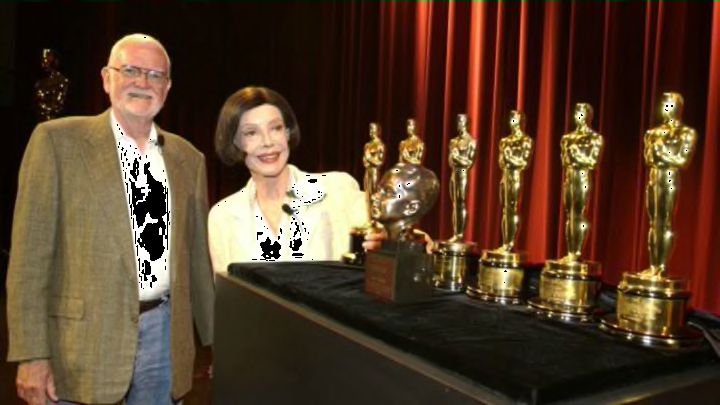
When talking about director and screenwriter Billy Wilder, one really only needs to list the titles of his many triumphs in genres as disparate as light comedy and film noir. The Apartment. Double Indemnity. Sunset Boulevard. Some Like It Hot. The Lot Weekend. Sabrina. Stalag 17. The Austrian-American filmmaker was so prolific and so brilliant that even his minor works like Ace in the Hole, a scathing indictment of journalism, are unforgettable. I really can't articulate just how wonderful Wilder's films are, but I can share a few things you might not have known about him:
1. Before He Was a Director, He Was a Gigolo
Getty Images
Wilder was born in Sucha Beskidzka in what is now Poland in 1906, and attended what he later called "the worst high school in Vienna." He eventually ended up at the University of Vienna to fulfill his parents' dreams of becoming a lawyer. Fortunately for the future of film, Wilder didn't love the ivory tower and quickly dropped out of college to become a journalist in Berlin.
It was tough to make ends meet as a writer, though, so Wilder supplemented his income by working as a gigolo. According to the director this was no Midnight Cowboy stuff, though, and Wilder went into the line of work mostly hoping it would make good research for a series of articles. His job mostly consisted of dining, dancing, and chatting with lonely old ladies. In the excellent book-length interview Conversations With Wilder by director Cameron Crowe, Wilder claims that he never got frisky with any clients "because they would come with their husbands"¦and the ladies were corpulent ladies, elderly ladies."
2. He Paid Attention to His Extras
Getty Images
One of the most memorable scenes in The Lost Weekend also ended up being one of the most important scenes in Wilder's life. Ray Milland's alcoholic writer character heads to a fancy nightclub for drinks, only to realize he doesn't have enough cash to cover his tab. To drum up the money, he filches a fellow patron's purse, but he gets caught and is given the heave-ho from the bar. It's perhaps the most embarrassing and crucial scene in the movie.
As Milland is being led from the bar, the arm of a hatcheck girl enters the frame to hand him his hat. As Wilder later told Cameron Crowe, "I only saw the arm, and I fell in love with the arm." Audrey Young, the Paramount extra on the other end of the arm and a singer in Tommy Dorsey's band, became Mrs. Billy Wilder in 1949, and the two stayed together until the director's death in 2002.
(Another interesting note about The Lost Weekend: Since it was the first sweeping portrayal of alcoholism on film, the country's booze peddlers were none too eager to have it hit the screen. The liquor industry banded together and offered Paramount $5 million to suppress the film, but the studio refused. Wilder later joked to Crowe, "If they'd offered me the five million, I would have.")
3. He Was No Raymond Chandler Fan
Getty Images
If Wilder liked a collaborator, they worked together over and over again. Wilder and longtime writing partner I.A.L. Diamond collaborated on eight scripts, including the screenplays for Some Like It Hot and The Apartment, and actors like Jack Lemmon, William Holden, and Fred MacMurray pop up in multiple Wilder films.
This happy arrangement never came together with mystery icon Raymond Chandler. Paramount hired Chandler to work with Wilder on adapting James M. Cain's novel Double Indemnity into a screenplay, and the two apparently spent much of the time at each other's throats. Wilder admittedly valued Chandler's ear for dialogue, but the aging writer apparently had no interest in working within the structure of a screenplay. As Wilder told Crowe, "[T]here was a lot of Hitler in Chandler," and the two fought over everything from whether or not Wilder could have a martini at lunch— Chandler was a recovering alcoholic—to the rules of etiquette—Chandler once quit in a huff when Wilder asked him to close the blinds without saying "please."
For his part, the notoriously cantankerous Chandler didn't seem to enjoy the process any more than Wilder did. He wrote in his letters, "I went to Hollywood in 1943 to work with Billy Wilder on Double Indemnity. This was an agonizing experience and probably shortened my life, but I learned from it as much about screen writing as I am capable of learning, which is not very much." From hearing these stories, you wouldn't think that the teaming would have resulted in arguably film noir's greatest masterpiece, would you? It's amazing what Barbara Stanwyck in an anklet can do.
4. He Brought Jack Lemmon and Walter Matthau Together
Getty Images
Although the long, frequently hilarious collaboration between Jack Lemmon and Walter Matthau is most notable for their work in The Odd Couple, it was actually Wilder who brought the two together for the first time in 1966's The Fortune Cookie.
The film tells the story of a CBS sports cameraman (Lemmon) who gets mildly injured while covering a football game, only to have his sleazy personal-injury lawyer brother-in-law (Matthau) railroad him into faking paralysis for a big cash settlement. If you haven't seen it, it's an extremely funny movie, particularly Matthau's performance as "Whiplash Willie" Gingrich, which won him an Oscar for Best Actor in a Supporting Role. As Wilder later said, "You just know with those two, they would be funny together. They're comedians."
As long as we're giving Wilder credit for changing peoples' careers, it's worth recounting the story of a waiter who asked an elderly Wilder for advice on acting. Wilder told the young man he was too ugly to be an actor, so if he wanted to break into the business he'd have to write a part for himself. The waiter took the advice to heart, and that's how Billy Bob Thornton penned himself a starring role in Sling Blade.
5. He Tried to Make Schindler's List
Getty Images
When Thomas Keneally published Schindler's Ark in 1983, Wilder tried to get the film rights to the book so he could make it his final film. With Wilder at the helm, the film would certainly have been quite different. After the director came to America, most of his family, including his mother, grandmother, and stepfather, were killed at Auschwitz, and Wilder wanted to make the Schindler film as a tribute to them.
However, Wilder hit a pretty big roadblock even as early as 1983: Steven Spielberg already owned the rights. Wilder tried to talk Spielberg into letting him direct the film, but to no avail. When Schindler's List eventually came out ten years later, Wilder admitted that while he would have made the picture very differently, Spielberg did a terrific job and crafted "a very important picture."
'5 Things You Didn't Know About...' appears every Friday. Read the previous installments here.