%20%20--%3E%0A%3Csvg%20version%3D%221.1%22%20id%3D%22Layer_1%22%20xmlns%3D%22http%3A%2F%2Fwww.w3.org%2F2000%2Fsvg%22%20xmlns%3Axlink%3D%22http%3A%2F%2Fwww.w3.org%2F1999%2Fxlink%22%20x%3D%220px%22%20y%3D%220px%22%0A%09%20viewBox%3D%220%200%20684.6%2068.1%22%20style%3D%22enable-background%3Anew%200%200%20684.6%2068.1%3B%22%20xml%3Aspace%3D%22preserve%22%3E%0A%3Cg%3E%0A%09%3Cpath%20d%3D%22M444.1%2C29.3h-17.4v14.5h17.4V29.3z%20M36.4%2C68.1l29.3-50.8V0H50.4L32.9%2C36.8L15.5%2C0H0v68.1h16.7V45.8l12.4%2C22.3H36.4z%0A%09%09%20M49.1%2C68.1h16.6V23.4L49.1%2C52.1V68.1z%20M76.6%2C68.1h45V53.8H93.3V41.6h21V27.1h-21V14.8h28.3V0.1h-45V68.1z%20M175.6%2C68.1h17.3v-68%0A%09%09h-16.5v40.3L150%2C0.1h-17.6v68h16.7V27.7L175.6%2C68.1z%20M235.8%2C14.8h15.4V0.1h-47.4v14.7H219v53.2h16.8V14.8z%20M290.3%2C45.9h-17.1%0A%09%09l7.5-15.6h2L290.3%2C45.9z%20M298.7%2C68.1h18l-32.2-68h-5.7l-32%2C68h18l3.3-7.1h27.1L298.7%2C68.1z%20M325.2%2C68.1h46.2V53.8h-29.6V0.1h-16.7%0A%09%09V68.1z%20M423.7%2C14.8h27.2V0.1H407v68h16.7V14.8z%20M462%2C68.1h46.2V53.8h-29.6V0.1H462V68.1z%20M564.8%2C34.1c0%2C10.7-7.2%2C19.2-18.5%2C19.2%0A%09%09c-11.4%2C0-18.5-8.5-18.5-19.2s7.1-19.2%2C18.5-19.2C557.6%2C14.9%2C564.8%2C23.4%2C564.8%2C34.1%20M580.6%2C34.1c0-19-14.2-34-34.3-34%0A%09%09c-20.2%2C0-34.3%2C15-34.3%2C34c0%2C19%2C14.1%2C34%2C34.3%2C34C566.4%2C68.1%2C580.6%2C53.1%2C580.6%2C34.1%20M604.8%2C20.5c0-4.1%2C3.3-6.2%2C6.7-6.2%0A%09%09c4.4%2C0%2C6.6%2C3%2C6.6%2C6.6h14.7C631.8%2C9.1%2C625.1%2C0.1%2C611%2C0.1c-12%2C0-21.7%2C9.3-21.7%2C20.6c0%2C10.9%2C5.9%2C15.9%2C16.7%2C19.8%0A%09%09c5.2%2C1.8%2C11.5%2C3.2%2C11.5%2C8c0%2C3.3-2.4%2C5.5-6.4%2C5.5c-3.6%2C0-6.6-3-6.6-6.7h-15.2c0%2C11.5%2C7.9%2C20.8%2C21.8%2C20.8c12%2C0%2C21.6-9.3%2C21.6-20.6%0A%09%09c0-10-5.3-16.4-16.7-19.8C610.6%2C26.1%2C604.8%2C25.3%2C604.8%2C20.5%20M670%2C20.9h14.7C683.8%2C9.1%2C677.1%2C0.1%2C663%2C0.1c-12%2C0-21.7%2C9.3-21.7%2C20.6%0A%09%09c0%2C10.9%2C5.9%2C15.9%2C16.7%2C19.8c5.2%2C1.8%2C11.5%2C3.2%2C11.5%2C8c0%2C3.3-2.4%2C5.5-6.4%2C5.5c-3.6%2C0-6.6-3-6.6-6.7h-15.2c0%2C11.5%2C7.9%2C20.8%2C21.8%2C20.8%0A%09%09c12%2C0%2C21.6-9.3%2C21.6-20.6c0-10-5.3-16.4-16.7-19.8c-5.4-1.6-11.3-2.4-11.3-7.2c0-4.1%2C3.3-6.2%2C6.7-6.2C667.7%2C14.4%2C670%2C17.3%2C670%2C20.9%0A%09%09%22%2F%3E%0A%3C%2Fg%3E%0A%3C%2Fsvg%3E%0A)

Some companies find their niche and stick to it. But others have to adapt to changing markets in order to thrive. Here's a look at some companies that switched industries at some point in their histories, usually for the better.
1. AVON
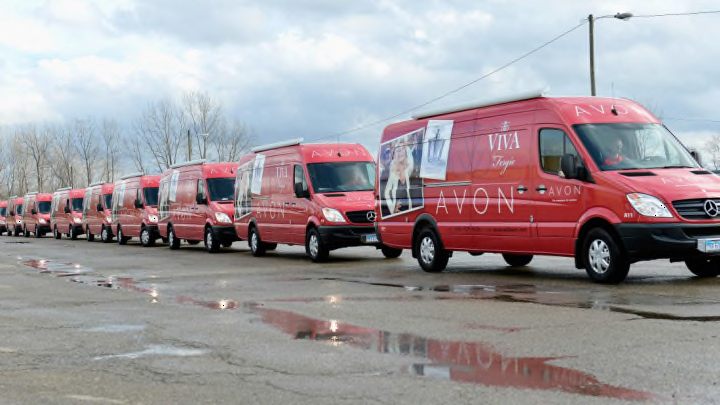
David H. McConnell started Avon in 1886 without meaning to. McConnell sold books door-to-door, but to lure in female customers he offered little gifts of perfume. Before long, the perfume McConnell was giving away had become more popular than the books he was selling, so he shifted focus and founded the California Perfume Company, which later became Avon.
2. NOKIA

The telecom giant got its start in Finland in 1865, when Fredrik Idestam opened a pulp mill and started making paper on the banks of Tammerkoski. The company later bounced around a number of industries before getting serious about phones in the 1960s.
3. 3M

When the Minnesota Mining and Manufacturing Company's founders opened their business in Two Harbors, Minnesota, in 1902, they weren't selling Post-It Notes. The partners originally planned to sell the mineral corundum, an important ingredient in building grinding wheels, directly to manufacturers.
4. WRIGLEY

Like Avon, the chewing gum company got its start with a popular freebie. William Wrigley, Jr. founded the company in 1891 with the goal of selling soap and baking powder. He offered chewing gum as an enticement to his customers, and eventually the customers didn't care about the baking powder; they only wanted the gum.
5. DUPONT

E.I. du Pont started the company that eventually became one of the world's largest chemical concerns in 1802 as a gunpowder business. Eventually the French immigrant expanded his business to include dynamite and other explosives before going into more diversified chemicals.
6. TIFFANY & CO.

The jewelry and silverware hot bed was originally a stationer called Tiffany, Young, and Ellis when it started in 1837. In 1853 Tiffany switched its core business and began focusing on jewelry.
7. HASBRO

The company behind Transformers and G.I. Joes began in 1923 as Hassenfeld Brothers. The titular brothers didn't make toys, though; they sold textile remnants. Their business gradually shifted into school supplies before making the leap to toys after the 1952 introduction of Mr. Potato Head.
8. COLECO
The defunct electronics corporation actually began as a leather goods company in Connecticut in 1932. In the early days it was known as the Connecticut Leather Company, which was later shortened to "Coleco." Oddly, fellow defunct computer marketer Tandy was also originally a leather goods company; it switched to electronics after acquiring RadioShack in 1963.
9. RAYTHEON

The defense contractor started up in 1922 as the American Appliance Company, which worked on refrigeration technology. Before long the company branched out into other areas of electronics and became Raytheon in 1925.
10. COLGATE

The hygienic products company got its start in 1806, but it didn't make its first toothpaste until 1873. Founder William Colgate initially manufactured soap, candles, and starch.
11. XEROX

When Xerox got off the ground in 1906, it was as a maker of photographic paper and photography equipment called the Haloid Company. The company didn't introduce what we would think of as a copier until the Xerox 914 made its debut in 1959.
12. JOHN DEERE

The man behind the giant fleet of green tractors got his start as a blacksmith in Grand Detour, Illinois. After struggling to make plows that could cut through the area's tough clay, Deere hit on the idea of building plows out of cast steel, and his blacksmith gig gave way to a booming farm-supply business.
13. READING ENTERTAINMENT

Remember the Reading Railroad from the last time you played Monopoly? The company still (sort of) exists! The Reading Company got out of the railroad business in 1976, but was reborn as Reading Entertainment, which operates movie theaters mainly in Australia, New Zealand, and the U.S.
14. BERKSHIRE HATHAWAY

The sprawling holding company helmed by Warren Buffett was originally a textile manufacturer that took off in 1839. Buffett took control in 1962, though, and by 1967 he started to move outside of textiles into insurance and other sectors.
15. ABERCROMBIE & FITCH

When David Abercrombie founded the clothing store in 1892 in New York City, he wasn't dreaming of clothing high school and college students everywhere. The store was originally a sporting goods shop and outfitter; Abercrombie even outfitted Charles Lindbergh for his famous flight across the Atlantic. The version of Abercrombie & Fitch you see in your local mall today started to come about after Limited Brands bought the company in 1988.