%20%20--%3E%0A%3Csvg%20version%3D%221.1%22%20id%3D%22Layer_1%22%20xmlns%3D%22http%3A%2F%2Fwww.w3.org%2F2000%2Fsvg%22%20xmlns%3Axlink%3D%22http%3A%2F%2Fwww.w3.org%2F1999%2Fxlink%22%20x%3D%220px%22%20y%3D%220px%22%0A%09%20viewBox%3D%220%200%20684.6%2068.1%22%20style%3D%22enable-background%3Anew%200%200%20684.6%2068.1%3B%22%20xml%3Aspace%3D%22preserve%22%3E%0A%3Cg%3E%0A%09%3Cpath%20d%3D%22M444.1%2C29.3h-17.4v14.5h17.4V29.3z%20M36.4%2C68.1l29.3-50.8V0H50.4L32.9%2C36.8L15.5%2C0H0v68.1h16.7V45.8l12.4%2C22.3H36.4z%0A%09%09%20M49.1%2C68.1h16.6V23.4L49.1%2C52.1V68.1z%20M76.6%2C68.1h45V53.8H93.3V41.6h21V27.1h-21V14.8h28.3V0.1h-45V68.1z%20M175.6%2C68.1h17.3v-68%0A%09%09h-16.5v40.3L150%2C0.1h-17.6v68h16.7V27.7L175.6%2C68.1z%20M235.8%2C14.8h15.4V0.1h-47.4v14.7H219v53.2h16.8V14.8z%20M290.3%2C45.9h-17.1%0A%09%09l7.5-15.6h2L290.3%2C45.9z%20M298.7%2C68.1h18l-32.2-68h-5.7l-32%2C68h18l3.3-7.1h27.1L298.7%2C68.1z%20M325.2%2C68.1h46.2V53.8h-29.6V0.1h-16.7%0A%09%09V68.1z%20M423.7%2C14.8h27.2V0.1H407v68h16.7V14.8z%20M462%2C68.1h46.2V53.8h-29.6V0.1H462V68.1z%20M564.8%2C34.1c0%2C10.7-7.2%2C19.2-18.5%2C19.2%0A%09%09c-11.4%2C0-18.5-8.5-18.5-19.2s7.1-19.2%2C18.5-19.2C557.6%2C14.9%2C564.8%2C23.4%2C564.8%2C34.1%20M580.6%2C34.1c0-19-14.2-34-34.3-34%0A%09%09c-20.2%2C0-34.3%2C15-34.3%2C34c0%2C19%2C14.1%2C34%2C34.3%2C34C566.4%2C68.1%2C580.6%2C53.1%2C580.6%2C34.1%20M604.8%2C20.5c0-4.1%2C3.3-6.2%2C6.7-6.2%0A%09%09c4.4%2C0%2C6.6%2C3%2C6.6%2C6.6h14.7C631.8%2C9.1%2C625.1%2C0.1%2C611%2C0.1c-12%2C0-21.7%2C9.3-21.7%2C20.6c0%2C10.9%2C5.9%2C15.9%2C16.7%2C19.8%0A%09%09c5.2%2C1.8%2C11.5%2C3.2%2C11.5%2C8c0%2C3.3-2.4%2C5.5-6.4%2C5.5c-3.6%2C0-6.6-3-6.6-6.7h-15.2c0%2C11.5%2C7.9%2C20.8%2C21.8%2C20.8c12%2C0%2C21.6-9.3%2C21.6-20.6%0A%09%09c0-10-5.3-16.4-16.7-19.8C610.6%2C26.1%2C604.8%2C25.3%2C604.8%2C20.5%20M670%2C20.9h14.7C683.8%2C9.1%2C677.1%2C0.1%2C663%2C0.1c-12%2C0-21.7%2C9.3-21.7%2C20.6%0A%09%09c0%2C10.9%2C5.9%2C15.9%2C16.7%2C19.8c5.2%2C1.8%2C11.5%2C3.2%2C11.5%2C8c0%2C3.3-2.4%2C5.5-6.4%2C5.5c-3.6%2C0-6.6-3-6.6-6.7h-15.2c0%2C11.5%2C7.9%2C20.8%2C21.8%2C20.8%0A%09%09c12%2C0%2C21.6-9.3%2C21.6-20.6c0-10-5.3-16.4-16.7-19.8c-5.4-1.6-11.3-2.4-11.3-7.2c0-4.1%2C3.3-6.2%2C6.7-6.2C667.7%2C14.4%2C670%2C17.3%2C670%2C20.9%0A%09%09%22%2F%3E%0A%3C%2Fg%3E%0A%3C%2Fsvg%3E%0A)

Long before our modern industries developed the cleaning products, industrial solvents, and drugs that can kill when misused, people used simple plants to murder each other. Some plants were especially effective.
1. Nightshade
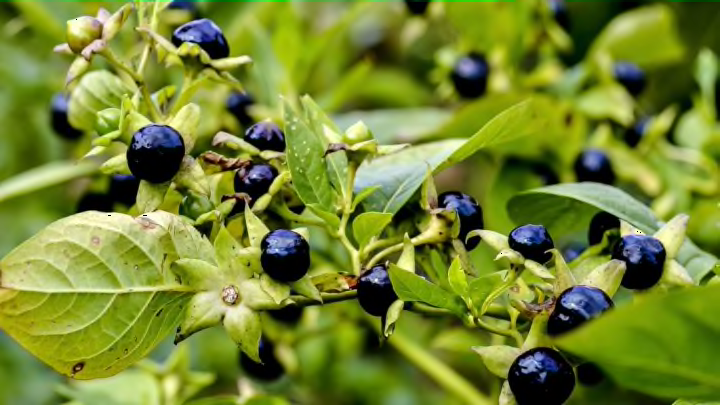
Atropa belladonna is also known as deadly nightshade. The flowering plant is native to Europe and can grow up to 10 feet tall if left to grow for years. Although all parts of the plant are poisonous, the shiny black berries are most poisonous. The words bella donna mean “pretty woman” in Italian. This name may have come from the use of belladonna to dilate the eyes in order to make a woman more attractive to men.
The alkaloid atropine is one of the active ingredients in nightshade. Atropine is used during surgery to regulate the heartbeat, decrease salivation, and paralyze muscles. In eye surgery, it relaxes the muscles and dilates the eye. Another drug found in nightshade is scopolamine, which has some of the same properties as atropine, and (in very dilute quantities) is also used for motion sickness and to combat drug addiction. Legend has it that when Agrippina the Younger hired the assassin Locusta to kill the Roman emperor Claudius, Locusta used nightshade. Before Macbeth became king in 1040, he supposedly used nightshade to poison an army of Danes who invaded Scotland.
2. Hemlock
Poison hemlock (Conium maculatum) is a flowering plant with fleshy, carrotlike roots that can grow up to 10 feet tall. This hemlock is no relation to the coniferous eastern hemlock tree in North America. All parts of the C. maculatum plant contain poison alkaloids. If ingested, C. maculatum will cause paralysis of various body systems. Paralysis of the respiratory system is the usual cause of death. A victim will remain aware of what is happening.
The most famous case of hemlock poisoning was that of Greek philosopher Socrates in 399 BCE. The 70-year-old was found guilty of heresy in a trial in Athens. His sentence was death by hemlock, and he had to drink the poison by his own hand.
3. Strychnine
Strychnine is made from seeds of the tree Strychnos nux-vomica, found in Asia and Australia. The poison was first isolated from the plant in 1818 by two French chemists, Pierre Joseph Pelletier and Joseph-Bienamé Caventou, who also isolated quinine (used to treat malaria) from its source. Strychnine has been used as a homeopathic remedy (in very diluted form), a performance-enhancing drug for athletes, a slight hallucinogenic used to cut street drugs, and most commonly as rat poison.
Strychnine is an alkaloid that paralyzes the victim and causes death by respiratory failure. There is no antidote for strychnine. Dr. Thomas Neil Cream killed at least seven women and one man, possibly many more, between 1878 and 1892 by giving them strychnine as medicine, both in the U.S. and England. After serving 10 years of a life sentence in America, he returned to London to continue poisoning his patients. Cream was convicted of murder in England and executed in 1892. Some have speculated that Cream might even be Jack the Ripper, but records indicate that Cream was in prison in the U.S. when the Whitechapel murders occurred.
4. Curare
Curare is a mixture of various South American plant compounds used for poison arrows and blowgun darts. One of the main ingredients is an extract of the plant Chondrodendron tomentosum. Curare is used for medicinal purposes in a highly diluted form. The main poison is an alkaloid, which causes paralysis and death much in the same way as strychnine and hemlock. However, after the respiratory system becomes paralyzed, the heart may continue beating for quite some time.
Death by curare is relatively slow and horrific, as the victim is awake and aware but cannot move or even speak. However, if artificial respiration is performed until the poison subsides, the victim may survive. Indigenous tribes of the Amazon basin used curare-laden arrows to hunt game for food. Curare does not affect those who eat the animals who were killed by it. A slightly different recipe for curare is used when the intended target is human. Curare has also been adapted for use as a muscle relaxant during surgery.
5. Arsenic
Arsenic is a metalloid element. It occurs in small amounts in air, water, and soil, and in greater amounts in volcanic ash and in copper and gold mines. Because it kills insects, a compound called chromated copper arsenate, or CCA, was used from the 1950s to 2003 to preserve pressure-treated wood. Arsenic has been used in medicines (it was once the indicated treatment for syphilis), chemical warfare, and as a pesticide. Various arsenic compounds are used to color paint and fireworks. It is also used to harden metal for ammunition and the process of bronzing.
Arsenic kills by inhibiting the production of necessary enzymes. Small amounts of arsenic ingested over time (possibly through drinking water) can raise the risk of developing cancer. Acute poisoning causes stomach cramps, diarrhea, confusion, convulsions, vomiting, and death. Murder by arsenic was popular in the Middle Ages; the substance was easy to procure and the symptoms of poisoning resembled those of cholera. Now, evidence of arsenic poisoning is easier to find. Chronic arsenic ingestion can be found months or years later in the victim's hair and fingernails. The most famous arsenic poisoners were the Borgia family in the Middle Ages. It was said that a little arsenic improved the taste of wine, and the gracious Borgias made sure their guests had the best-tasting wine possible.
A version of this story ran in 2009; it has been updated for 2021.