%20%20--%3E%0A%3Csvg%20version%3D%221.1%22%20id%3D%22Layer_1%22%20xmlns%3D%22http%3A%2F%2Fwww.w3.org%2F2000%2Fsvg%22%20xmlns%3Axlink%3D%22http%3A%2F%2Fwww.w3.org%2F1999%2Fxlink%22%20x%3D%220px%22%20y%3D%220px%22%0A%09%20viewBox%3D%220%200%20684.6%2068.1%22%20style%3D%22enable-background%3Anew%200%200%20684.6%2068.1%3B%22%20xml%3Aspace%3D%22preserve%22%3E%0A%3Cg%3E%0A%09%3Cpath%20d%3D%22M444.1%2C29.3h-17.4v14.5h17.4V29.3z%20M36.4%2C68.1l29.3-50.8V0H50.4L32.9%2C36.8L15.5%2C0H0v68.1h16.7V45.8l12.4%2C22.3H36.4z%0A%09%09%20M49.1%2C68.1h16.6V23.4L49.1%2C52.1V68.1z%20M76.6%2C68.1h45V53.8H93.3V41.6h21V27.1h-21V14.8h28.3V0.1h-45V68.1z%20M175.6%2C68.1h17.3v-68%0A%09%09h-16.5v40.3L150%2C0.1h-17.6v68h16.7V27.7L175.6%2C68.1z%20M235.8%2C14.8h15.4V0.1h-47.4v14.7H219v53.2h16.8V14.8z%20M290.3%2C45.9h-17.1%0A%09%09l7.5-15.6h2L290.3%2C45.9z%20M298.7%2C68.1h18l-32.2-68h-5.7l-32%2C68h18l3.3-7.1h27.1L298.7%2C68.1z%20M325.2%2C68.1h46.2V53.8h-29.6V0.1h-16.7%0A%09%09V68.1z%20M423.7%2C14.8h27.2V0.1H407v68h16.7V14.8z%20M462%2C68.1h46.2V53.8h-29.6V0.1H462V68.1z%20M564.8%2C34.1c0%2C10.7-7.2%2C19.2-18.5%2C19.2%0A%09%09c-11.4%2C0-18.5-8.5-18.5-19.2s7.1-19.2%2C18.5-19.2C557.6%2C14.9%2C564.8%2C23.4%2C564.8%2C34.1%20M580.6%2C34.1c0-19-14.2-34-34.3-34%0A%09%09c-20.2%2C0-34.3%2C15-34.3%2C34c0%2C19%2C14.1%2C34%2C34.3%2C34C566.4%2C68.1%2C580.6%2C53.1%2C580.6%2C34.1%20M604.8%2C20.5c0-4.1%2C3.3-6.2%2C6.7-6.2%0A%09%09c4.4%2C0%2C6.6%2C3%2C6.6%2C6.6h14.7C631.8%2C9.1%2C625.1%2C0.1%2C611%2C0.1c-12%2C0-21.7%2C9.3-21.7%2C20.6c0%2C10.9%2C5.9%2C15.9%2C16.7%2C19.8%0A%09%09c5.2%2C1.8%2C11.5%2C3.2%2C11.5%2C8c0%2C3.3-2.4%2C5.5-6.4%2C5.5c-3.6%2C0-6.6-3-6.6-6.7h-15.2c0%2C11.5%2C7.9%2C20.8%2C21.8%2C20.8c12%2C0%2C21.6-9.3%2C21.6-20.6%0A%09%09c0-10-5.3-16.4-16.7-19.8C610.6%2C26.1%2C604.8%2C25.3%2C604.8%2C20.5%20M670%2C20.9h14.7C683.8%2C9.1%2C677.1%2C0.1%2C663%2C0.1c-12%2C0-21.7%2C9.3-21.7%2C20.6%0A%09%09c0%2C10.9%2C5.9%2C15.9%2C16.7%2C19.8c5.2%2C1.8%2C11.5%2C3.2%2C11.5%2C8c0%2C3.3-2.4%2C5.5-6.4%2C5.5c-3.6%2C0-6.6-3-6.6-6.7h-15.2c0%2C11.5%2C7.9%2C20.8%2C21.8%2C20.8%0A%09%09c12%2C0%2C21.6-9.3%2C21.6-20.6c0-10-5.3-16.4-16.7-19.8c-5.4-1.6-11.3-2.4-11.3-7.2c0-4.1%2C3.3-6.2%2C6.7-6.2C667.7%2C14.4%2C670%2C17.3%2C670%2C20.9%0A%09%09%22%2F%3E%0A%3C%2Fg%3E%0A%3C%2Fsvg%3E%0A)

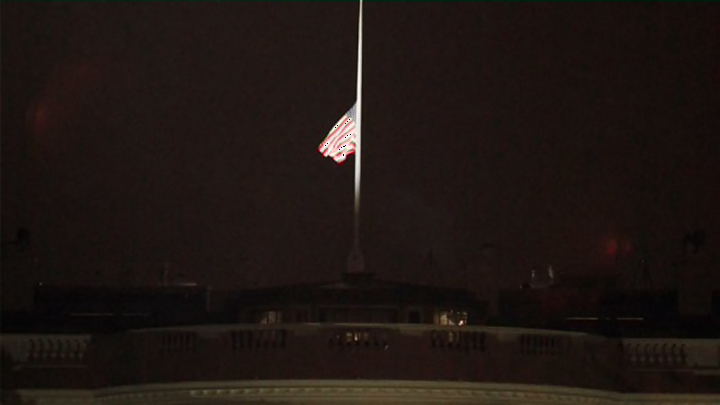
The White House flag is flying at half-staff to mourn the passing of Nelson Mandela. This has become a well-recognized symbol of national grieving, but where did the tradition originate, and how does the decision to lower the flag work?
How did the tradition of flying the flag at half-staff get started?
It's tough to say, but the oldest commonly accepted reference to a half-staff flag dates back to 1612, when the captain of the British ship Heart's Ease died on a journey to Canada. When the ship returned to London, it was flying its flag at half-mast to honor the departed captain.
Why would these sailors lower their flag to honor their departed captain?
According to one line of scholarly thinking, by lowering the Union Jack, the sailors were making room for the invisible flag of Death. This explanation jibes with the British tradition of flying a "half-staff" flag exactly one flag's width lower than its normal position to underscore that Death's flag is flapping above it.
How long is the flag flown at half-staff in the United States?
It depends on whom the nation is mourning. Title 4, Chapter 1, Section 7 of the United States Code outlines strict guidelines for how long the flag is flown at half-staff following the deaths of various members of the government.
The death of a current or former president lowers the flag for 30 days, while the current vice president, Chief Justice of the Supreme Court, and Speaker of the House receive 10 days of half-staff flying following their deaths.
Flags fly at half-staff from the day of death until the date of interment for cabinet secretaries, Associate Justices of the Supreme Court, former vice presidents, and the governors of states. The death of a current member of Congress lowers the flag to half-staff on the day of death and following day.
Does the President have any leeway when he's making these orders?
Yes, the President can make an executive order lowering the flag to half-staff to honor the passing of other important figures or tragic events. For example, President George W. Bush ordered the flags flown at half-staff until the interment of Pope John Paul II. For Mandela, the flags will remain at half-staff until sunset on December 9.
With national tragedies, the length of time seems to be a bit more arbitrary. Following the September 11th attacks, Bush ordered the flag be flown at half-staff until September 16, 2001. The Indian Ocean earthquake and resulting tsunamis in 2004 prompted flags to be flown at half-staff from a Monday through the end of the following Friday.
What days is the flag always flown at half-staff?
The flag always flies on half-staff on Patriot Day (September 11 of each year), Peace Officers Memorial Day (May 15), and Pearl Harbor Remembrance Day (December 7). On Memorial Day, the flag flies at half-staff until noon, at which point it is raised to the top of the staff.
What if I can't fly my flag at half-staff?
Some flags, like the ones commonly seen in school classrooms or on houses, are fixed in a certain position on their poles. How does one handle the sticky situation of a flag that physically can't be flown at half-staff? The United States Code doesn't cover this conundrum, but the American Legion advocates adding a black ribbon to the top of the flag's pole to indicate mourning.
Can anyone other than the President order flags to be flown at half-staff?
Sure. Governors of states, territories, and possessions have the authority under the federal flag code to order a half-staffing, as does the mayor of Washington, D.C.
It's not uncommon for a local mayor to order a half-staffing following the death of some prominent citizen, and occasionally businesses will half-staff their flags to honor the passing of a member of the company. Technically, these sorts of half-staffings aren't covered by the federal flag code. There's no penalty for breaking the federal flag code, though, so it's generally no big deal if a local leader wants to honor a prominent citizen in this way.
How does one raise a flag to half-staff?
Surprisingly, not just by raising it halfway up the flagpole. To properly fly a flag at half-staff in mourning, one quickly raises the flag to the peak of the pole before slowly lowering it back down to the half-staff position.
Portions of this post originally appeared in 2009.