%20%20--%3E%0A%3Csvg%20version%3D%221.1%22%20id%3D%22Layer_1%22%20xmlns%3D%22http%3A%2F%2Fwww.w3.org%2F2000%2Fsvg%22%20xmlns%3Axlink%3D%22http%3A%2F%2Fwww.w3.org%2F1999%2Fxlink%22%20x%3D%220px%22%20y%3D%220px%22%0A%09%20viewBox%3D%220%200%20684.6%2068.1%22%20style%3D%22enable-background%3Anew%200%200%20684.6%2068.1%3B%22%20xml%3Aspace%3D%22preserve%22%3E%0A%3Cg%3E%0A%09%3Cpath%20d%3D%22M444.1%2C29.3h-17.4v14.5h17.4V29.3z%20M36.4%2C68.1l29.3-50.8V0H50.4L32.9%2C36.8L15.5%2C0H0v68.1h16.7V45.8l12.4%2C22.3H36.4z%0A%09%09%20M49.1%2C68.1h16.6V23.4L49.1%2C52.1V68.1z%20M76.6%2C68.1h45V53.8H93.3V41.6h21V27.1h-21V14.8h28.3V0.1h-45V68.1z%20M175.6%2C68.1h17.3v-68%0A%09%09h-16.5v40.3L150%2C0.1h-17.6v68h16.7V27.7L175.6%2C68.1z%20M235.8%2C14.8h15.4V0.1h-47.4v14.7H219v53.2h16.8V14.8z%20M290.3%2C45.9h-17.1%0A%09%09l7.5-15.6h2L290.3%2C45.9z%20M298.7%2C68.1h18l-32.2-68h-5.7l-32%2C68h18l3.3-7.1h27.1L298.7%2C68.1z%20M325.2%2C68.1h46.2V53.8h-29.6V0.1h-16.7%0A%09%09V68.1z%20M423.7%2C14.8h27.2V0.1H407v68h16.7V14.8z%20M462%2C68.1h46.2V53.8h-29.6V0.1H462V68.1z%20M564.8%2C34.1c0%2C10.7-7.2%2C19.2-18.5%2C19.2%0A%09%09c-11.4%2C0-18.5-8.5-18.5-19.2s7.1-19.2%2C18.5-19.2C557.6%2C14.9%2C564.8%2C23.4%2C564.8%2C34.1%20M580.6%2C34.1c0-19-14.2-34-34.3-34%0A%09%09c-20.2%2C0-34.3%2C15-34.3%2C34c0%2C19%2C14.1%2C34%2C34.3%2C34C566.4%2C68.1%2C580.6%2C53.1%2C580.6%2C34.1%20M604.8%2C20.5c0-4.1%2C3.3-6.2%2C6.7-6.2%0A%09%09c4.4%2C0%2C6.6%2C3%2C6.6%2C6.6h14.7C631.8%2C9.1%2C625.1%2C0.1%2C611%2C0.1c-12%2C0-21.7%2C9.3-21.7%2C20.6c0%2C10.9%2C5.9%2C15.9%2C16.7%2C19.8%0A%09%09c5.2%2C1.8%2C11.5%2C3.2%2C11.5%2C8c0%2C3.3-2.4%2C5.5-6.4%2C5.5c-3.6%2C0-6.6-3-6.6-6.7h-15.2c0%2C11.5%2C7.9%2C20.8%2C21.8%2C20.8c12%2C0%2C21.6-9.3%2C21.6-20.6%0A%09%09c0-10-5.3-16.4-16.7-19.8C610.6%2C26.1%2C604.8%2C25.3%2C604.8%2C20.5%20M670%2C20.9h14.7C683.8%2C9.1%2C677.1%2C0.1%2C663%2C0.1c-12%2C0-21.7%2C9.3-21.7%2C20.6%0A%09%09c0%2C10.9%2C5.9%2C15.9%2C16.7%2C19.8c5.2%2C1.8%2C11.5%2C3.2%2C11.5%2C8c0%2C3.3-2.4%2C5.5-6.4%2C5.5c-3.6%2C0-6.6-3-6.6-6.7h-15.2c0%2C11.5%2C7.9%2C20.8%2C21.8%2C20.8%0A%09%09c12%2C0%2C21.6-9.3%2C21.6-20.6c0-10-5.3-16.4-16.7-19.8c-5.4-1.6-11.3-2.4-11.3-7.2c0-4.1%2C3.3-6.2%2C6.7-6.2C667.7%2C14.4%2C670%2C17.3%2C670%2C20.9%0A%09%09%22%2F%3E%0A%3C%2Fg%3E%0A%3C%2Fsvg%3E%0A)

THE DILEMMA
You find yourself at a Chinese restaurant craving cylindrical food. But of which variety?
WHO YOU CAN IMPRESS
All the folks down at Hunan Garden. No longer do you need to hang your head in shame!
THE QUICK TRICK
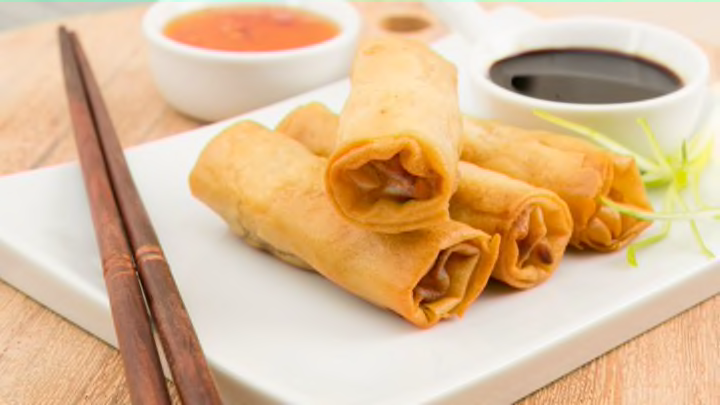
If it's got a shell like a deep fried tortilla, it's probably an egg roll. And if you're thinking that deep frying tortillas is awfully American for Chinese food, you're onto something.
THE REASON
The main gustatory difference between a spring roll and its egg cousin is that spring rolls have thin, often translucent flour wrappers and usually aren't fried, while egg rolls have thicker, deep-fried wrappings. Also, spring rolls in America are often filled with carrots and bamboo, while egg rolls are more likely to be filled with meat and bean shoots. Oh, and one other difference: Spring rolls are Chinese; egg rolls probably aren't.
In fact, Chinese cuisine in America is so vastly different from Chinese cuisine in China that many American Chinese restaurants advertise, beneath their English names, the words "Westernized Food" in Chinese.
In the 19th century, the primary audience for Chinese food was railroad workers, a group of people not widely known for their sophisticated palates. Chinese restaurateurs sought to accommodate both Chinese immigrants working the rails and their white coworkers—and in doing so created "fusion cuisine" long before it was hip. While some argue that egg rolls existed in China prior to their appearance in America, many food scholars believe that the egg roll is an American original. Besides the legendary roll, there are many staples of American Chinese food you'll rarely if ever see in China: fried rice, crab Rangoon, chow mein, sweet and sour pork, and General Tso's chicken. Also, fortune cookies (see sidebar). What do all these meals have in common? Frying, which is a staple of American Chinese food but somewhat less important in authentic Chinese cuisine.
As for the spring roll, though, around the late 1980s, Americans began to turn against the very Chinese food they'd helped to invent. No longer could we afford to eat deep-fried, high-sodium foods slathered in MSG. And so more authentic Chinese restaurants started popping up, and with them came the reemergence of the light and healthy spring roll. American Chinese cuisine still dominates the market in small towns, but the number of authentic restaurants grows every year.
HOW THE FORTUNE COOKIE CRUMBLES
Unlike the spring roll, the fortune cookie is not Chinese. And unlike the egg roll, fortune cookies aren't Chinese-American, either. They're actually Japanese-American. Makato Hagiwara, who designed (and for many years lived in) the Japanese Tea Garden in San Francisco's Golden Gate Park, invented the fortune cookie in the early 20th century. He intended the cookie to be a snack for people walking through the tea garden, but the concept became so popular that Chinese restaurants in San Francisco's Chinatown stole the idea. Soon, the cookies were ubiquitous. Sadly, Hagiwara himself ended up suffering from bad fortune: In 1942, he and his family were evicted from the Tea Garden and sent, along with thousands of other Japanese-Americans, to live in internment camps.
Still confused? Find more answers to life's persistent questions in What's the Difference?, a mental_floss book edited by John Green.