%20%20--%3E%0A%3Csvg%20version%3D%221.1%22%20id%3D%22Layer_1%22%20xmlns%3D%22http%3A%2F%2Fwww.w3.org%2F2000%2Fsvg%22%20xmlns%3Axlink%3D%22http%3A%2F%2Fwww.w3.org%2F1999%2Fxlink%22%20x%3D%220px%22%20y%3D%220px%22%0A%09%20viewBox%3D%220%200%20684.6%2068.1%22%20style%3D%22enable-background%3Anew%200%200%20684.6%2068.1%3B%22%20xml%3Aspace%3D%22preserve%22%3E%0A%3Cg%3E%0A%09%3Cpath%20d%3D%22M444.1%2C29.3h-17.4v14.5h17.4V29.3z%20M36.4%2C68.1l29.3-50.8V0H50.4L32.9%2C36.8L15.5%2C0H0v68.1h16.7V45.8l12.4%2C22.3H36.4z%0A%09%09%20M49.1%2C68.1h16.6V23.4L49.1%2C52.1V68.1z%20M76.6%2C68.1h45V53.8H93.3V41.6h21V27.1h-21V14.8h28.3V0.1h-45V68.1z%20M175.6%2C68.1h17.3v-68%0A%09%09h-16.5v40.3L150%2C0.1h-17.6v68h16.7V27.7L175.6%2C68.1z%20M235.8%2C14.8h15.4V0.1h-47.4v14.7H219v53.2h16.8V14.8z%20M290.3%2C45.9h-17.1%0A%09%09l7.5-15.6h2L290.3%2C45.9z%20M298.7%2C68.1h18l-32.2-68h-5.7l-32%2C68h18l3.3-7.1h27.1L298.7%2C68.1z%20M325.2%2C68.1h46.2V53.8h-29.6V0.1h-16.7%0A%09%09V68.1z%20M423.7%2C14.8h27.2V0.1H407v68h16.7V14.8z%20M462%2C68.1h46.2V53.8h-29.6V0.1H462V68.1z%20M564.8%2C34.1c0%2C10.7-7.2%2C19.2-18.5%2C19.2%0A%09%09c-11.4%2C0-18.5-8.5-18.5-19.2s7.1-19.2%2C18.5-19.2C557.6%2C14.9%2C564.8%2C23.4%2C564.8%2C34.1%20M580.6%2C34.1c0-19-14.2-34-34.3-34%0A%09%09c-20.2%2C0-34.3%2C15-34.3%2C34c0%2C19%2C14.1%2C34%2C34.3%2C34C566.4%2C68.1%2C580.6%2C53.1%2C580.6%2C34.1%20M604.8%2C20.5c0-4.1%2C3.3-6.2%2C6.7-6.2%0A%09%09c4.4%2C0%2C6.6%2C3%2C6.6%2C6.6h14.7C631.8%2C9.1%2C625.1%2C0.1%2C611%2C0.1c-12%2C0-21.7%2C9.3-21.7%2C20.6c0%2C10.9%2C5.9%2C15.9%2C16.7%2C19.8%0A%09%09c5.2%2C1.8%2C11.5%2C3.2%2C11.5%2C8c0%2C3.3-2.4%2C5.5-6.4%2C5.5c-3.6%2C0-6.6-3-6.6-6.7h-15.2c0%2C11.5%2C7.9%2C20.8%2C21.8%2C20.8c12%2C0%2C21.6-9.3%2C21.6-20.6%0A%09%09c0-10-5.3-16.4-16.7-19.8C610.6%2C26.1%2C604.8%2C25.3%2C604.8%2C20.5%20M670%2C20.9h14.7C683.8%2C9.1%2C677.1%2C0.1%2C663%2C0.1c-12%2C0-21.7%2C9.3-21.7%2C20.6%0A%09%09c0%2C10.9%2C5.9%2C15.9%2C16.7%2C19.8c5.2%2C1.8%2C11.5%2C3.2%2C11.5%2C8c0%2C3.3-2.4%2C5.5-6.4%2C5.5c-3.6%2C0-6.6-3-6.6-6.7h-15.2c0%2C11.5%2C7.9%2C20.8%2C21.8%2C20.8%0A%09%09c12%2C0%2C21.6-9.3%2C21.6-20.6c0-10-5.3-16.4-16.7-19.8c-5.4-1.6-11.3-2.4-11.3-7.2c0-4.1%2C3.3-6.2%2C6.7-6.2C667.7%2C14.4%2C670%2C17.3%2C670%2C20.9%0A%09%09%22%2F%3E%0A%3C%2Fg%3E%0A%3C%2Fsvg%3E%0A)

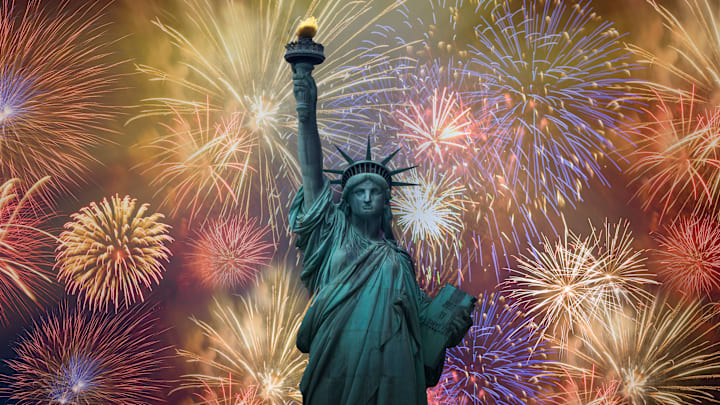
The celebration of American Independence Day has never been small, subdued, or quiet. From sea to shining sea, the Fourth of July is illuminated with colorful displays in major cities, small towns, and backyards. The fireworks that burst in the sky on the Fourth of July have come a long way in the millennia since they were first created.
A Brief History of Fireworks
The history of pyrotechnics began around 2000 years ago, when a Chinese alchemist accidentally developed gunpowder by mixing sulphur, charcoal, and saltpeter. Even in its early form, huo yao (“fire chemical”) was used to make loud noises for celebrations and to scare away spirits. A monk named Li Tian is often credited with inventing firecrackers about 1000 years ago by stuffing huo yao into a bamboo tube.
It’s unclear who brought gunpowder to Europe—some credit Marco Polo with introducing fireworks to the continent, while others argue Europeans first encountered gunpowder earlier via the Crusaders. Europeans used gunpowder in weaponry, but also deployed fireworks in various festivals and celebrations; they were notably featured in King Henry VII’s 1486 wedding. Italians developed the pyrotechnic shows we’re used to seeing in the 1830s, and even today, many of the major American pyrotechnic companies are run by families of Italian ancestry, such as Fireworks by Grucci and Zambelli Fireworks Internationale.
Fireworks came to the New World with the European settlers; a popular legend claims Captain John Smith lit them in the Jamestown colony. And after the British colonists broke free from the king’s rule, fireworks became a traditional part of Independence Day events.
Why We Celebrate the Fourth of July With Fireworks
Today, fireworks are a unifying factor in the many ways America honors the Fourth of July. John Adams would be pleased: On July 3, 1776—the day after the Founding Fathers finished the final draft of the Declaration of Independence—Adams wrote to his wife, Abigail, about the momentous occasion (though he predicted the wrong date for the holiday that would commemorate American independence):
“The Second Day of July 1776, will be the most memorable Epocha, in the History of America. I am apt to believe that it will be celebrated, by succeeding Generations, as the great anniversary Festival. It ought to be commemorated, as the Day of Deliverance by solemn Acts of Devotion to God Almighty. It ought to be solemnized with Pomp and Parade, with Shews, Games, Sports, Guns, Bells, Bonfires and Illuminations from one End of this Continent to the other from this Time forward forever more.”
Adams may have gotten the date wrong, but he was right about the festivities. Independence Day’s first anniversary was celebrated with the pomp and circumstance we would recognize today—complete with fireworks. As the Virginia Gazette reported, people Philadelphia set the sky ablaze on July 4, 1777:
“The evening was closed with the ringing of bells, and at night there was a grand exhibition of fireworks, which began and concluded with thirteen rockets on the commons, and the city was beautifully illuminated. Every thing was conducted with the greatest order and decorum, and the face of joy and gladness was universal. Thus may the 4th of July, that glorious and ever memorable day, be celebrated through America, by the sons of freedom, from age to age till time shall be no more.”
The War of 1812 brought more fireworks traditions to Independence Day celebrations. Francis Scott Key wrote a poem entitled “Defence of Fort McHenry” while watching a battle rage in 1814. It was later set to the tune of a drinking song, retitled “The Star-Spangled Banner,” and became the U.S. national anthem. The lines “the rocket’s red glare, the bombs bursting in air” reinforce the use of fireworks in patriotic displays. Another composition, “The 1812 Overture,” has been co-opted to use in public fireworks displays, although the tune was written by Tchaikovsky about Napoleon’s unsuccessful invasion of Russia.
The fiery festivities continued. By the early 20th century, the revelry had become so rambunctious it prompted one Pennsylvania lawyer to begin advocating for safer celebrations. Rather than light dangerous fireworks, Charles Pennypacker wanted people to enjoy more low-key activities. “The price of five skyrockets will buy a hammock, whose swing delights youth and old age in all lands,” he encouraged (Pennypacker also suggested people go for a trolley ride or bake a “cake with deviled eggs”). Overtime, various cities and states passed laws either regulating or outright banning the use of fireworks.
Several states now allow fireworks, though restrictions vary. Today, Americans continue to host private celebrations in their yards (unless they live in Massachusetts), or gather together to watch their town or city’s explosive displays on the Fourth of July.
A version of this story originally ran in 2007; it has been updated for 2023.