%20%20--%3E%0A%3Csvg%20version%3D%221.1%22%20id%3D%22Layer_1%22%20xmlns%3D%22http%3A%2F%2Fwww.w3.org%2F2000%2Fsvg%22%20xmlns%3Axlink%3D%22http%3A%2F%2Fwww.w3.org%2F1999%2Fxlink%22%20x%3D%220px%22%20y%3D%220px%22%0A%09%20viewBox%3D%220%200%20684.6%2068.1%22%20style%3D%22enable-background%3Anew%200%200%20684.6%2068.1%3B%22%20xml%3Aspace%3D%22preserve%22%3E%0A%3Cg%3E%0A%09%3Cpath%20d%3D%22M444.1%2C29.3h-17.4v14.5h17.4V29.3z%20M36.4%2C68.1l29.3-50.8V0H50.4L32.9%2C36.8L15.5%2C0H0v68.1h16.7V45.8l12.4%2C22.3H36.4z%0A%09%09%20M49.1%2C68.1h16.6V23.4L49.1%2C52.1V68.1z%20M76.6%2C68.1h45V53.8H93.3V41.6h21V27.1h-21V14.8h28.3V0.1h-45V68.1z%20M175.6%2C68.1h17.3v-68%0A%09%09h-16.5v40.3L150%2C0.1h-17.6v68h16.7V27.7L175.6%2C68.1z%20M235.8%2C14.8h15.4V0.1h-47.4v14.7H219v53.2h16.8V14.8z%20M290.3%2C45.9h-17.1%0A%09%09l7.5-15.6h2L290.3%2C45.9z%20M298.7%2C68.1h18l-32.2-68h-5.7l-32%2C68h18l3.3-7.1h27.1L298.7%2C68.1z%20M325.2%2C68.1h46.2V53.8h-29.6V0.1h-16.7%0A%09%09V68.1z%20M423.7%2C14.8h27.2V0.1H407v68h16.7V14.8z%20M462%2C68.1h46.2V53.8h-29.6V0.1H462V68.1z%20M564.8%2C34.1c0%2C10.7-7.2%2C19.2-18.5%2C19.2%0A%09%09c-11.4%2C0-18.5-8.5-18.5-19.2s7.1-19.2%2C18.5-19.2C557.6%2C14.9%2C564.8%2C23.4%2C564.8%2C34.1%20M580.6%2C34.1c0-19-14.2-34-34.3-34%0A%09%09c-20.2%2C0-34.3%2C15-34.3%2C34c0%2C19%2C14.1%2C34%2C34.3%2C34C566.4%2C68.1%2C580.6%2C53.1%2C580.6%2C34.1%20M604.8%2C20.5c0-4.1%2C3.3-6.2%2C6.7-6.2%0A%09%09c4.4%2C0%2C6.6%2C3%2C6.6%2C6.6h14.7C631.8%2C9.1%2C625.1%2C0.1%2C611%2C0.1c-12%2C0-21.7%2C9.3-21.7%2C20.6c0%2C10.9%2C5.9%2C15.9%2C16.7%2C19.8%0A%09%09c5.2%2C1.8%2C11.5%2C3.2%2C11.5%2C8c0%2C3.3-2.4%2C5.5-6.4%2C5.5c-3.6%2C0-6.6-3-6.6-6.7h-15.2c0%2C11.5%2C7.9%2C20.8%2C21.8%2C20.8c12%2C0%2C21.6-9.3%2C21.6-20.6%0A%09%09c0-10-5.3-16.4-16.7-19.8C610.6%2C26.1%2C604.8%2C25.3%2C604.8%2C20.5%20M670%2C20.9h14.7C683.8%2C9.1%2C677.1%2C0.1%2C663%2C0.1c-12%2C0-21.7%2C9.3-21.7%2C20.6%0A%09%09c0%2C10.9%2C5.9%2C15.9%2C16.7%2C19.8c5.2%2C1.8%2C11.5%2C3.2%2C11.5%2C8c0%2C3.3-2.4%2C5.5-6.4%2C5.5c-3.6%2C0-6.6-3-6.6-6.7h-15.2c0%2C11.5%2C7.9%2C20.8%2C21.8%2C20.8%0A%09%09c12%2C0%2C21.6-9.3%2C21.6-20.6c0-10-5.3-16.4-16.7-19.8c-5.4-1.6-11.3-2.4-11.3-7.2c0-4.1%2C3.3-6.2%2C6.7-6.2C667.7%2C14.4%2C670%2C17.3%2C670%2C20.9%0A%09%09%22%2F%3E%0A%3C%2Fg%3E%0A%3C%2Fsvg%3E%0A)

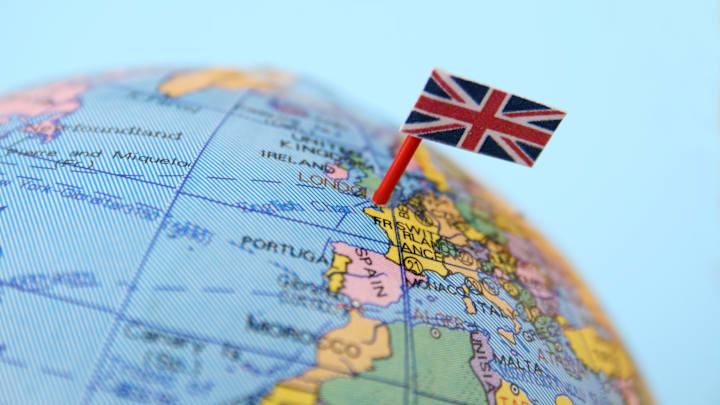
If you live in the UK, you’ve probably had the irritating experience of trying to find United Kingdom in a list of countries, only to discover that some well-meaning person has listed the country under the name Great Britain instead. It’s an annoyance, but it’s also indicative of a wider problem: people just don’t know how to refer to the UK.
All over the world, people use the terms England, Great Britain, and the United Kingdom interchangeably, even though they all mean different things. Indeed, a fair chunk of actual Britons probably can’t articulate the difference either—and don’t exactly help perceptions by referring to themselves as “British” rather than “United Kingdomers.”
But in case you’re ever wondering how you should refer to the UK (and, perhaps more importantly, how you shouldn’t), here’s a quick guide to understanding the various ways to refer to the rainy corner of northwest Europe that once ran the largest empire in history.
United Kingdom
Often abbreviated to just “UK," the United Kingdom is a shortened form of the country’s full name, which is the United Kingdom of Great Britain and Northern Ireland. The state itself consists of four component countries—England, Scotland, Wales, and Northern Ireland—and if you’re referring to all four as a single body, you should always use the phrase United Kingdom to describe them.
Although England is the largest of the UK’s four states, and the one in which the UK’s government traditionally meets, it is nonetheless only a component of the UK, and shouldn’t be used to describe the entire country. Visiting Edinburgh, for example, is not visiting England, just as visiting Trenton is not visiting Massachusetts.
Great Britain
Great Britain is the name of the largest island in the British Isles and is also a political entity consisting of three countries: England, Scotland, and Wales. It is sometimes used interchangeably with the term United Kingdom, but to prevent confusion—and to avoid possible offense to those from Northern Ireland—it’s best if you don’t do this. As the UK’s full name suggests, Northern Ireland is not part of Great Britain, hence United Kingdom of Great Britain and Northern Ireland.
To add even more to the confusion, there are some islands that are part of these countries (like England’s Isle of Wight and Scotland’s Isle of Skye) that, although not on the physical island of Great Britain itself, are often included because they’re part of countries that are predominantly on Great Britain. So political Great Britain is slightly larger than geographic Great Britain.
But if you get this wrong, you can at least take comfort in knowing you’re not the only one to do so. Even the UK’s official Olympic team styles itself as “Team GB,” despite including athletes from Northern Ireland.
Ireland
Ireland—also called Éire—is the second largest island of the British Isles, and is divided into the UK-affiliated Northern Ireland and the independent Irish state, the Republic of Ireland. It’s not uncommon to shorten Republic of Ireland to just Ireland, but again, to avoid confusion it’s best to use the full name.
The British Isles
The British Isles is the collective name for as many as 6000 smaller islands that surround Great Britain and Ireland. Although a purely geographical term in that it does not refer to specific nations, it is nonetheless politically controversial because it includes the Republic of Ireland, even though many of its citizens would never describe themselves as “British.” Indeed, the Republic of Ireland does not recognize the term and some have argued that it should be replaced internationally with British and Irish Isles, or perhaps an even more generic term such as Atlantic Archipelago.
The British Islands
This term is little-used by the general public but is defined in law to avoid any confusion with the British Isles. The British Islands specifically refers to the UK and its three self-governing Crown Dependencies: the Isle of Man, the Bailiwick of Jersey, and the Bailiwick of Guernsey, which are not part of the United Kingdom but are geographically close to it.
Unlike British Isles, The British Islands is definitely a political definition and refers to the countries and dependencies local to the UK; it does not include the Republic of Ireland or even any British Overseas Territories, such as Gibraltar or the Falkland Islands.
Britain
Here’s where things get really confusing: Although commonly used as a colloquial shorthand for the UK, Britain is also a political entity that doesn’t really exist anymore. We’ve established that Great Britain is the name of the island containing England, Scotland, and Wales, but Britain is really an archaic term for the Roman territory of Britannia, also called “Britannia Major” to distinguish it from Britannia Minor (the area of France now called Brittany). Scotland was never conquered by the Romans, so Britain—if you’re being pedantic—refers only to England and Wales.
It’s probably best to assume anyone who says “Britain” is just shortening “Great Britain” for convenience—unless you’re actually in second-century Britain, in which case you probably have bigger problems.
Have you got a Big Question you'd like us to answer? If so, let us know by emailing us at bigquestions@mentalfloss.com.
Read More About Geography:
A version of this story originally ran in 2016; it has been updated for 2025.