%20%20--%3E%0A%3Csvg%20version%3D%221.1%22%20id%3D%22Layer_1%22%20xmlns%3D%22http%3A%2F%2Fwww.w3.org%2F2000%2Fsvg%22%20xmlns%3Axlink%3D%22http%3A%2F%2Fwww.w3.org%2F1999%2Fxlink%22%20x%3D%220px%22%20y%3D%220px%22%0A%09%20viewBox%3D%220%200%20684.6%2068.1%22%20style%3D%22enable-background%3Anew%200%200%20684.6%2068.1%3B%22%20xml%3Aspace%3D%22preserve%22%3E%0A%3Cg%3E%0A%09%3Cpath%20d%3D%22M444.1%2C29.3h-17.4v14.5h17.4V29.3z%20M36.4%2C68.1l29.3-50.8V0H50.4L32.9%2C36.8L15.5%2C0H0v68.1h16.7V45.8l12.4%2C22.3H36.4z%0A%09%09%20M49.1%2C68.1h16.6V23.4L49.1%2C52.1V68.1z%20M76.6%2C68.1h45V53.8H93.3V41.6h21V27.1h-21V14.8h28.3V0.1h-45V68.1z%20M175.6%2C68.1h17.3v-68%0A%09%09h-16.5v40.3L150%2C0.1h-17.6v68h16.7V27.7L175.6%2C68.1z%20M235.8%2C14.8h15.4V0.1h-47.4v14.7H219v53.2h16.8V14.8z%20M290.3%2C45.9h-17.1%0A%09%09l7.5-15.6h2L290.3%2C45.9z%20M298.7%2C68.1h18l-32.2-68h-5.7l-32%2C68h18l3.3-7.1h27.1L298.7%2C68.1z%20M325.2%2C68.1h46.2V53.8h-29.6V0.1h-16.7%0A%09%09V68.1z%20M423.7%2C14.8h27.2V0.1H407v68h16.7V14.8z%20M462%2C68.1h46.2V53.8h-29.6V0.1H462V68.1z%20M564.8%2C34.1c0%2C10.7-7.2%2C19.2-18.5%2C19.2%0A%09%09c-11.4%2C0-18.5-8.5-18.5-19.2s7.1-19.2%2C18.5-19.2C557.6%2C14.9%2C564.8%2C23.4%2C564.8%2C34.1%20M580.6%2C34.1c0-19-14.2-34-34.3-34%0A%09%09c-20.2%2C0-34.3%2C15-34.3%2C34c0%2C19%2C14.1%2C34%2C34.3%2C34C566.4%2C68.1%2C580.6%2C53.1%2C580.6%2C34.1%20M604.8%2C20.5c0-4.1%2C3.3-6.2%2C6.7-6.2%0A%09%09c4.4%2C0%2C6.6%2C3%2C6.6%2C6.6h14.7C631.8%2C9.1%2C625.1%2C0.1%2C611%2C0.1c-12%2C0-21.7%2C9.3-21.7%2C20.6c0%2C10.9%2C5.9%2C15.9%2C16.7%2C19.8%0A%09%09c5.2%2C1.8%2C11.5%2C3.2%2C11.5%2C8c0%2C3.3-2.4%2C5.5-6.4%2C5.5c-3.6%2C0-6.6-3-6.6-6.7h-15.2c0%2C11.5%2C7.9%2C20.8%2C21.8%2C20.8c12%2C0%2C21.6-9.3%2C21.6-20.6%0A%09%09c0-10-5.3-16.4-16.7-19.8C610.6%2C26.1%2C604.8%2C25.3%2C604.8%2C20.5%20M670%2C20.9h14.7C683.8%2C9.1%2C677.1%2C0.1%2C663%2C0.1c-12%2C0-21.7%2C9.3-21.7%2C20.6%0A%09%09c0%2C10.9%2C5.9%2C15.9%2C16.7%2C19.8c5.2%2C1.8%2C11.5%2C3.2%2C11.5%2C8c0%2C3.3-2.4%2C5.5-6.4%2C5.5c-3.6%2C0-6.6-3-6.6-6.7h-15.2c0%2C11.5%2C7.9%2C20.8%2C21.8%2C20.8%0A%09%09c12%2C0%2C21.6-9.3%2C21.6-20.6c0-10-5.3-16.4-16.7-19.8c-5.4-1.6-11.3-2.4-11.3-7.2c0-4.1%2C3.3-6.2%2C6.7-6.2C667.7%2C14.4%2C670%2C17.3%2C670%2C20.9%0A%09%09%22%2F%3E%0A%3C%2Fg%3E%0A%3C%2Fsvg%3E%0A)

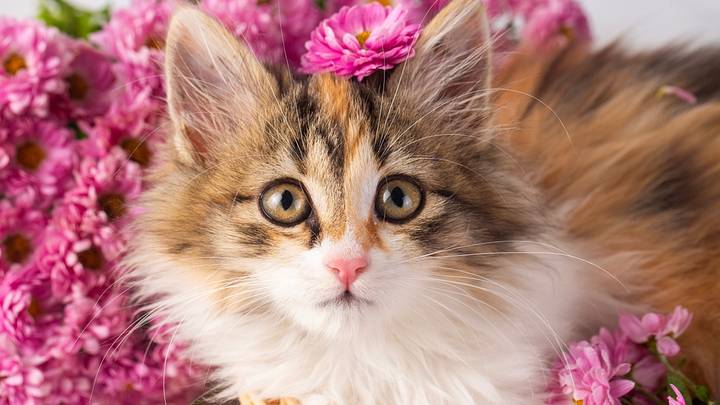
Cats can be rather peculiar creatures. These elegant and graceful—yet sometimes extremely awkward and hilarious—beings are beloved parts of many people’s homes. As anyone who’s owned a cat can attest, cats are independent creatures, and their behavior is often unpredictable and sometimes downright mystifying.
Fortunately, there are some common and strange cat habits that animal behaviorists and veterinarians do understand. Here, learn the secrets to 20 common cat behaviors.
- The Zoomies
- Kneading
- Gifts of Prey
- Bunting
- Knocking Things Over
- Purring
- Belly-Up
- Open Jaw
- Slow-Blinking
- Winking
- Wagging Their Tails
- Scratching Furniture
- Licking
- Peeing Outside the Litter Box
- Eating Grass
- Squeezing Into Small Spaces
- Biting
- Drinking From the Faucet
- Twitching Ears
- Chirping and Chittering
The Zoomies

According to the Oakland Veterinary Referral Services, zoomies are more formally known as frenetic random activity periods (FRAPs), and both cats and dogs can experience them. These periods are completely normal, and they can have a number of causes. The most common catalyst for the zoomies, of course, is pent-up energy; some cats just need to burn off some steam, just like some people need to go for runs or dance it out on occasion.
Zoomies can also be caused by boredom, hunger, or latent hunting instincts that surge and cause cats to chase after imaginary prey. They often occur at dawn or in the evening because cats are crepuscular creatures, meaning they are most active at twilight but typically sleep intermittently throughout the day. They can also occur after a cat uses their litter box due to a sense of relief after going to the bathroom, which might result from vagus nerve stimulation after a poop.
In general, zoomies are ordinary and nothing to worry about—other than the fact that you might want to watch out for any breakable objects if your cat is having the zoomies inside. If your cat’s tail is upright, it's meowing playfully, and their ears are neutral or pointed forward, that’s a sign that it's relaxed. If their ears are pressed back, this might be a sign that their zoomies are more related to stress or anxiety.
Kneading
Kneading, which is often called “making biscuits,” is an extremely common cat behavior, albeit one that can be annoying—especially if your cat has sharp claws.
Cats actually typically begin kneading when they are kittens, and they instinctively perform this action during nursing to help their mothers with milk production. In the wild, some cats will also knead grasses to prepare to sleep. Cats also have scent glands between their toes, and kneading is a way to release their scent onto a surface, marking their territory. Additionally, kneading is believed to release dopamine in cats, which can be a reason they return to this habit again and again.
If a cat kneads you, it can be a sign that your cat feels comfortable with you and maybe even associates you with its mother. Excessive kneading, however, can be a sign of stress, which can be worth bringing up with a veterinarian—especially if you notice your cat is kneading a lot more than usual.
In general, it’s never a good idea to punish your cat for kneading. Declawing your cat is never the answer, as this can cause ongoing pain and nerve damage. Instead, the easiest strategy is simply to place a blanket between yourself and your cat when they’re trying to knead you, and simply keeping your cat’s nails clipped is also never a bad idea.
Gifts of Prey
One feline habit that can be more disconcerting than others is some cats’ tendency to bring dead animals home. Unfortunately, these objects aren’t actually special gifts for you. Instead, cats usually bring their prey back to places they feel safe in so they can store it or eat it without being bothered.
Bunting
When a cat butts its head against you, it is most likely indicating that it feels comfortable with you—and that it wants to mark you as its territory. Cats have scent glands on their foreheads, chins, and cheeks, and when they push their heads up against you, this releases pheromones that can indicate to other cats and animals that a person or place is theirs.
This behavior, which is called bunting, can also be a way to reduce stress, to express affection, and to receive comfort. If your cat does this to you, you might respond with some affectionate pets to show the message has been received.
Knocking Things Over

There’s no one clear reason why cats seem to absolutely love to knock things over. Most cat behavior analysts believe this behavior has its roots in cats’ instinctual desire to hunt; by knocking things over, they can satisfy a bit of that craving. Simple curiousity can also play a role, and also, your cat might constantly knock things over while you’re around because it’s learned that you’ll always come over when they do that.
If knocking things over is becoming a problem, you might try to provide your cat with toys and entertainment that can help them feel the thrill of the hunt without destroying yet another vase or glass. Also, it could be a good idea not to come over immediately when they knock things over to prevent them from associating the behavior with human attention.
Purring
Purring is generally considered to be a universal signifier of kitty bliss, but this is not necessarily the case. Typically, purring indicates a cat is deeply content, drowsy, and happy. However, cats can also purr when they are sick or in pain as a way of asking for help, and purring can also be a cry for attention.
Belly-Up

If you’ve ever encountered a cat who rolls over on their back and shows you its belly, only to roll away immediately when you try to pet it, there’s a logical reason for this—or at least, one that makes perfect sense in the realm of cat logic.
Cats sometimes will show you their belly as a way to display that they trust you or as a way to invite you to play, but this doesn’t necessarily mean they want a belly rub; it might just be more of a signal of love than an invitation to come closer. Some cats also sleep with their bellies up, so be sure you’re not interrupting a sleeping miniature tiger before you reach down and try to give some rubs. Finally, if a cat is lying on their back with their ears pinned back—and especially if they’re hissing—the cat might actually be in a defensive position, so going anywhere near a cat’s belly when they look like this is a surefire way to receive a swipe.
Open Jaw
Cats generally always breathe through their noses, so it’s not so common to see a cat with its mouth open—unless, of course, it’s in the middle of a massive yawn.
Aside from that, our furry friends might have their mouths open for a variety of different reasons. If your cat seems to be sneering or making a face that looks like they’re reacting to a bad smell, this might be the flehmen response—a behavior that cats and other animals, including horses and goats, display in order to take in a certain scent more fully. This action allows air to pass through their vomeronasal organ (VMO), which lets cats process hormones and pheromones and allows them to detect information ranging from another cat’s health and readiness for mating to human emotion, according to some studies.
If a cat has its mouth open for a period of time longer than a minute or so, though, this can also be a sign of respiratory disease, heart problems, or other ailments. You’ll definitely need to contact a vet immediately if the cat has its mouth open and is also drooling, wheezing, or collapsing, or if its gums look pale and blue or gray.
Slow-Blinking

The best way to your cat’s heart may not be through smiling and cooing, but through learning to speak their language—and using your eyes to communicate your love. Research has shown that cats can indeed communicate love and trust by blinking very slowly, and when humans do this to cats, they'll most likely get the message. Just make sure the cat is already in a relaxed state, as staring for a long time at an already agitated or uncertain cat can indeed make them uncomfortable, just as it would a human.
Winking
Unfortunately, if your cat winks at you, it probably doesn’t mean they’re actually sentient, have understood every word you’ve ever said this whole time, and are plotting world domination. It turns out that winking most likely has exactly the same meaning as a slow blink. Sometimes called “cat kisses,” winks and slow blinks are typically clear signs that your kitty loves you very much. Just watch out for excessive winking, as this can mean that your cat might actually have an eye infection—or that a cat-led global revolution is most definitely coming soon.
Wagging Their Tails
While a wagging tail on a dog is a near-universal sign of excitement and happiness, it's a little different for cats. Feline tail-wagging is often a sign of anxiety, worry, or excitement, and this behavior can indicate that your cat is stressed, on edge, or annoyed. It's best to step away and give your cat some space if you see their tail flickering—especially if it's moving quickly or puffed up. "The thrashing tail generally means ‘stop what you are doing or I am going to get angry and might bite you,'" said Evelyn Kass, DVM. However, if you see the very tip of your cat's tail wiggling just slightly, it could be a sign that it's preparing to pounce on a toy or their prey.
Scratching Furniture
If you've ever walked into a room only to discover that your cat has torn the edges of your couch to shreds, you're not alone. But your cat's destructive-seeming behaviors may actually be the result of very natural instincts. Cats generally scratch for one main reason—to keep their nails short and manageable—which is why it's a good idea to provide them with a scratching pole, especially if they're not outdoor cats. Additionally, cats might scratch indoors in order to mark their territories, or simply to blow off a little steam.
Licking

Unexpectedly feeling a cat's rough tongue on your skin might be a surprising and not altogether pleasant sensation, but this is simply their way of showing you a little love. “A cat will lick their humans to show care and affection. When your cat licks you, they are creating a special social bond with you,” says veterinarian JoAnna Pendergrass. “This licking behavior stems from kittenhood, when a mama cat licks her kittens to groom and show affection.”
Peeing Outside the Litter Box
No cat owner wants to come home to the smell of cat urine, but unfortunately, this is sometimes a reality of pet ownership. Still, it's definitely not something to get complacent about. In general, urination outside of the litter box is a sign that your cat isn't happy with some part of their living situation. It might mean that the cat isn't pleased with how infrequently the litter box has been cleaned, or that the litter box is too small, used by too many cats, or has some other issue.
It also could mean that your cat is stressed, which could be because you've recently brought a new animal or human into the house, because a person or animal is bothering your cat while they're trying to use the litter box, or some other reason.
If you witness this behavior, it's a good idea to take action immediately by consulting your vet and examining any factors that might be causing your pet undue stress. You could also try a new litter box and new litter, while using odor-neutralizing products on any spots your cat has been using as an impromptu bathroom.
Eating Grass
If you've ever spotted your cat chowing down on grass and wondered why, there's a surprisingly practical reason behind this behavior. Though some cats snack on grass for the taste, they may also do so in order to help with an upset stomach and to fight off parasites. Grass can induce vomiting and act as a natural laxative in cats, both of which can help clear hairballs, bones, parasites, and other unwanted material out of their systems. In general, it's not unhealthy for cats to eat grass, as long as they're doing so in relative moderation and the grass hasn't been treated with pesticides or herbicides.
Squeezing Into Small Spaces
When cats squeeze themselves into grocery bags and delivery boxes, it can make for an adorable photo for you—but for your cat, it's likely a way to make themselves feel safe. Like many of the behaviors on this list, this action has its roots in cats' wild instincts. Small, enclosed spaces keep cats hidden from predators, making them feel secure, warm, and cozy and generally lowering their anxiety. Additionally, small, enclosed spaces are ideal places to hide and wait to ambush prey. They're often warm, too, which doesn't hurt!
Biting
Not all cat bites have the same meaning. If your cat gives you little nips, especially during petting sessions, they might simply be using a kittenish technique to show some love. If those bites are painful or distressing to you, it might be a good idea to give them toys to chew on and play with in order to distract them.
However, if your cat is staring at you, pinning back their ears, or hissing before biting you, and if the bites are hard or escalating in intensity, this behavior might be a sign of aggression and might require behavior modifications, medication, or other treatment approaches.
Drinking From the Faucet

Some cats seem to enjoy drinking from faucets a whole lot more than their bowls. This is sometimes because of the same reason that humans usually prefer fresh water over water that has been sitting out for a while—it might simply be cooler and taste a bit better. Additionally, cats' evolutionary instincts tell them that running water is generally fresher than standing water.
A third possible reason for your cat's sink-water preference could be that they might dislike the placement of their bowls. Regardless, if you're tired of your cat constantly interrupting your hand-washing sessions, you could always invest in a cat water fountain.
Twitching Ears
Cats' ears are controlled by over 30 muscles, and if you watch a feline, you'll notice that their ears are almost constantly in motion. Cats' ears are also key to understanding their emotions. Pinned-back "airplane" ears might indicate that they're angry, while little twitches most likely indicate that they're listening to something—or that their ears are itchy. If you're noticing excessive or constant ear-twitching, it could be a sign of ear mites, allergies, or other itch-inducing issues. Most likely, though, it's just an indication that your cat is listening closely to a whole bunch of sounds you probably can't hear.
Chirping and Chittering
You'll most likely hear these sounds from your cat if it's sitting at the window watching birds, squirrels, or other critters. Cats frequently chirp and chitter as a way of expressing excitement over prey, and they most frequently do this when there are other cats around to chitter with. It's not hard to imagine that this behavior is your cat's way of saying, "Look at the amazing birds—I can't wait to get my jaws in one!" Of course, this behavior can have a number of divergent causes, including excitement, frustration, or curiosity. Ultimately, it's just another way of your kitty sharing their feelings and emotions with the world.