%20%20--%3E%0A%3Csvg%20version%3D%221.1%22%20id%3D%22Layer_1%22%20xmlns%3D%22http%3A%2F%2Fwww.w3.org%2F2000%2Fsvg%22%20xmlns%3Axlink%3D%22http%3A%2F%2Fwww.w3.org%2F1999%2Fxlink%22%20x%3D%220px%22%20y%3D%220px%22%0A%09%20viewBox%3D%220%200%20684.6%2068.1%22%20style%3D%22enable-background%3Anew%200%200%20684.6%2068.1%3B%22%20xml%3Aspace%3D%22preserve%22%3E%0A%3Cg%3E%0A%09%3Cpath%20d%3D%22M444.1%2C29.3h-17.4v14.5h17.4V29.3z%20M36.4%2C68.1l29.3-50.8V0H50.4L32.9%2C36.8L15.5%2C0H0v68.1h16.7V45.8l12.4%2C22.3H36.4z%0A%09%09%20M49.1%2C68.1h16.6V23.4L49.1%2C52.1V68.1z%20M76.6%2C68.1h45V53.8H93.3V41.6h21V27.1h-21V14.8h28.3V0.1h-45V68.1z%20M175.6%2C68.1h17.3v-68%0A%09%09h-16.5v40.3L150%2C0.1h-17.6v68h16.7V27.7L175.6%2C68.1z%20M235.8%2C14.8h15.4V0.1h-47.4v14.7H219v53.2h16.8V14.8z%20M290.3%2C45.9h-17.1%0A%09%09l7.5-15.6h2L290.3%2C45.9z%20M298.7%2C68.1h18l-32.2-68h-5.7l-32%2C68h18l3.3-7.1h27.1L298.7%2C68.1z%20M325.2%2C68.1h46.2V53.8h-29.6V0.1h-16.7%0A%09%09V68.1z%20M423.7%2C14.8h27.2V0.1H407v68h16.7V14.8z%20M462%2C68.1h46.2V53.8h-29.6V0.1H462V68.1z%20M564.8%2C34.1c0%2C10.7-7.2%2C19.2-18.5%2C19.2%0A%09%09c-11.4%2C0-18.5-8.5-18.5-19.2s7.1-19.2%2C18.5-19.2C557.6%2C14.9%2C564.8%2C23.4%2C564.8%2C34.1%20M580.6%2C34.1c0-19-14.2-34-34.3-34%0A%09%09c-20.2%2C0-34.3%2C15-34.3%2C34c0%2C19%2C14.1%2C34%2C34.3%2C34C566.4%2C68.1%2C580.6%2C53.1%2C580.6%2C34.1%20M604.8%2C20.5c0-4.1%2C3.3-6.2%2C6.7-6.2%0A%09%09c4.4%2C0%2C6.6%2C3%2C6.6%2C6.6h14.7C631.8%2C9.1%2C625.1%2C0.1%2C611%2C0.1c-12%2C0-21.7%2C9.3-21.7%2C20.6c0%2C10.9%2C5.9%2C15.9%2C16.7%2C19.8%0A%09%09c5.2%2C1.8%2C11.5%2C3.2%2C11.5%2C8c0%2C3.3-2.4%2C5.5-6.4%2C5.5c-3.6%2C0-6.6-3-6.6-6.7h-15.2c0%2C11.5%2C7.9%2C20.8%2C21.8%2C20.8c12%2C0%2C21.6-9.3%2C21.6-20.6%0A%09%09c0-10-5.3-16.4-16.7-19.8C610.6%2C26.1%2C604.8%2C25.3%2C604.8%2C20.5%20M670%2C20.9h14.7C683.8%2C9.1%2C677.1%2C0.1%2C663%2C0.1c-12%2C0-21.7%2C9.3-21.7%2C20.6%0A%09%09c0%2C10.9%2C5.9%2C15.9%2C16.7%2C19.8c5.2%2C1.8%2C11.5%2C3.2%2C11.5%2C8c0%2C3.3-2.4%2C5.5-6.4%2C5.5c-3.6%2C0-6.6-3-6.6-6.7h-15.2c0%2C11.5%2C7.9%2C20.8%2C21.8%2C20.8%0A%09%09c12%2C0%2C21.6-9.3%2C21.6-20.6c0-10-5.3-16.4-16.7-19.8c-5.4-1.6-11.3-2.4-11.3-7.2c0-4.1%2C3.3-6.2%2C6.7-6.2C667.7%2C14.4%2C670%2C17.3%2C670%2C20.9%0A%09%09%22%2F%3E%0A%3C%2Fg%3E%0A%3C%2Fsvg%3E%0A)

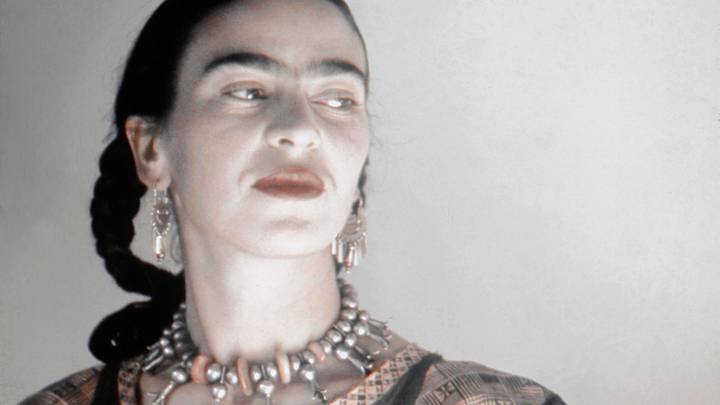
The Mexican artist Frida Kahlo was renowned for her paintings and other visual artworks, including numerous self-portraits. However, her written work also reveals a great deal about her and shows the importance of words as well as images in understanding a creative figure.
Here is a look at some of Kahlo’s handwritten work and what it tells us about her, both as an artist and as a human being.
A legacy of letters

Kahlo conducted a great deal of correspondence by letter with family, friends, and romantic partners throughout her life. Many of those letters survive to this day and are held by museums and libraries around the world, and a number of them have also surfaced at auction and been purchased by private collectors.
In addition, she kept a personal journal that combined her handwritten reflections with vivid color illustrations and numerous sketches in the margins. Kahlo’s handwritten notes and letters illustrate that she was fluent in both Spanish and English, and could move comfortably between the two languages.
What Frida Kahlo wrote about

Kahlo’s letters are frequently intimate and informal. She often showed vulnerability to others in discussing her personal troubles, including her chronic health problems. She would sometimes add the imprint of a lipstick kiss to letters to close friends; these lipstick marks can be seen in her notes to her boyfriend, Ignacio Aguirre, from the mid-1930s.
When the letters were sold at auction by Sotheby’s many years later, the item description even singled out this detail: “Signed by the artist, with drawings and lipstick kisses.” Lipstick traces can also be found on letters to her fellow artist Diego Rivera (“Diego, mi amor”), with whom she had an emotional and turbulent on-off relationship across a quarter of a century.
How Frida Kahlo signed her letters

The way Kahlo signed her letters gives a strong sense of the personality that infused her work. She usually used only her first name, and it was much less common for her to sign her full name.
Most of her surviving correspondence is signed off with the single name “Frida,” and only a handful use “Frida Kahlo” in its entirety to conclude the letter. Expert analysis of Kahlo’s handwriting has also indicated that she composed her written work at a calm, measured pace and did not rush her notes and letters.
She also seemingly showed precision through the careful dotting of the letter ‘i’ throughout her handwritten work. This is indicative of her strong determination, equally visible in her writing as in the images she created.
An interweaving of art, letters, and friendship

One of the ways in which Kahlo interwove images and text in her work can be seen in the way she added illustrations to some of her letters, as shown in notes to friends including Clara Strang Weatherwax, to whom she penned a letter in 1931 that included a drawing of a cameo-style portrait of a woman.
Kahlo also wrote notes designed to help her friends, even when the content was formal rather than personal. One note, dated August 2, 1947, is a statement written to accompany visual works that a friend of hers was taking from Mexico to America.
Kahlo wrote to confirm the authenticity of the works, and to clarify that this meant they would not be subject to customs duties upon her friend’s entry to the U.S.: “The drawings that Mr. Arthur Sidon and the persons accompanying him are originals of mine, and are gifts that I have made to them, so they are free of [customs] duties.”
Kahlo understood that by making this statement, she would ease their passage to the United States and ensure they could bring her work with them without further complications.
Even in notes intended as formal statements, Kahlo showed how deeply her writing was infused with her own personality, including a keen awareness of the value that both her words and her images had in the lives of those close to her.
The 2027 Mental Floss Amazing Facts Calendar is now on sale! Order yours today.