%20%20--%3E%0A%3Csvg%20version%3D%221.1%22%20id%3D%22Layer_1%22%20xmlns%3D%22http%3A%2F%2Fwww.w3.org%2F2000%2Fsvg%22%20xmlns%3Axlink%3D%22http%3A%2F%2Fwww.w3.org%2F1999%2Fxlink%22%20x%3D%220px%22%20y%3D%220px%22%0A%09%20viewBox%3D%220%200%20684.6%2068.1%22%20style%3D%22enable-background%3Anew%200%200%20684.6%2068.1%3B%22%20xml%3Aspace%3D%22preserve%22%3E%0A%3Cg%3E%0A%09%3Cpath%20d%3D%22M444.1%2C29.3h-17.4v14.5h17.4V29.3z%20M36.4%2C68.1l29.3-50.8V0H50.4L32.9%2C36.8L15.5%2C0H0v68.1h16.7V45.8l12.4%2C22.3H36.4z%0A%09%09%20M49.1%2C68.1h16.6V23.4L49.1%2C52.1V68.1z%20M76.6%2C68.1h45V53.8H93.3V41.6h21V27.1h-21V14.8h28.3V0.1h-45V68.1z%20M175.6%2C68.1h17.3v-68%0A%09%09h-16.5v40.3L150%2C0.1h-17.6v68h16.7V27.7L175.6%2C68.1z%20M235.8%2C14.8h15.4V0.1h-47.4v14.7H219v53.2h16.8V14.8z%20M290.3%2C45.9h-17.1%0A%09%09l7.5-15.6h2L290.3%2C45.9z%20M298.7%2C68.1h18l-32.2-68h-5.7l-32%2C68h18l3.3-7.1h27.1L298.7%2C68.1z%20M325.2%2C68.1h46.2V53.8h-29.6V0.1h-16.7%0A%09%09V68.1z%20M423.7%2C14.8h27.2V0.1H407v68h16.7V14.8z%20M462%2C68.1h46.2V53.8h-29.6V0.1H462V68.1z%20M564.8%2C34.1c0%2C10.7-7.2%2C19.2-18.5%2C19.2%0A%09%09c-11.4%2C0-18.5-8.5-18.5-19.2s7.1-19.2%2C18.5-19.2C557.6%2C14.9%2C564.8%2C23.4%2C564.8%2C34.1%20M580.6%2C34.1c0-19-14.2-34-34.3-34%0A%09%09c-20.2%2C0-34.3%2C15-34.3%2C34c0%2C19%2C14.1%2C34%2C34.3%2C34C566.4%2C68.1%2C580.6%2C53.1%2C580.6%2C34.1%20M604.8%2C20.5c0-4.1%2C3.3-6.2%2C6.7-6.2%0A%09%09c4.4%2C0%2C6.6%2C3%2C6.6%2C6.6h14.7C631.8%2C9.1%2C625.1%2C0.1%2C611%2C0.1c-12%2C0-21.7%2C9.3-21.7%2C20.6c0%2C10.9%2C5.9%2C15.9%2C16.7%2C19.8%0A%09%09c5.2%2C1.8%2C11.5%2C3.2%2C11.5%2C8c0%2C3.3-2.4%2C5.5-6.4%2C5.5c-3.6%2C0-6.6-3-6.6-6.7h-15.2c0%2C11.5%2C7.9%2C20.8%2C21.8%2C20.8c12%2C0%2C21.6-9.3%2C21.6-20.6%0A%09%09c0-10-5.3-16.4-16.7-19.8C610.6%2C26.1%2C604.8%2C25.3%2C604.8%2C20.5%20M670%2C20.9h14.7C683.8%2C9.1%2C677.1%2C0.1%2C663%2C0.1c-12%2C0-21.7%2C9.3-21.7%2C20.6%0A%09%09c0%2C10.9%2C5.9%2C15.9%2C16.7%2C19.8c5.2%2C1.8%2C11.5%2C3.2%2C11.5%2C8c0%2C3.3-2.4%2C5.5-6.4%2C5.5c-3.6%2C0-6.6-3-6.6-6.7h-15.2c0%2C11.5%2C7.9%2C20.8%2C21.8%2C20.8%0A%09%09c12%2C0%2C21.6-9.3%2C21.6-20.6c0-10-5.3-16.4-16.7-19.8c-5.4-1.6-11.3-2.4-11.3-7.2c0-4.1%2C3.3-6.2%2C6.7-6.2C667.7%2C14.4%2C670%2C17.3%2C670%2C20.9%0A%09%09%22%2F%3E%0A%3C%2Fg%3E%0A%3C%2Fsvg%3E%0A)

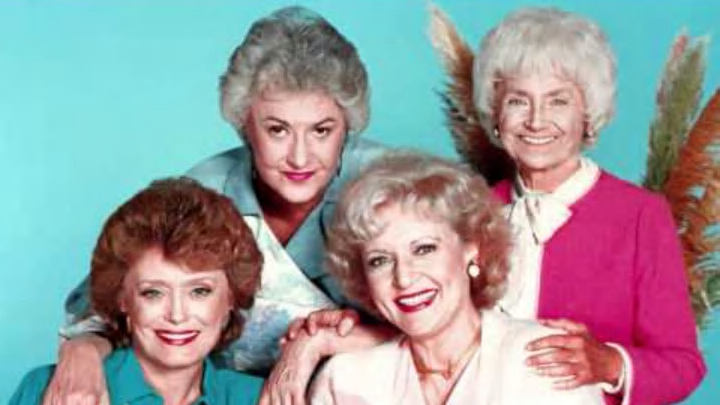
Though The Golden Girls made its debut on September 14, 1985, the series still remains fresh for generations of new viewers thanks to great writing and syndicated reruns. Here are 20 things you might not have known about Dorothy, Rose, Blanche, and Sophia.
- Lee Grant was series creator Susan Harris’s first choice for Dorothy.
- NBC was against casting Bea Arthur.
- Rue McClanahan pushed Arthur to pursue the part.
- Betty White and McClanahan passed the time with word games.
- Estelle Getty was a year younger than her TV daughter.
- Getty suffered from extreme stage fright.
- McClanahan’s favorite episode was “Journey to the Center of Attention.”
- Queen Elizabeth was a huge Golden Girls fan.
- There were only three chairs at the kitchen table for a reason.
- Arthur always got the center chair.
- The kitchen set was a hand-me-down.
- Dorothy’s last name came from the show’s stage manager.
- White’s favorite episode was “A Little Romance.”
- Arthur did not have pierced ears.
- Getty had a phobia about death.
- McClanahan got to keep Blanche’s clothes.
- One episode was autobiographical for Harris.
- Blanche’s Miami home was located in Los Angeles.
- Dorothy’s shoes were a nod to Arthur’s personal style.
- The show introduced a new word to viewers.
Lee Grant was series creator Susan Harris’s first choice for Dorothy.
Grant had starred in Harris's short-lived 1978 sitcom, Fay. Grant, however, was reportedly unenthusiastic about playing a grandmother, so the part was eventually offered to Bea Arthur—though not immediately.
NBC was against casting Bea Arthur.

Harris actually wrote the role of Dorothy with Arthur in mind, having worked with the actress on several episodes of Maude. But then-NBC president Brandon Tartikoff was against the idea, stating that Arthur’s “Q” score (a rating system of a performer’s audience appeal) was too low—she was recognizable, but not “loveable,” thanks to Maude’s liberal leanings. Broadway legend Elaine Stritch was a contender for the part, but she alienated the producers by improvising her dialogue and dropping an f-bomb during her audition.
You Might Also Like ...
- 11 Beguiling ‘The Golden Girls’ Fan Theories
- Rose Nylund’s Rules to Live By, in 25 Quotes
- 11 Golden Girls References Explained for Younger Viewers
Add Mental Floss as a preferred news source!
Rue McClanahan pushed Arthur to pursue the part.

Rue McClanahan gave her reluctant Maude co-star the final push to convince her to give The Golden Girls a try. According to McClanahan, she phoned Arthur and asked her incredulously, “Why are you going to turn down the best script that’s ever going to come across your desk as long as you live?”
Betty White and McClanahan passed the time with word games.

Betty White had always been a fierce competitor when she appeared on Password back in the day, and she found a kindred spirit in McClanahan when it came to word games. The two ladies frequently played alphabet games in between takes.
Estelle Getty was a year younger than her TV daughter.
During the show's first season, it took the makeup department 45 minutes to transform Getty into Sophia Petrillo. That aging process became even more complex when Getty turned up looking even younger when season two began (she’d had a facelift during the summer hiatus).
Getty suffered from extreme stage fright.

McClanahan recalled that Getty would seem to have a “black cloud” hanging over her head beginning Thursdays during dress rehearsal. During Friday tapings she would often freeze on camera. She was the least experienced actress of the four, and it intimidated her. In a 1988 interview she stated that working every week with talent like Arthur and White scared her out of her wits. She felt like a fraud and worried that the fans would “find out” that she wasn’t as good as her co-stars.
McClanahan’s favorite episode was “Journey to the Center of Attention.”
It’s the Season 7 episode in which Dorothy uncharacteristically becomes popular at The Rusty Anchor, Blanche’s favorite place for meeting men. At McClanahan's request, the producers hired choreographer Gregory Scott Young to carefully stage the scene where Blanche seductively sings “I Want to Be Loved by You” on top of a grand piano while encountering one mishap after another.
Queen Elizabeth was a huge Golden Girls fan.

The Queen invited the stars of the show to perform live at 1988’s Royal Variety Performance in London. The Girls reenacted two of their kitchen table scenes (with a bit of censoring, so as not to offend any royal sensibilities). One line that was surprisingly left intact was Sophia’s interjection to Dorothy’s question to Blanche about how long she had waited to have sex again after her husband had died. The then-88-year-old Queen Mum was spotted in the Royal Box chuckling heartily at Sophia’s risqué response: “Until the paramedics came.”
There were only three chairs at the kitchen table for a reason.

Eagle-eyed fans have noticed over the years that although there were four women living in the Miami house, there were always only three chairs around that famous kitchen table. That was strictly due to the limitations of filming—to avoid either squeezing all four shoulder-to-shoulder or having one actress with her back to the camera.
Arthur always got the center chair.
Bea was always given the center chair, both because of her height and also in order to catch her priceless facial expressions. The placement of the other characters around the table depended upon the particular situation, and which character might need to exit the kitchen. On those occasions when all four characters had to be seated, a tall stool was scooted up to the outskirt of the conclave.
The kitchen set was a hand-me-down.
Speaking of that iconic kitchen: the main reason for its particular design was that it was a set left over from another short-lived Harris sitcom called It Takes Two. It starred Richard Crenna and Patty Duke Astin as a dual-career couple—he was a doctor, she was a lawyer—with two teenaged children.
Dorothy’s last name came from the show’s stage manager.
Dorothy’s last name was lifted from Kent Zbornak, who worked as the stage manager for the show for the entire run of the series. Susan Harris had worked with Kent on Soap in 1977 and fell in love with his surname.
White’s favorite episode was “A Little Romance.”
In this first season episode, Rose is reluctant to introduce the ladies to her new boyfriend, psychiatrist Dr. Jonathan Newman, because he is a little person. White said that despite the fact that “every ‘short’ joke in the book” was used, none of the humor was truly hurtful.
Arthur did not have pierced ears.
All of those “crazy earrings” (Arthur's words) that Golden Girls stylist Judy Evans gave Dorothy were clip-ons. Arthur loved the dramatic effect of the jewelry, but hated that her ears were numb with pain by the end of the day.
Getty had a phobia about death.
Which was a definite handicap when starring in a show about four senior women. It was a tribute to Getty's acting skills that Sophia always seemed very nonchalant and effortlessly tossed off quips in funeral home scenes.
McClanahan got to keep Blanche’s clothes.
McClanahan had a clause written into her contract that allowed her to keep all of Blanche’s custom-made clothing. She reportedly had 13 closets full of the designer duds.
One episode was autobiographical for Harris.
The two-part episode entitled “Sick and Tired” was based on Susan Harris’s real-life struggle with chronic fatigue syndrome, and Dorothy’s struggle to find a doctor who would take her symptoms seriously is still relevant for many women. A 2011 study showed that 62 percent of doctors referred men to cardiologists when they complained of chest pain and shortness of breath, while less than 30 percent did the same for their female patients—instead, they counseled those women to “take it easy” and prescribed them anti-anxiety medications.
Blanche’s Miami home was located in Los Angeles.
Even though the Girls’ official address was 6151 Richmond Street in Miami, Florida, the original exterior shots of Blanche’s house were of a home located at 245 North Saltair Avenue in Los Angeles, California. According to real estate records, that 2901-square-foot house has four bedrooms and four bathrooms and is valued at more than $5 million.
Dorothy’s shoes were a nod to Arthur’s personal style.
The nearly 5-foot-10-inch actress once stated in an interview that when she was younger she wished she could wear heels, but that would have meant towering over most of her dates in high school, and then later over the actors she worked with in the theater. By the time “heightism” was no longer a concern, Arthur found that she couldn’t balance properly or walk elegantly in even 1-inch heels.
The show introduced a new word to viewers.
The Golden Girls introduced a new word to non-Floridian viewers: lanai. Architecturally speaking, a lanai is a porch or veranda with a cement floor and an awning and is sometimes also enclosed by screens. Of course, we can always count on Sophia to simplify matters:
Dorothy: We are throwing a surprise birthday party for Blanche. I want you to go out to the lanai and mingle with the other guests.
Sophia: Check! ... What’s a lanai?
Dorothy: The porch!
Sophia: Excuse me, Krystle Carrington!
A version of this story ran in 2014; it has been updated for 2025.