%20%20--%3E%0A%3Csvg%20version%3D%221.1%22%20id%3D%22Layer_1%22%20xmlns%3D%22http%3A%2F%2Fwww.w3.org%2F2000%2Fsvg%22%20xmlns%3Axlink%3D%22http%3A%2F%2Fwww.w3.org%2F1999%2Fxlink%22%20x%3D%220px%22%20y%3D%220px%22%0A%09%20viewBox%3D%220%200%20684.6%2068.1%22%20style%3D%22enable-background%3Anew%200%200%20684.6%2068.1%3B%22%20xml%3Aspace%3D%22preserve%22%3E%0A%3Cg%3E%0A%09%3Cpath%20d%3D%22M444.1%2C29.3h-17.4v14.5h17.4V29.3z%20M36.4%2C68.1l29.3-50.8V0H50.4L32.9%2C36.8L15.5%2C0H0v68.1h16.7V45.8l12.4%2C22.3H36.4z%0A%09%09%20M49.1%2C68.1h16.6V23.4L49.1%2C52.1V68.1z%20M76.6%2C68.1h45V53.8H93.3V41.6h21V27.1h-21V14.8h28.3V0.1h-45V68.1z%20M175.6%2C68.1h17.3v-68%0A%09%09h-16.5v40.3L150%2C0.1h-17.6v68h16.7V27.7L175.6%2C68.1z%20M235.8%2C14.8h15.4V0.1h-47.4v14.7H219v53.2h16.8V14.8z%20M290.3%2C45.9h-17.1%0A%09%09l7.5-15.6h2L290.3%2C45.9z%20M298.7%2C68.1h18l-32.2-68h-5.7l-32%2C68h18l3.3-7.1h27.1L298.7%2C68.1z%20M325.2%2C68.1h46.2V53.8h-29.6V0.1h-16.7%0A%09%09V68.1z%20M423.7%2C14.8h27.2V0.1H407v68h16.7V14.8z%20M462%2C68.1h46.2V53.8h-29.6V0.1H462V68.1z%20M564.8%2C34.1c0%2C10.7-7.2%2C19.2-18.5%2C19.2%0A%09%09c-11.4%2C0-18.5-8.5-18.5-19.2s7.1-19.2%2C18.5-19.2C557.6%2C14.9%2C564.8%2C23.4%2C564.8%2C34.1%20M580.6%2C34.1c0-19-14.2-34-34.3-34%0A%09%09c-20.2%2C0-34.3%2C15-34.3%2C34c0%2C19%2C14.1%2C34%2C34.3%2C34C566.4%2C68.1%2C580.6%2C53.1%2C580.6%2C34.1%20M604.8%2C20.5c0-4.1%2C3.3-6.2%2C6.7-6.2%0A%09%09c4.4%2C0%2C6.6%2C3%2C6.6%2C6.6h14.7C631.8%2C9.1%2C625.1%2C0.1%2C611%2C0.1c-12%2C0-21.7%2C9.3-21.7%2C20.6c0%2C10.9%2C5.9%2C15.9%2C16.7%2C19.8%0A%09%09c5.2%2C1.8%2C11.5%2C3.2%2C11.5%2C8c0%2C3.3-2.4%2C5.5-6.4%2C5.5c-3.6%2C0-6.6-3-6.6-6.7h-15.2c0%2C11.5%2C7.9%2C20.8%2C21.8%2C20.8c12%2C0%2C21.6-9.3%2C21.6-20.6%0A%09%09c0-10-5.3-16.4-16.7-19.8C610.6%2C26.1%2C604.8%2C25.3%2C604.8%2C20.5%20M670%2C20.9h14.7C683.8%2C9.1%2C677.1%2C0.1%2C663%2C0.1c-12%2C0-21.7%2C9.3-21.7%2C20.6%0A%09%09c0%2C10.9%2C5.9%2C15.9%2C16.7%2C19.8c5.2%2C1.8%2C11.5%2C3.2%2C11.5%2C8c0%2C3.3-2.4%2C5.5-6.4%2C5.5c-3.6%2C0-6.6-3-6.6-6.7h-15.2c0%2C11.5%2C7.9%2C20.8%2C21.8%2C20.8%0A%09%09c12%2C0%2C21.6-9.3%2C21.6-20.6c0-10-5.3-16.4-16.7-19.8c-5.4-1.6-11.3-2.4-11.3-7.2c0-4.1%2C3.3-6.2%2C6.7-6.2C667.7%2C14.4%2C670%2C17.3%2C670%2C20.9%0A%09%09%22%2F%3E%0A%3C%2Fg%3E%0A%3C%2Fsvg%3E%0A)

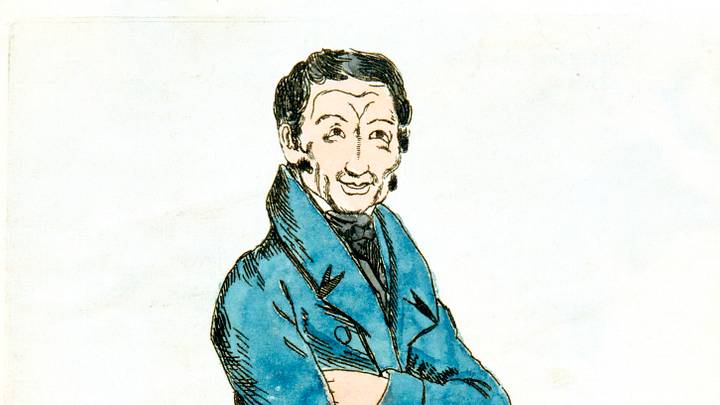
During the late 18th and early 19th centuries, Edinburgh was one of the leading hubs for anatomical study. But although surgeons were making great strides in the field, they were running out of cadavers to dissect. Grave robbers were only too happy to profit from that gap and began digging up recently buried bodies to sell to anatomists (who didn’t tend to ask questions about where the corpses came from). Body snatching was a risky business, though, with some graveyards having armed guards to catch resurrectionists in the act. But two men turned to a different method of sourcing bodies: murder.
Between 1927 and 1828, Irish-born William Burke and William Hare murdered 16 people and sold their bodies to Dr. Robert Knox, who dissected them in his anatomy lectures. Their scheme was discovered and stopped in early November of that year, and has gone down as one of the most notorious murder cases in Scottish history.
Beyond those basic and fairly well-known details, here are seven fascinating facts about the Burke and Hare murders that you might not know.
- Burke and Hare didn’t actually kill the first body they sold
- Their method of murder inspired a new word: “burking”
- Their wives were probably accomplices
- Burke and Hare turned on each other when they were caught
- A book was bound in Burke’s skin after he was executed
- Hare’s fate remains a mystery
- Burke and Hare might be connected to mysterious dolls found on Arthur’s Seat
Burke and Hare didn’t actually kill the first body they sold

At the end of 1827, Hare ran a lodging house in Edinburgh’s West Port district. On November 29, his lodger, a man called Donald (his surname isn’t known), died of dropsy while still owing rent. With the help of his friend Burke, Hare decided to sell Donald’s body to an anatomist to make up the money.
They filled Donald’s coffin with bark (so that the weight wouldn’t arouse suspicion when it was carted off), hid his body under a bed, and then waited until nightfall to seek out an anatomist. They ended up finding Dr. Robert Knox, who paid them £7 and 10 shillings (about £700 or $940 in today’s money) for the corpse. As they were leaving, one of Knox’s assistants said he “would be glad to see them again when they had another to dispose of.”
Just a few weeks later, Burke and Hare were back at Knox’s door, having committed their first murder to get the body (although the exact date of their first kill isn’t known).
Their method of murder inspired a new word: “burking”
Burke and Hare knew that Knox would struggle to turn a blind eye to corpses that had obviously been murdered, so they killed their victims via suffocation because it didn’t leave any signs of violence. “We made the persons drunk, and then suffocated them by holding the nostrils and mouth, and getting on the body,” Burke later testified. They varied which one of them would use their hands (or sometimes a pillow) to block the person’s airways and which one of them would sit on their chest.
This method of murder led to the coining of a new word—named after Burke himself—once their crimes were revealed: burking, which means to “murder by smothering.” Nowadays the word isn’t necessarily linked to murder and can simply mean “to suppress quietly or indirectly.”
Their wives were probably accomplices

Although it’s often only Burke and Hare’s names that are pinned to the murders, it’s thought that their wives—Helen McDougal was Burke’s common-law wife and Margaret Laird was Hare’s wife—were also involved in the criminal scheme. The prevailing theory has it that the women helped to lure victims to the lodging house, but the extent of their involvement isn’t known for certain. “There was little actual evidence of the crimes, so there was very, very little chance of unraveling the extent of the murders or of achieving a conviction without a confession,” explains Dr. Tacye Phillipson from the National Museum of Scotland.
Burke and Hare turned on each other when they were caught

Burke and Hare’s final victim was Margaret Docherty, who was killed on October 31, 1828. They stuffed her body into a pile of straw at the bottom of a bed until they could transport it to Knox, but two other lodgers, Ann and James Gray, discovered her remains the next day and reported the murder to the police.
Burke, Hare, McDougal, and Laird were all taken into police custody, and although they were suspected of committing multiple murders, there was little physical evidence that could be used against them. In an attempt to secure a conviction, Hare was offered immunity (and spousal privilege meant that Laird would go free too) if he testified against Burke and McDougal. Only Burke’s testimony has survived, but he paints Hare in a negative light—no doubt due to having been turned on by his friend.
On Christmas Day, 1828, the jury found Burke guilty of murder, while McDougal went free. Knox was also exonerated thanks to Burke stating that the doctor had no knowledge of the cadavers being murder victims, but his career still suffered.
A book was bound in Burke’s skin after he was executed

Burke’s execution was a huge spectacle, with between 25,000 and 35,000 people gathering to see him hang on January 28, 1829—which is thought to be the largest crowd for a hanging in Edinburgh’s history. Due to being a convicted criminal, he was denied a proper burial and his body was instead donated to an anatomist for dissection—meaning he suffered the same fate as his 16 victims.
Knox’s rival, Dr. Alexander Monro, performed the public dissection, during which he penned a brief note written in blood “taken from [Burke’s] head.” A few other gruesome mementos were also kept from Burke’s body: a death mask was made, his skeleton was stripped of flesh and displayed, and a small pocketbook was even bound in his skin.
Hare’s fate remains a mystery

Hare’s fate is a little more mysterious than his murderous counterpart. Although he wasn’t formally convicted, people knew that he was just as guilty as Burke, and he had to be smuggled out of Edinburgh in disguise. Police were transporting him south to Dumfries when he was recognized and disorder broke out. He was taken to jail (because it was the safest place) and a mob attacked the building. Once things had calmed down during the night, he was then taken to the town’s border on foot and set loose, after which his trail goes cold. Some people think he went to London—where he was thrown into a lime pit, went blind, and then lived as a beggar—while others believe he returned to Ireland.
Burke and Hare might be connected to mysterious dolls found on Arthur’s Seat

In 1836, a group of boys were exploring a cave on Arthur’s Seat—a prominent hill in Edinburgh—when they found 17 tiny coffins that contained strange dolls. Who carved the little figures and why remains a mystery to this day, but some theorize that they’re linked to Burke and Hare. It’s been suggested that either Burke or Hare felt guilty about the murders and made the dolls to give their victims (including Donald, who they didn’t kill but whose body they sold) a symbolic burial.
Other possible explanations for the dolls include that they were objects used for witchcraft or that they were made as lucky charms for sailors. No one really knows for sure, but the eight dolls that have survived can be viewed at the National Museum of Scotland.