%20%20--%3E%0A%3Csvg%20version%3D%221.1%22%20id%3D%22Layer_1%22%20xmlns%3D%22http%3A%2F%2Fwww.w3.org%2F2000%2Fsvg%22%20xmlns%3Axlink%3D%22http%3A%2F%2Fwww.w3.org%2F1999%2Fxlink%22%20x%3D%220px%22%20y%3D%220px%22%0A%09%20viewBox%3D%220%200%20684.6%2068.1%22%20style%3D%22enable-background%3Anew%200%200%20684.6%2068.1%3B%22%20xml%3Aspace%3D%22preserve%22%3E%0A%3Cg%3E%0A%09%3Cpath%20d%3D%22M444.1%2C29.3h-17.4v14.5h17.4V29.3z%20M36.4%2C68.1l29.3-50.8V0H50.4L32.9%2C36.8L15.5%2C0H0v68.1h16.7V45.8l12.4%2C22.3H36.4z%0A%09%09%20M49.1%2C68.1h16.6V23.4L49.1%2C52.1V68.1z%20M76.6%2C68.1h45V53.8H93.3V41.6h21V27.1h-21V14.8h28.3V0.1h-45V68.1z%20M175.6%2C68.1h17.3v-68%0A%09%09h-16.5v40.3L150%2C0.1h-17.6v68h16.7V27.7L175.6%2C68.1z%20M235.8%2C14.8h15.4V0.1h-47.4v14.7H219v53.2h16.8V14.8z%20M290.3%2C45.9h-17.1%0A%09%09l7.5-15.6h2L290.3%2C45.9z%20M298.7%2C68.1h18l-32.2-68h-5.7l-32%2C68h18l3.3-7.1h27.1L298.7%2C68.1z%20M325.2%2C68.1h46.2V53.8h-29.6V0.1h-16.7%0A%09%09V68.1z%20M423.7%2C14.8h27.2V0.1H407v68h16.7V14.8z%20M462%2C68.1h46.2V53.8h-29.6V0.1H462V68.1z%20M564.8%2C34.1c0%2C10.7-7.2%2C19.2-18.5%2C19.2%0A%09%09c-11.4%2C0-18.5-8.5-18.5-19.2s7.1-19.2%2C18.5-19.2C557.6%2C14.9%2C564.8%2C23.4%2C564.8%2C34.1%20M580.6%2C34.1c0-19-14.2-34-34.3-34%0A%09%09c-20.2%2C0-34.3%2C15-34.3%2C34c0%2C19%2C14.1%2C34%2C34.3%2C34C566.4%2C68.1%2C580.6%2C53.1%2C580.6%2C34.1%20M604.8%2C20.5c0-4.1%2C3.3-6.2%2C6.7-6.2%0A%09%09c4.4%2C0%2C6.6%2C3%2C6.6%2C6.6h14.7C631.8%2C9.1%2C625.1%2C0.1%2C611%2C0.1c-12%2C0-21.7%2C9.3-21.7%2C20.6c0%2C10.9%2C5.9%2C15.9%2C16.7%2C19.8%0A%09%09c5.2%2C1.8%2C11.5%2C3.2%2C11.5%2C8c0%2C3.3-2.4%2C5.5-6.4%2C5.5c-3.6%2C0-6.6-3-6.6-6.7h-15.2c0%2C11.5%2C7.9%2C20.8%2C21.8%2C20.8c12%2C0%2C21.6-9.3%2C21.6-20.6%0A%09%09c0-10-5.3-16.4-16.7-19.8C610.6%2C26.1%2C604.8%2C25.3%2C604.8%2C20.5%20M670%2C20.9h14.7C683.8%2C9.1%2C677.1%2C0.1%2C663%2C0.1c-12%2C0-21.7%2C9.3-21.7%2C20.6%0A%09%09c0%2C10.9%2C5.9%2C15.9%2C16.7%2C19.8c5.2%2C1.8%2C11.5%2C3.2%2C11.5%2C8c0%2C3.3-2.4%2C5.5-6.4%2C5.5c-3.6%2C0-6.6-3-6.6-6.7h-15.2c0%2C11.5%2C7.9%2C20.8%2C21.8%2C20.8%0A%09%09c12%2C0%2C21.6-9.3%2C21.6-20.6c0-10-5.3-16.4-16.7-19.8c-5.4-1.6-11.3-2.4-11.3-7.2c0-4.1%2C3.3-6.2%2C6.7-6.2C667.7%2C14.4%2C670%2C17.3%2C670%2C20.9%0A%09%09%22%2F%3E%0A%3C%2Fg%3E%0A%3C%2Fsvg%3E%0A)

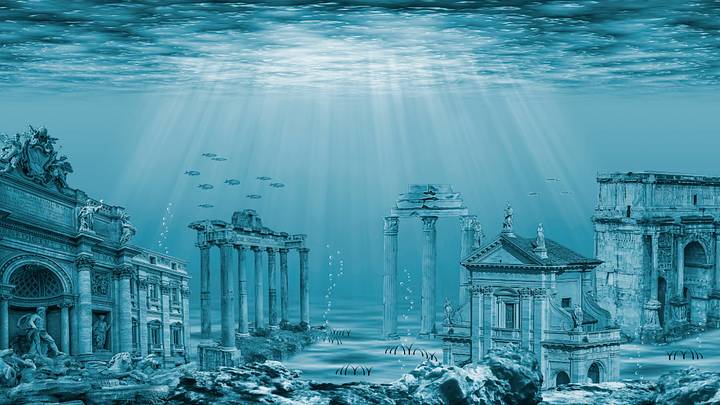
According to the writings of the Greek philosopher Plato, when the gods were dividing up the Earth, it only made sense for Poseidon, god of the sea, to take ownership of the island of Atlantis.
Let's dive into the dialogues of Plato and learn more about the supposed existence of the lost city of Atlantis and its demise.
CRITIAS AND TIMAEUS

In his dialogues Critias and Timaeus, Plato explains that Poseidon settled on his allotted island, just as the other gods did with theirs, and immediately fell in love with a local woman named Cleito. Poseidon and his mortal wife began their lineage with five sets of twin sons.
In the beginning, Atlantis was a place of peace and prosperity, as Plato describes. The god of the sea divided the land and water into rings encompassing the hill where Cleito lived. He also created "cold and hot springs," according to EBSCO, so his family and the people of Atlantis had designated places to wash and drink.
Atlas, the pair's first son, inherited his mother's home and became the first king of Atlantis. He introduced and extended trade routes, allowing Atlantis to prosper, and his descendants continued to build the island's wealth for generations.
Under Poseidon's guidance and protection, the rulers, descendants of his ten original sons, continued to make Atlantis an ideal place to live until they all but decided to disregard his advice.
Atlantis was turned on its head by greed, as is the case with many kingdoms throughout history. The rulers used their power to seize neighboring lands, including Athens, by force. The militias of these lands fought back, leaving the Atlanteans no choice but to surrender and return to their island, where natural disasters awaited. Within hours of their return, Atlantis was so battered by storms it sank into the sea.
As Plato recorded in Critias and Timaeus, the island totally disappeared into the abyss, and so did its people.
SOLON AND THE DISCOVERY OF THE MYTH

Plato wrote these dialogues thousands of years ago around 360 BC.
Solon, the Greek statesman whom Plato cites as discovering Atlantis during a trip to Egypt, was a real person. However, historians debate whether he truly uncovered the myth of Poseidon's lost island.
To this day, there is no evidence that Atlantis ever existed, not in Egyptian records, as Plato suggested, or anywhere else for that matter. Whether Atlantis was created by Plato as a cautionary tale of power and corruption, or was an actual location lost to the ocean, remains a mystery.
Geologists say it's impossible for an island of such grandeur and scale, as it is presented in literature, to simply sink into the ocean. Despite this, searches for the lost city and its supposed elaborate ruins have been unfruitful. Still, similarities have been drawn between the story of Atlantis' demise and real places like Pavlopetri and Sahul, lands that really did sink into the sea at the hands of Mother Nature.
MODERN-DAY ATLANTIS

Though there is no physical evidence that the lost underwater city ever existed, creative thinkers have turned the idea into novels and films, most notably Disney's Atlantis: The Lost Empire, Jules Verne’s Journey to the Center of the Earth and Twenty Thousand Leagues Under the Sea, and DC Comics' Aquaman.
While a timeless allegory and an interesting story, to say the least, Atlantis remains submerged in our imaginations. Will Poseidon's lost city resurface one day? We’ll have to wait and see.