%20%20--%3E%0A%3Csvg%20version%3D%221.1%22%20id%3D%22Layer_1%22%20xmlns%3D%22http%3A%2F%2Fwww.w3.org%2F2000%2Fsvg%22%20xmlns%3Axlink%3D%22http%3A%2F%2Fwww.w3.org%2F1999%2Fxlink%22%20x%3D%220px%22%20y%3D%220px%22%0A%09%20viewBox%3D%220%200%20684.6%2068.1%22%20style%3D%22enable-background%3Anew%200%200%20684.6%2068.1%3B%22%20xml%3Aspace%3D%22preserve%22%3E%0A%3Cg%3E%0A%09%3Cpath%20d%3D%22M444.1%2C29.3h-17.4v14.5h17.4V29.3z%20M36.4%2C68.1l29.3-50.8V0H50.4L32.9%2C36.8L15.5%2C0H0v68.1h16.7V45.8l12.4%2C22.3H36.4z%0A%09%09%20M49.1%2C68.1h16.6V23.4L49.1%2C52.1V68.1z%20M76.6%2C68.1h45V53.8H93.3V41.6h21V27.1h-21V14.8h28.3V0.1h-45V68.1z%20M175.6%2C68.1h17.3v-68%0A%09%09h-16.5v40.3L150%2C0.1h-17.6v68h16.7V27.7L175.6%2C68.1z%20M235.8%2C14.8h15.4V0.1h-47.4v14.7H219v53.2h16.8V14.8z%20M290.3%2C45.9h-17.1%0A%09%09l7.5-15.6h2L290.3%2C45.9z%20M298.7%2C68.1h18l-32.2-68h-5.7l-32%2C68h18l3.3-7.1h27.1L298.7%2C68.1z%20M325.2%2C68.1h46.2V53.8h-29.6V0.1h-16.7%0A%09%09V68.1z%20M423.7%2C14.8h27.2V0.1H407v68h16.7V14.8z%20M462%2C68.1h46.2V53.8h-29.6V0.1H462V68.1z%20M564.8%2C34.1c0%2C10.7-7.2%2C19.2-18.5%2C19.2%0A%09%09c-11.4%2C0-18.5-8.5-18.5-19.2s7.1-19.2%2C18.5-19.2C557.6%2C14.9%2C564.8%2C23.4%2C564.8%2C34.1%20M580.6%2C34.1c0-19-14.2-34-34.3-34%0A%09%09c-20.2%2C0-34.3%2C15-34.3%2C34c0%2C19%2C14.1%2C34%2C34.3%2C34C566.4%2C68.1%2C580.6%2C53.1%2C580.6%2C34.1%20M604.8%2C20.5c0-4.1%2C3.3-6.2%2C6.7-6.2%0A%09%09c4.4%2C0%2C6.6%2C3%2C6.6%2C6.6h14.7C631.8%2C9.1%2C625.1%2C0.1%2C611%2C0.1c-12%2C0-21.7%2C9.3-21.7%2C20.6c0%2C10.9%2C5.9%2C15.9%2C16.7%2C19.8%0A%09%09c5.2%2C1.8%2C11.5%2C3.2%2C11.5%2C8c0%2C3.3-2.4%2C5.5-6.4%2C5.5c-3.6%2C0-6.6-3-6.6-6.7h-15.2c0%2C11.5%2C7.9%2C20.8%2C21.8%2C20.8c12%2C0%2C21.6-9.3%2C21.6-20.6%0A%09%09c0-10-5.3-16.4-16.7-19.8C610.6%2C26.1%2C604.8%2C25.3%2C604.8%2C20.5%20M670%2C20.9h14.7C683.8%2C9.1%2C677.1%2C0.1%2C663%2C0.1c-12%2C0-21.7%2C9.3-21.7%2C20.6%0A%09%09c0%2C10.9%2C5.9%2C15.9%2C16.7%2C19.8c5.2%2C1.8%2C11.5%2C3.2%2C11.5%2C8c0%2C3.3-2.4%2C5.5-6.4%2C5.5c-3.6%2C0-6.6-3-6.6-6.7h-15.2c0%2C11.5%2C7.9%2C20.8%2C21.8%2C20.8%0A%09%09c12%2C0%2C21.6-9.3%2C21.6-20.6c0-10-5.3-16.4-16.7-19.8c-5.4-1.6-11.3-2.4-11.3-7.2c0-4.1%2C3.3-6.2%2C6.7-6.2C667.7%2C14.4%2C670%2C17.3%2C670%2C20.9%0A%09%09%22%2F%3E%0A%3C%2Fg%3E%0A%3C%2Fsvg%3E%0A)

J.R.R. Tolkien created an entire universe of creatures, monsters, races, languages, and cultures in his Lord of the Rings stories and their supporting mythologies. Many of them were his own invention, with monstrous Balrogs, sentient tree-like Ents, half-bred Uruk-Hai, and—perhaps most famously of all—hobbits all being products of Tolkien’s unending imagination.
But alongside his numerous original creations, Tolkien utilized a number of creatures from existing real-world folklore, and borrowed considerably from Norse, Celtic and Anglo-Saxon mythology, as well as several other sources, in filling Middle-earth with its array of legendary creatures.
Elves

Tolkien’s elves are portrayed as wise, graceful, and nigh-on immortal beings (killable only in battle or by sorrow), and the fairest of all the inhabitants of Tolkien’s world. Outside of his stories, however, elves originated in tales from ancient Germanic mythology, with some of their earliest detailed descriptions coming from old Icelandic legends and Old English mythology.
How the elves of Germanic folklore were portrayed varied enormously. It is the elves of northern and Scandinavian folklore who most resemble those of Tolkien’s writing, and as such were generally seen as being graceful and rather indifferent creatures, who would largely leave humans alone and live in peace and quiet in pastoral settings. Other Germanic elves were typically portrayed as diminutive beings that could either be a help or a hindrance to people, depending on their notoriously volatile moods. The Anglo-Saxons, for instance, blamed various medical issues on the malevolent or tricky behavior of elves, labelling hiccups or some other mysterious complaint as “ælfsogoða,” or “elf-chokes.” Later, tangles in a person’s hair on waking up in the morning were nicknamed “elf-locks,” and blamed on the mischievousness of elves overnight.
Goblins

Popular etymology links goblins to malevolent creatures from Germanic folklore known as kobolds or kobolts. Among miners and earth workers, these creatures were said to dwell in caves far below ground and were blamed for spoiling ores, ruining seams of valuable material, noxious gases and vapors, and all the mysterious ailments that many mine workers would succumb to. In fact, the workers’ ills were due to the rocks with which they were working being laced with arsenic; the more valuable metal they obtained from them, however, became known as cobalt.
That particular bit of folklore is true, but the connection between goblins and kobolts is not. Instead, goblins appear to be a more Western rather than Germanic invention, with the word borrowed into English from French in medieval times. Its roots ultimately lie in Latin and Greek, and the word can at length be traced back to an ancient Greek word for a rogue or vagabond.
Unlike Tolkien’s monstrous goblins, the goblins of European folklore were typically portrayed as diminutive, mischievous, and often rather mysterious gnome-like creatures that would attach themselves to a household and cause mischief around the home—pulling bedclothes of sleeping people, banging doors and pots and pans, and moving furniture under cover of darkness. Far from being the vicious, “cruel, wicked, and bad-hearted” creatures that Tolkien writes about in The Hobbit, these folkloric goblins were more malevolent nuisances that could easily be done away with by rapping noisily on walls or furniture.
Orcs

Orcs are one of those creatures that many Lord of the Rings fans will popularly claim Tolkien himself made up—but that’s not strictly true. As far back as the 10th century, the Old English word orc was being used as an early translation of the far older Latin word orcus (which was in turn the byname of a kind of underworld deity in Roman mythology), while the compound form “orcneas,” likewise interpreted as the name of some kind of monster, is used in the legendary poem Beowulf. It’s been , but is by no means certain, that this word may be a distant relative of ogre, perhaps via an old Italian word for a man-eating monster, orco.
Confusing things slightly here is the existence of another Old English word, orc or ork, which was used for a kind of sea creature (and shares its roots with the orca killer whale). Despite both terms being used for monstrous creatures in early English folklore, they were ultimately separate words—and only one, it seems, was resurrected by Tolkien around 1,000 years later.
Rather than inventing orcs himself, therefore, Tolkien appears to have picked up and revived an established Anglo-Saxon term for a monster—but with no actual folklore to go on, created an entirely new creature, which he henceforth referred to as an orc in his writings. The success of his stories led to the term becoming popularized and finally reestablished in our language in the late 1900s, a millennium or so after it was first used in print.
Trolls

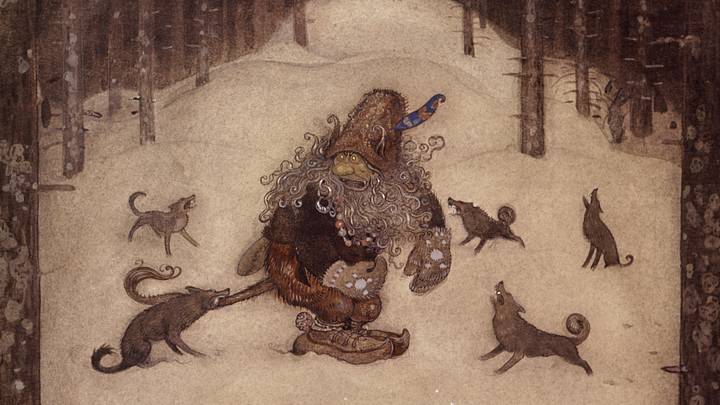
Tolkien lifted the trolls that appear in his stories almost directly from Nordic and later Scandinavian folklore. In the original myths and legends of northern Europe, trolls were portrayed as giant, powerful, man-eating monsters that lived in remote or dark places—and, just as happens in The Hobbit, can be turned to stone when exposed to sunlight.
In later tales—especially those introduced to the far north of Scotland by Scandinavian settlers in later medieval times—trolls became smaller and more human-like creatures, but were still portrayed as malevolent, nasty, or dim-witted.
Dwarves

Dwarves are another being Tolkien borrowed from Germanic and Scandinavian folklore. Norse mythology in particular includes a number of characters who are identified as dwarves, including the brothers Brokkr and Sindri (also known as Eitri), who forged Thor’s hammer, Mjölnir.
Myths and folkloric tales about dwarves were varied and numerous across ancient northern Europe, with many stories creating different kinds, kingdoms, or races of dwarves. Almost always, though, dwarves were portrayed just as Tolkien went on to do too, and were considered industrious workers, miners, metalworkers, and craftsmen, who dwelled in immense halls full of gold and precious stones deep in remote mountains.
Wights

Largely excluded from Peter Jackson’s film series, Tolkien wrote extensively of “barrow-wights”—wraith-like beings that were essentially animated bones, possessed by evil spirits and sent back to walk the earth.
In early Old English, the word wight (or wiht as it was originally spelled) meant simply a being or living thing, but by later medieval times the word had picked up a secondary meaning and come to be used more specifically of supernatural or spiritual beings—just like those described by Tolkien.