%20%20--%3E%0A%3Csvg%20version%3D%221.1%22%20id%3D%22Layer_1%22%20xmlns%3D%22http%3A%2F%2Fwww.w3.org%2F2000%2Fsvg%22%20xmlns%3Axlink%3D%22http%3A%2F%2Fwww.w3.org%2F1999%2Fxlink%22%20x%3D%220px%22%20y%3D%220px%22%0A%09%20viewBox%3D%220%200%20684.6%2068.1%22%20style%3D%22enable-background%3Anew%200%200%20684.6%2068.1%3B%22%20xml%3Aspace%3D%22preserve%22%3E%0A%3Cg%3E%0A%09%3Cpath%20d%3D%22M444.1%2C29.3h-17.4v14.5h17.4V29.3z%20M36.4%2C68.1l29.3-50.8V0H50.4L32.9%2C36.8L15.5%2C0H0v68.1h16.7V45.8l12.4%2C22.3H36.4z%0A%09%09%20M49.1%2C68.1h16.6V23.4L49.1%2C52.1V68.1z%20M76.6%2C68.1h45V53.8H93.3V41.6h21V27.1h-21V14.8h28.3V0.1h-45V68.1z%20M175.6%2C68.1h17.3v-68%0A%09%09h-16.5v40.3L150%2C0.1h-17.6v68h16.7V27.7L175.6%2C68.1z%20M235.8%2C14.8h15.4V0.1h-47.4v14.7H219v53.2h16.8V14.8z%20M290.3%2C45.9h-17.1%0A%09%09l7.5-15.6h2L290.3%2C45.9z%20M298.7%2C68.1h18l-32.2-68h-5.7l-32%2C68h18l3.3-7.1h27.1L298.7%2C68.1z%20M325.2%2C68.1h46.2V53.8h-29.6V0.1h-16.7%0A%09%09V68.1z%20M423.7%2C14.8h27.2V0.1H407v68h16.7V14.8z%20M462%2C68.1h46.2V53.8h-29.6V0.1H462V68.1z%20M564.8%2C34.1c0%2C10.7-7.2%2C19.2-18.5%2C19.2%0A%09%09c-11.4%2C0-18.5-8.5-18.5-19.2s7.1-19.2%2C18.5-19.2C557.6%2C14.9%2C564.8%2C23.4%2C564.8%2C34.1%20M580.6%2C34.1c0-19-14.2-34-34.3-34%0A%09%09c-20.2%2C0-34.3%2C15-34.3%2C34c0%2C19%2C14.1%2C34%2C34.3%2C34C566.4%2C68.1%2C580.6%2C53.1%2C580.6%2C34.1%20M604.8%2C20.5c0-4.1%2C3.3-6.2%2C6.7-6.2%0A%09%09c4.4%2C0%2C6.6%2C3%2C6.6%2C6.6h14.7C631.8%2C9.1%2C625.1%2C0.1%2C611%2C0.1c-12%2C0-21.7%2C9.3-21.7%2C20.6c0%2C10.9%2C5.9%2C15.9%2C16.7%2C19.8%0A%09%09c5.2%2C1.8%2C11.5%2C3.2%2C11.5%2C8c0%2C3.3-2.4%2C5.5-6.4%2C5.5c-3.6%2C0-6.6-3-6.6-6.7h-15.2c0%2C11.5%2C7.9%2C20.8%2C21.8%2C20.8c12%2C0%2C21.6-9.3%2C21.6-20.6%0A%09%09c0-10-5.3-16.4-16.7-19.8C610.6%2C26.1%2C604.8%2C25.3%2C604.8%2C20.5%20M670%2C20.9h14.7C683.8%2C9.1%2C677.1%2C0.1%2C663%2C0.1c-12%2C0-21.7%2C9.3-21.7%2C20.6%0A%09%09c0%2C10.9%2C5.9%2C15.9%2C16.7%2C19.8c5.2%2C1.8%2C11.5%2C3.2%2C11.5%2C8c0%2C3.3-2.4%2C5.5-6.4%2C5.5c-3.6%2C0-6.6-3-6.6-6.7h-15.2c0%2C11.5%2C7.9%2C20.8%2C21.8%2C20.8%0A%09%09c12%2C0%2C21.6-9.3%2C21.6-20.6c0-10-5.3-16.4-16.7-19.8c-5.4-1.6-11.3-2.4-11.3-7.2c0-4.1%2C3.3-6.2%2C6.7-6.2C667.7%2C14.4%2C670%2C17.3%2C670%2C20.9%0A%09%09%22%2F%3E%0A%3C%2Fg%3E%0A%3C%2Fsvg%3E%0A)

From outside the graveyard gates, headstones blur together. Grey slabs with faded dedications and symbols line cemetery lawns, summoning passersby to saunter the paths to their inscriptions.
Eventually, you pass a section with really old gravestones that are harder to make out than others; you have to get close, squint, and even rub off the dirt to read when the deceased passed and what they wanted the world to remember of their life.
And then there are the symbols, some more thought-provoking than others, that reveal something about the person buried six feet beneath them. Over time, several of these emblems have lost their nuance, and fewer people understand their meaning.
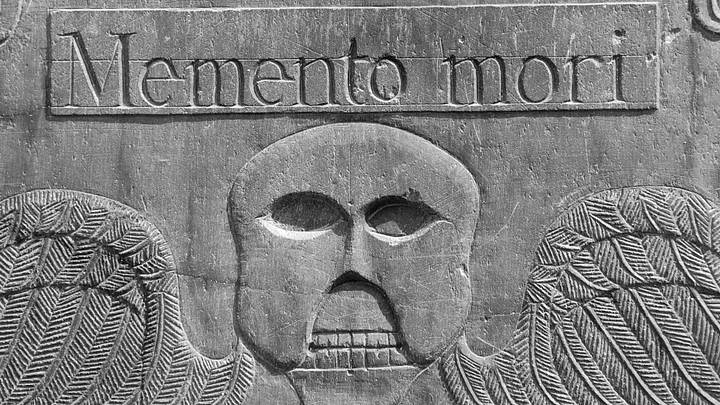
One in particular, a winged skull, might look morbid, but it's really a bittersweet reminder of life’s fragility.
FUNERARY ART

According to the Virginia Department of Historic Resources, the symbol, an example of "funerary art," began as a skull with crossed bones etched into headstones throughout Europe as early as the 13th century. Puritan colonists continued the tradition in New England, with variations carved into old gravestones.
The symbol transitioned from a skull and crossbones to a winged skull, and eventually to a cherub by the late 1700s, each representing a similar concept. Take a stroll through a cemetery with gravestones from the first colonies, and you'll likely spot a few of these symbols, but what do they tell us about death, and, for that matter, life?
MEMENTO MORI IN PHILOSOPHY AND RELIGION

The winged skull is believed to symbolize mortality tied to the Latin phrase “memento mori,” which translates to "remember to die," or "remember death," and traces its origins to philosophy and religion. Encyclopedia Britannica writes that Socrates, an ancient Greek philosopher, reflected on this idea, not to incite fear of death but to expel it. He believed that by truly understanding that death is unavoidable, you will be more apt to live the time you do have to the fullest.
Roman philosopher Seneca also urged people to think about "the end" in a way that deepens appreciation of the present.
In a religious context, a few Bible verses parallel memento mori and invite believers to reflect on life by reflecting on death. Psalm 90:12 says, "Teach us to number our days, that we may apply our hearts unto wisdom." Ecclesiastes 7:2 reads, "Death is the destiny of everyone; the living should take this to heart."
A physical example is Ash Wednesday, when Catholics line up to receive ashes guided by the belief that "for dust you are and to dust you will return" (Genesis 3:19), yet another passage reminding us of our mortality.
AS DEATH FOLLOWS LIFE

Circling back to symbols, the winged skull isn’t meant to scare us as we pass by gravestones in a cemetery; it’s meant to prompt contemplation on the present. Once we grasp life’s temporary nature, we can cast away the superficial, see the present more clearly, and appreciate the simple wonders each day brings, without fearing what’s to come.
Though just one symbol, the winged skull is a window into the world of memento mori and the beauty that lies just beyond the understanding of death.