%20%20--%3E%0A%3Csvg%20version%3D%221.1%22%20id%3D%22Layer_1%22%20xmlns%3D%22http%3A%2F%2Fwww.w3.org%2F2000%2Fsvg%22%20xmlns%3Axlink%3D%22http%3A%2F%2Fwww.w3.org%2F1999%2Fxlink%22%20x%3D%220px%22%20y%3D%220px%22%0A%09%20viewBox%3D%220%200%20684.6%2068.1%22%20style%3D%22enable-background%3Anew%200%200%20684.6%2068.1%3B%22%20xml%3Aspace%3D%22preserve%22%3E%0A%3Cg%3E%0A%09%3Cpath%20d%3D%22M444.1%2C29.3h-17.4v14.5h17.4V29.3z%20M36.4%2C68.1l29.3-50.8V0H50.4L32.9%2C36.8L15.5%2C0H0v68.1h16.7V45.8l12.4%2C22.3H36.4z%0A%09%09%20M49.1%2C68.1h16.6V23.4L49.1%2C52.1V68.1z%20M76.6%2C68.1h45V53.8H93.3V41.6h21V27.1h-21V14.8h28.3V0.1h-45V68.1z%20M175.6%2C68.1h17.3v-68%0A%09%09h-16.5v40.3L150%2C0.1h-17.6v68h16.7V27.7L175.6%2C68.1z%20M235.8%2C14.8h15.4V0.1h-47.4v14.7H219v53.2h16.8V14.8z%20M290.3%2C45.9h-17.1%0A%09%09l7.5-15.6h2L290.3%2C45.9z%20M298.7%2C68.1h18l-32.2-68h-5.7l-32%2C68h18l3.3-7.1h27.1L298.7%2C68.1z%20M325.2%2C68.1h46.2V53.8h-29.6V0.1h-16.7%0A%09%09V68.1z%20M423.7%2C14.8h27.2V0.1H407v68h16.7V14.8z%20M462%2C68.1h46.2V53.8h-29.6V0.1H462V68.1z%20M564.8%2C34.1c0%2C10.7-7.2%2C19.2-18.5%2C19.2%0A%09%09c-11.4%2C0-18.5-8.5-18.5-19.2s7.1-19.2%2C18.5-19.2C557.6%2C14.9%2C564.8%2C23.4%2C564.8%2C34.1%20M580.6%2C34.1c0-19-14.2-34-34.3-34%0A%09%09c-20.2%2C0-34.3%2C15-34.3%2C34c0%2C19%2C14.1%2C34%2C34.3%2C34C566.4%2C68.1%2C580.6%2C53.1%2C580.6%2C34.1%20M604.8%2C20.5c0-4.1%2C3.3-6.2%2C6.7-6.2%0A%09%09c4.4%2C0%2C6.6%2C3%2C6.6%2C6.6h14.7C631.8%2C9.1%2C625.1%2C0.1%2C611%2C0.1c-12%2C0-21.7%2C9.3-21.7%2C20.6c0%2C10.9%2C5.9%2C15.9%2C16.7%2C19.8%0A%09%09c5.2%2C1.8%2C11.5%2C3.2%2C11.5%2C8c0%2C3.3-2.4%2C5.5-6.4%2C5.5c-3.6%2C0-6.6-3-6.6-6.7h-15.2c0%2C11.5%2C7.9%2C20.8%2C21.8%2C20.8c12%2C0%2C21.6-9.3%2C21.6-20.6%0A%09%09c0-10-5.3-16.4-16.7-19.8C610.6%2C26.1%2C604.8%2C25.3%2C604.8%2C20.5%20M670%2C20.9h14.7C683.8%2C9.1%2C677.1%2C0.1%2C663%2C0.1c-12%2C0-21.7%2C9.3-21.7%2C20.6%0A%09%09c0%2C10.9%2C5.9%2C15.9%2C16.7%2C19.8c5.2%2C1.8%2C11.5%2C3.2%2C11.5%2C8c0%2C3.3-2.4%2C5.5-6.4%2C5.5c-3.6%2C0-6.6-3-6.6-6.7h-15.2c0%2C11.5%2C7.9%2C20.8%2C21.8%2C20.8%0A%09%09c12%2C0%2C21.6-9.3%2C21.6-20.6c0-10-5.3-16.4-16.7-19.8c-5.4-1.6-11.3-2.4-11.3-7.2c0-4.1%2C3.3-6.2%2C6.7-6.2C667.7%2C14.4%2C670%2C17.3%2C670%2C20.9%0A%09%09%22%2F%3E%0A%3C%2Fg%3E%0A%3C%2Fsvg%3E%0A)

The Academy Awards carry a lot of weight in the entertainment industry. An actor gives a great performance, the Academy votes on it, and everyone gets to go home feeling like they got it right. But sometimes, an actor gets an Oscar late in their career that viewers consider “make-up” awards.
That does not mean these wins are wrong; the performances are still great. They just are not the ones people bring up first when an actor’s name comes up in conversation. More often, the role that cements an actor in our cultural memory sits somewhere else in their filmography, doing far more to shape their legacy than the little gold man ever could.
The following list looks at seven actors who have won Academy Awards, just not for the performances that most people think of as their best.
- Al Pacino - Dog Day Afternoon (1975)
- Denzel Washington - Malcolm X (1992)
- Leonardo DiCaprio - The Wolf of Wall Street (2013)
- Julianne Moore - Boogie Nights (1997)
- Joaquin Phoenix - The Master (2012)
- Kate Winslet - Eternal Sunshine of the Spotless Mind (2004)
- Gene Hackman - The Conversation (1974)
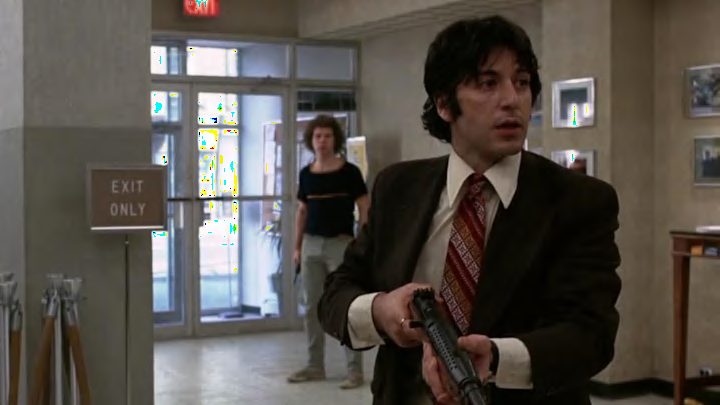
Al Pacino - Dog Day Afternoon (1975)
Al Pacino won his Oscar years later for his role in Scent of a Woman, a performance that feels almost self-aware of his reputation. But as Sonny in Dog Day Afternoon, he feels the most alive on screen than he ever has. He is desperate, dangerous, and oddly compassionate all at the same time. The performance feels unstable, and that’s why it works. It is the clearest example of his talent outweighing the myth that began to calcify around him later in his career.
Denzel Washington - Malcolm X (1992)
Let’s get to the performance that should have won the year Pacino received his make-up Oscar. Denzel Washington as Malcom X is, without a doubt, transcendently good. While Washington’s Oscar win for Training Day rewarded charisma and menace, and his win for Glory marked the arrival of one of the greatest actors to ever appear on screen, Malcolm X demanded something far more difficult.
The performance spans ideology, transformation, and internal contradiction without ever slipping into impersonation. It is a towering piece of work that asks the audience to follow a man as he changes in public and in private. That it lost out in its year says more about the Academy than it does about the role, prompting the iconic director of the movie, Spike Lee, to say something about it.
Leonardo DiCaprio - The Wolf of Wall Street (2013)
Leonardo DiCaprio finally won an Oscar for The Revenant (2015), a role built on endurance and suffering. But it is his take on Jordan Belfort in The Wolf of Wall Street that shows a freer, messier, and more dangerous side of the actor that we rarely get to see him play.
DiCaprio weaponizes charm as he abuses substances and commits federal crimes while the audience laughs and the ground rots beneath his feet. It is a rare performance that is simultaneously repulsive and magnetic, and it’s just sad that he had to get tossed around by a bear before he got his first statue.
Julianne Moore - Boogie Nights (1997)
Julianne Moore’s Oscar for Still Alice recognized the devastation and horror of a woman with familial Alzheimer’s disease, but she should have been recognized by the Academy much sooner.
Paul Thomas Anderson’s Boogie Nights was absolute lightning in a bottle and is one of the best movies of the ‘90s. Moore’s role as Amber Waves grounds the absurdity of the ‘70s porn industry that looms over the entire film into a story about flawed people who find each other, care for each other, and cause irreversible damage to each other.
Joaquin Phoenix - The Master (2012)
Joaquin Phoenix won the Oscar for Joker, which showed an externalized version of suffering that became a spectacle, but in the second Paul Thomas Anderson film to appear on this list, The Master, he does the opposite.
Phoenix is constantly at war with himself in The Master, and for over two hours, he asks the audience to experience the tension and physical discomfort of a fractured and unsettled man in this film loosely inspired by the founder of Scientology, L. Ron Hubbard. It is Phoenix at his most disciplined and disturbing, and it has only grown in reputation over time.
Kate Winslet - Eternal Sunshine of the Spotless Mind (2004)
While Kate Winslet’s Oscar came for her performance in Stephen Daldry’s The Reader, her role as Clementine in Eternal Sunshine of the Spotless Mind remains her most beautiful creation.
She is impulsive and deeply sad beneath the surface, and allows the character to be contradictory and at times unlikable, and it is the emotional tightrope walk between her unlikability and humanity that makes the emotional payoff hit harder. Her portrayal feels lived, not performed, and it remains one of her most impressive and decorated roles.
Gene Hackman - The Conversation (1974)
Gene Hackman won Oscars for The French Connection and Unforgiven, roles built on corrupt authority and menace, respectively.
In The Conversation, Hackman does something much quieter and more restrained. His character is defined by his paranoia in an interesting character study of how isolation can unravel a person. His take on Harry Caul is precise and withdrawn, and it trusts the audience to lean into the alienation the character experiences. It is one of the great portraits of a man disappearing into himself that went unrecognized at the time.
The Oscars have always been great at capturing a moment, not a legacy. They have always been limited by the moments they are trapped in, and these performances remind us that the ones that endure are the ones that wait for time to do the recognizing.