%20%20--%3E%0A%3Csvg%20version%3D%221.1%22%20id%3D%22Layer_1%22%20xmlns%3D%22http%3A%2F%2Fwww.w3.org%2F2000%2Fsvg%22%20xmlns%3Axlink%3D%22http%3A%2F%2Fwww.w3.org%2F1999%2Fxlink%22%20x%3D%220px%22%20y%3D%220px%22%0A%09%20viewBox%3D%220%200%20684.6%2068.1%22%20style%3D%22enable-background%3Anew%200%200%20684.6%2068.1%3B%22%20xml%3Aspace%3D%22preserve%22%3E%0A%3Cg%3E%0A%09%3Cpath%20d%3D%22M444.1%2C29.3h-17.4v14.5h17.4V29.3z%20M36.4%2C68.1l29.3-50.8V0H50.4L32.9%2C36.8L15.5%2C0H0v68.1h16.7V45.8l12.4%2C22.3H36.4z%0A%09%09%20M49.1%2C68.1h16.6V23.4L49.1%2C52.1V68.1z%20M76.6%2C68.1h45V53.8H93.3V41.6h21V27.1h-21V14.8h28.3V0.1h-45V68.1z%20M175.6%2C68.1h17.3v-68%0A%09%09h-16.5v40.3L150%2C0.1h-17.6v68h16.7V27.7L175.6%2C68.1z%20M235.8%2C14.8h15.4V0.1h-47.4v14.7H219v53.2h16.8V14.8z%20M290.3%2C45.9h-17.1%0A%09%09l7.5-15.6h2L290.3%2C45.9z%20M298.7%2C68.1h18l-32.2-68h-5.7l-32%2C68h18l3.3-7.1h27.1L298.7%2C68.1z%20M325.2%2C68.1h46.2V53.8h-29.6V0.1h-16.7%0A%09%09V68.1z%20M423.7%2C14.8h27.2V0.1H407v68h16.7V14.8z%20M462%2C68.1h46.2V53.8h-29.6V0.1H462V68.1z%20M564.8%2C34.1c0%2C10.7-7.2%2C19.2-18.5%2C19.2%0A%09%09c-11.4%2C0-18.5-8.5-18.5-19.2s7.1-19.2%2C18.5-19.2C557.6%2C14.9%2C564.8%2C23.4%2C564.8%2C34.1%20M580.6%2C34.1c0-19-14.2-34-34.3-34%0A%09%09c-20.2%2C0-34.3%2C15-34.3%2C34c0%2C19%2C14.1%2C34%2C34.3%2C34C566.4%2C68.1%2C580.6%2C53.1%2C580.6%2C34.1%20M604.8%2C20.5c0-4.1%2C3.3-6.2%2C6.7-6.2%0A%09%09c4.4%2C0%2C6.6%2C3%2C6.6%2C6.6h14.7C631.8%2C9.1%2C625.1%2C0.1%2C611%2C0.1c-12%2C0-21.7%2C9.3-21.7%2C20.6c0%2C10.9%2C5.9%2C15.9%2C16.7%2C19.8%0A%09%09c5.2%2C1.8%2C11.5%2C3.2%2C11.5%2C8c0%2C3.3-2.4%2C5.5-6.4%2C5.5c-3.6%2C0-6.6-3-6.6-6.7h-15.2c0%2C11.5%2C7.9%2C20.8%2C21.8%2C20.8c12%2C0%2C21.6-9.3%2C21.6-20.6%0A%09%09c0-10-5.3-16.4-16.7-19.8C610.6%2C26.1%2C604.8%2C25.3%2C604.8%2C20.5%20M670%2C20.9h14.7C683.8%2C9.1%2C677.1%2C0.1%2C663%2C0.1c-12%2C0-21.7%2C9.3-21.7%2C20.6%0A%09%09c0%2C10.9%2C5.9%2C15.9%2C16.7%2C19.8c5.2%2C1.8%2C11.5%2C3.2%2C11.5%2C8c0%2C3.3-2.4%2C5.5-6.4%2C5.5c-3.6%2C0-6.6-3-6.6-6.7h-15.2c0%2C11.5%2C7.9%2C20.8%2C21.8%2C20.8%0A%09%09c12%2C0%2C21.6-9.3%2C21.6-20.6c0-10-5.3-16.4-16.7-19.8c-5.4-1.6-11.3-2.4-11.3-7.2c0-4.1%2C3.3-6.2%2C6.7-6.2C667.7%2C14.4%2C670%2C17.3%2C670%2C20.9%0A%09%09%22%2F%3E%0A%3C%2Fg%3E%0A%3C%2Fsvg%3E%0A)

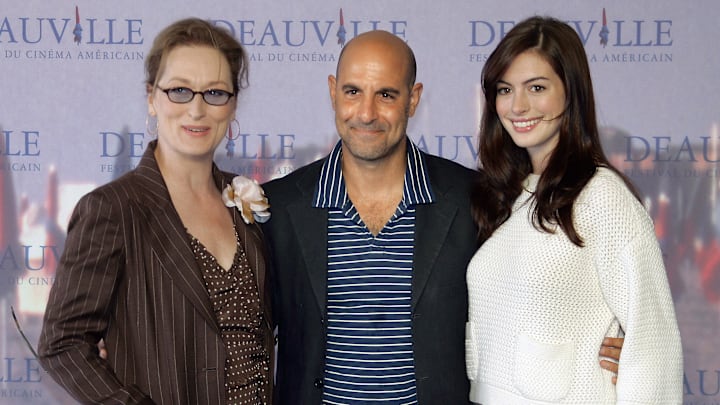
The Devil Wears Prada took the world by storm when it came out in 2006. It starred Anne Hathaway as Andy Sachs, a lovable aspiring journalist who gets a job as an assistant at a famous fashion magazine helmed by the imposing Miranda Priestly (Meryl Streep).
With its mix of fashion, memorable characters, and workplace faux pas cringeworthy enough to send a chill down the spine of anyone who has ever been an underling at a new job, the film has remained a beloved 2000s classic ever since its premiere. In 2026, nearly two decades after the first film came out, The Devil Wears Prada 2 is stirring up plenty of excitement, proving that this story—like a little black dress or vintage Chanel boots—is here to stay.
Part of what gave the original Devil Wears Prada some of its sheen is the tale’s apparent connections to the real world—and specifically, the similarities between Priestly and Anna Wintour, the fashion executive who served as the editor-in-chief of Vogue for 37 years. Because of this, The Devil Wears Prada always felt a bit like a tell-all workplace exposé in the guise of a comedic drama. Yet just how true are the events the original film portrayed?
How the Book That Inspired The Devil Wears Prada Came to Be

In short, The Devil Wears Prada is a fictional story that drew a whole lot of inspiration from real events. The book that served as the source material for the first movie was written by Lauren Weisberger, who actually was a junior assistant to Anna Wintour at Vogue for about a year beginning in 1999. Like Andy, Weisberger was an aspiring journalist when she started at the company.
Before being hired, Weisberger moved to New York and spent two weeks sleeping on a friend’s couch and applying for jobs. The process of getting the gig at Vogue went “exactly as it [did] in the book,” the author told The Times. “Condé Nast called me in for an interview. They didn’t tell me which magazine or which position. I interviewed first with the HR woman, and she told me the position was at Vogue. I was like, ‘Well, that’s nice, but maybe not what I’m looking for.’ And she was like, ‘We’re not really interested in what you’re looking for. Proceed!’”
After two interviews that same day, Weisberger was sent to meet Wintour. “I remember having no thoughts about that, which in hindsight is crazy,” she continued. “I did not know what I was walking into, and that probably had something to do with why I ended up getting the job. I didn’t know enough to be tongue-tied and terrified. [Wintour] was extremely composed and very intimidating, in hindsight, and her office was beautiful, but I didn’t have time to take in the whole scene at that point. It really wasn’t until I actually started that I thought, where the hell am I?”
Just like Andy, Weisberger said she was told to change her appearance upon starting work, and claimed that Wintour immediately sent her to the salon to dye and color her hair. She also said she felt some pressure to be thin and to wear high heels. Ultimately, she reflected, the whole experience “was a year of being yelled at.”
Weisberger also had trouble with the job due to her journalistic aspirations, which didn't exactly jive with the role's emphasis on getting coffee—though apparently she may have struggled a bit more with writing than Andy, who is portrayed as a brilliant journalist. In actuality, Weisberger “couldn’t get any assignments from us,” said Laurie Jones, who was the managing editor when Weisberger worked there. The young assistant was “a lovely girl,” she said, but “not a great writer, poor thing.”
After ten months at Vogue, Weisberger got another job at the magazine Departures and enrolled in a writing class at her editor's behest. There, she started writing a book about her experience in the fashion industry. She showed an unfinished draft to her instructor, who asked to share it with an agent, and the rest is history.
Weisberger never expected her story to take off the way it did, and some of the cruel reviews that the book received shocked her. “Truly, it sounds unbelievable now, but I had no idea [how successful it would be]. I was blindsided,” she reflected. “Some of it got really nasty, very personal.”
Are the Characters in The Devil Wears Prada Based on Real People?

While The Devil Wears Prada book is mostly fiction, it’s deeply rooted in Weisberger’s real-life experiences—and yes, some real people.
“Of course my time at Vogue informed the book, there's no denying that,” Weisberger told The Daily Mail. However, Weisberger has always denied that the character of Priestly is directly based on Wintour. But some of the similarities—like their penchant for oversized sunglasses—are impossible to discount.
Upon learning of the book, Wintour reportedly told Jones, “I cannot remember who that girl is.” She did end up reading the manuscript, though, and apparently didn’t take things too personally.
“I know Anna read it and she was sort of bemused. She wasn’t offended. She wasn’t bothered by it at all,” Jones said. Though she stayed quiet about the book and movie for years, Wintour has since gone on to embrace her similarities to Priestly, even appearing in a Vogue interview alongside Meryl Streep in 2026.
Streep also initially denied that Priestly was the basis for the character of Wintour, saying she drew inspiration from male directors like Clint Eastwood. Still, Wintour’s imposing image loomed large enough over the first film that many designers refused to give clothes to the costume department for fear of offending the legendary executive.
The Real Emily Speaks
Over the years, other details have emerged about similarities between Weisberger’s manuscript and reality. In 2026, stylist Leslie Framer told Vogue that she was the basis of the character Emily Charlton, an anxious Vogue employee who torments Andy throughout the film. In reality, Fremar was the one who hired Weisberger, and the two worked together for eight months.
Some of the dialogue in the book was apparently pulled directly from conversations Fremar and Weisberger had. “I definitely told her a million girls would kill for the job,” Fremar said. “That was definitely my line because I actually really believed that, and I knew that she didn't necessarily wanna be there.”
In the end, Weisberger’s book made Fremar uncomfortable. “It just felt like this exposure,” Fremar said of the novel. “Even though someone obviously advised her to make it fiction, it was really based off of a lot of things that, you know, I lived, she lived.”
Fremar went on to share some more of her side of the story. “I probably was not very nice, and I probably was high-strung because I felt like I was having to do her job as well,” she said. “So for me, that was really frustrating. I think she was probably just sitting there writing a book and not necessarily taking the job as seriously as I did.”
While much of The Devil Wears Prada is based on true events, some of it is pure fantasy. The whole storyline about Andy's partner, for example, is entirely fictionalized. Another key detail that Weisberger totally made up? Andy’s fashion transformation. “Let’s just say that, unlike Andy,” the author told The Daily Mail, “there was no closet makeover in my real life.”
Read More: