%20%20--%3E%0A%3Csvg%20version%3D%221.1%22%20id%3D%22Layer_1%22%20xmlns%3D%22http%3A%2F%2Fwww.w3.org%2F2000%2Fsvg%22%20xmlns%3Axlink%3D%22http%3A%2F%2Fwww.w3.org%2F1999%2Fxlink%22%20x%3D%220px%22%20y%3D%220px%22%0A%09%20viewBox%3D%220%200%20684.6%2068.1%22%20style%3D%22enable-background%3Anew%200%200%20684.6%2068.1%3B%22%20xml%3Aspace%3D%22preserve%22%3E%0A%3Cg%3E%0A%09%3Cpath%20d%3D%22M444.1%2C29.3h-17.4v14.5h17.4V29.3z%20M36.4%2C68.1l29.3-50.8V0H50.4L32.9%2C36.8L15.5%2C0H0v68.1h16.7V45.8l12.4%2C22.3H36.4z%0A%09%09%20M49.1%2C68.1h16.6V23.4L49.1%2C52.1V68.1z%20M76.6%2C68.1h45V53.8H93.3V41.6h21V27.1h-21V14.8h28.3V0.1h-45V68.1z%20M175.6%2C68.1h17.3v-68%0A%09%09h-16.5v40.3L150%2C0.1h-17.6v68h16.7V27.7L175.6%2C68.1z%20M235.8%2C14.8h15.4V0.1h-47.4v14.7H219v53.2h16.8V14.8z%20M290.3%2C45.9h-17.1%0A%09%09l7.5-15.6h2L290.3%2C45.9z%20M298.7%2C68.1h18l-32.2-68h-5.7l-32%2C68h18l3.3-7.1h27.1L298.7%2C68.1z%20M325.2%2C68.1h46.2V53.8h-29.6V0.1h-16.7%0A%09%09V68.1z%20M423.7%2C14.8h27.2V0.1H407v68h16.7V14.8z%20M462%2C68.1h46.2V53.8h-29.6V0.1H462V68.1z%20M564.8%2C34.1c0%2C10.7-7.2%2C19.2-18.5%2C19.2%0A%09%09c-11.4%2C0-18.5-8.5-18.5-19.2s7.1-19.2%2C18.5-19.2C557.6%2C14.9%2C564.8%2C23.4%2C564.8%2C34.1%20M580.6%2C34.1c0-19-14.2-34-34.3-34%0A%09%09c-20.2%2C0-34.3%2C15-34.3%2C34c0%2C19%2C14.1%2C34%2C34.3%2C34C566.4%2C68.1%2C580.6%2C53.1%2C580.6%2C34.1%20M604.8%2C20.5c0-4.1%2C3.3-6.2%2C6.7-6.2%0A%09%09c4.4%2C0%2C6.6%2C3%2C6.6%2C6.6h14.7C631.8%2C9.1%2C625.1%2C0.1%2C611%2C0.1c-12%2C0-21.7%2C9.3-21.7%2C20.6c0%2C10.9%2C5.9%2C15.9%2C16.7%2C19.8%0A%09%09c5.2%2C1.8%2C11.5%2C3.2%2C11.5%2C8c0%2C3.3-2.4%2C5.5-6.4%2C5.5c-3.6%2C0-6.6-3-6.6-6.7h-15.2c0%2C11.5%2C7.9%2C20.8%2C21.8%2C20.8c12%2C0%2C21.6-9.3%2C21.6-20.6%0A%09%09c0-10-5.3-16.4-16.7-19.8C610.6%2C26.1%2C604.8%2C25.3%2C604.8%2C20.5%20M670%2C20.9h14.7C683.8%2C9.1%2C677.1%2C0.1%2C663%2C0.1c-12%2C0-21.7%2C9.3-21.7%2C20.6%0A%09%09c0%2C10.9%2C5.9%2C15.9%2C16.7%2C19.8c5.2%2C1.8%2C11.5%2C3.2%2C11.5%2C8c0%2C3.3-2.4%2C5.5-6.4%2C5.5c-3.6%2C0-6.6-3-6.6-6.7h-15.2c0%2C11.5%2C7.9%2C20.8%2C21.8%2C20.8%0A%09%09c12%2C0%2C21.6-9.3%2C21.6-20.6c0-10-5.3-16.4-16.7-19.8c-5.4-1.6-11.3-2.4-11.3-7.2c0-4.1%2C3.3-6.2%2C6.7-6.2C667.7%2C14.4%2C670%2C17.3%2C670%2C20.9%0A%09%09%22%2F%3E%0A%3C%2Fg%3E%0A%3C%2Fsvg%3E%0A)

By the time 1970 rolled around, the Vietnam War had reached a fever pitch, and so had the opposition to it. Tens of thousands of U.S. soldiers had died, not to mention millions of Vietnamese, and people had begun to question the war’s purpose—and were taking to the streets to show they weren’t going to tolerate any of it.
Despite some overall failings and the irreparable damage and loss caused by the Vietnam War, the anti-war movement actually wound up achieving many of its aims. The American military withdrew entirely from the conflict in 1973, and that same year, the U.S. military draft officially ended, which had been a major goal of the movement.
One major factor that gave the anti-war movement of the 1960s longevity and coherence was the music of the time. Protest music truly took off in the 1960s, with acts like Bob Dylan, Nina Simone, Joan Baez, and Pete Seeger giving voice to the anger, rage, and dreams of all the American people who wished to challenge their government's actions.
The movement they helped catalyze reached its height in the early 1970s, when the frustration and fear of the era reached its height. At the same time, the protest music of the early ‘70s played a fundamental role by offering up balms for tired souls, wellsprings of inspiration and momentum, and blueprints for a better world.
Here are some of the most potent resistance anthems of the era, all of which continue to reverberate today.
- “Fortunate Son” // Creedence Clearwater Revival
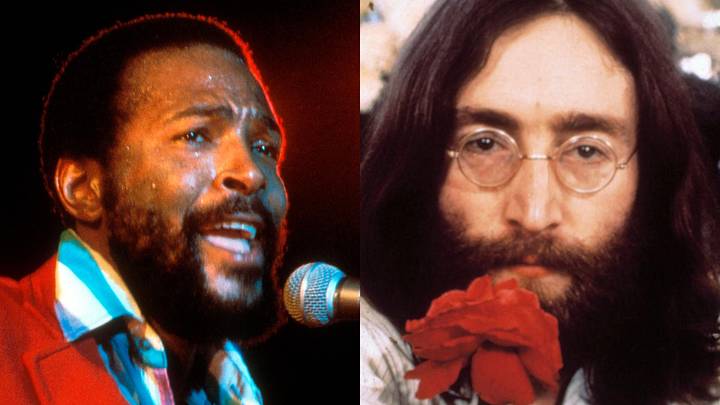
- “Imagine” // John Lennon
- “War” // Edwin Starr
- “Ohio” // Crosby, Stills, Nash & Young
- “What’s Goin’ On” // Marvin Gaye
“Fortunate Son” // Creedence Clearwater Revival
This one admittedly came out in 1969, but is so inextricable from the sound of the anti-war movement of the early 1970s that it deserves a place here. Creedence Clearwater Revival’s “Fortunate Son” took direct aim at the wealthy and influential Americans who avoided the draft due to their families’ connections and power. It criticized the war itself, as well as the classism that forced everyday people to fight in a conflict organized by a wealthy few, and that kept people locked in cycles of poverty while others prospered.
Fogerty had already been thinking about writing a song that protested the draft system when he saw news coverage of the wedding of Dwight Eisenhower’s grandson and Richard Nixon’s daughter in 1968. “You had the feeling that none of these people were going to be too involved with the war,” he said. “It made me so angry that the rich old men make the war, and the poor young men have to fight it,” he later reflected.
Fogerty—who himself had enlisted in the U.S. Army Reserve in 1966 to avoid the draft—penned the song in 20 minutes. The song became a major anti-war anthem, but the band has since emphasized that its main target is really economic inequality. “It isn’t really an anti-war song, it’s about class,” drummer Doug Clifford later commented.
“Imagine” // John Lennon
John Lennon and Yoko Ono’s “Bed-In” of 1969 saw the couple spend two weeks in bed in order to protest war and advocate for world peace. Two years later, Lennon wrote one of his seminal works, which also happens to be one of the greatest pro-peace songs ever written—“Imagine.”
The tune expresses Lennon’s belief in world peace and collective harmony, while also directly addressing detractors and reminding the world that “I’m not the only one.” The song scandalized some listeners with its emphasis on letting go of possessions and religion, but its overarching message of unity has managed to make it immortal.
Lennon was inspired to write the song by a line in Yoko Ono’s 1964 poem “Cloud Piece” that read, “Imagine the clouds dripping, dig a hole in your garden to put them in.” What emerged from that spark of inspiration was a transcendent piece of songwriting that paints a picture of a better and more peaceful world.
In his final BBC interview, Lennon spoke to the song’s enduring message. “We’re not the first to say ‘Imagine no countries’ or ‘Give peace a chance,’ but we’re carrying that torch, like the Olympic torch, passing it hand to hand, to each other, to each country, to each generation…and that’s our job,” he said in the 1980 conversation. “Not to live according to somebody else’s idea of how we should live—rich, poor, happy, not happy, smiling, not smiling, wearing the right jeans, not wearing the right jeans.”
“War” // Edwin Starr
The lyric “War! Huh! Yeah! What is it good for? Absolutely nothing!” is one of the most famous—and famously concise—anti-war lyrics ever released. Those words were penned by Motown Records singer-songwriter and producer Norman Whitfield and Barrett Strong, who saw an opportunity to harness the public’s anti-war sentiment in song.
Strong, in particular, drew on a personal desire to speak out about Vietnam. “With ‘War,’ I had a cousin who was a paratrooper that got hurt pretty bad in Vietnam,” he said. “I also knew a guy who used to sing with Lamont Dozier that got hit by shrapnel and was crippled for life. You talk about these things with your families when you’re sitting at home, and it inspires you to say something about it.”
The Temptations released the tune on their album Psychedelic Shack in 1970, and fans soon began to push for the song to be released as a single. But Motown executives feared that if the song grew too popular, backlash from conservatives might damage The Temptations’ career, which was critical to the label’s success.
Ultimately, they decided the song could be released as a single if it was performed by a musician whose career success or failure wouldn’t affect the label. Edwin Starr took on the job, but insisted that he be able to put his own spin on the track.
“It was necessary to understand and appreciate the lyrics,” he said to Palace FM. “I was given the opportunity to record the song, but I made the stipulation that I must record it with the feeling that I thought was right for it, and I was given that privilege to do so.”
He transformed the song from the relatively mellow tune it had been in The Temptations’ hands to a howling, ragged anti-war diatribe that became a massive hit. It went on to power anti-war movements for decades to come.
Starr wound up only receiving one royalty check, albeit a very large one, from the song. Still, the track remains inextricable from his legacy and from the sound of the anti-war movement on the whole.
“Ohio” // Crosby, Stills, Nash & Young
This song was written by none other than Neil Young, who penned it in response to the 1970 Kent State Massacre. The violent event occurred at a rally at Kent State University protesting the United States’ invasion of Cambodia a month prior.
On Friday, May 1, 1970, Kent State students gathered at an anti-war rally that quickly devolved into a confrontation between protestors and police. Another rally was planned for that Monday, and on Saturday, the Ohio National Guard was called to the campus.
On May 4, protestors were ordered to disperse but refused. Some Guardsmen fired into the crowd, killing four students and injuring nine.
The killings immediately sparked national backlash, inspiring hundreds of strikes in colleges across the nation. It heightened the tensions within the anti-war movement and inspired many activists to fully dedicate themselves to anti-war efforts.
Shortly after the event, Young’s bandmate David Crosby showed him the famous photo of 14-year-old Mary Ann Vecchio kneeling over the body of Jeffrey Miller, who had just been killed by the National Guard.
“I saw Neil walk off with his guitar into the woods. And he comes back an hour later with this song,” Crosby later recalled. That song was “Ohio,” and it became a rallying cry for the anti-war movement and an enduring reminder to always question authority.
It also made waves for directly naming President Nixon in its first line. “Tin soldiers and Nixon coming / We're finally on our own / This summer I hear the drumming / Four dead in Ohio,” the band sings in the first verse, a lyric that leaves little room for confusion and that spoke to a generation’s sense of betrayal and defiance.
“What’s Goin’ On” // Marvin Gaye
“What’s Goin’ On” came out on May 21, 1971, right as the anti-war movement was reaching a fever pitch. The track marked a departure for Gaye, who had just gone through some major life changes when he received the track. His duet partner Tammi Terrell had just died of a brain tumor, and his brother Frankie had brought back horrific stories about his time in Vietnam. Gaye also felt a desire to use his music to speak to social issues but wasn’t sure how.
Then Four Tops member Obie Benson wrote a song that spoke to everything Gaye had been feeling and wanting to communicate. The idea for the track came to Benson on a trip to San Francisco, where he witnessed police beating peaceful anti-war protestors at Berkeley.
“They had the Haight-Ashbury then, all the kids up there with the long hair and everything,” Benson told MOJO. “The police was beating on the kids, but they wasn’t bothering anybody. I saw this, and started wondering what was going on. ‘What is happening here?’ One question leads to another. ‘Why are they sending kids so far away from their families overseas?’ And so on.”
The song resonated with Gaye, who saw it as a way to give back to the world through music. “To be truly righteous, you offer love with a pure heart, without regard for what you’ll get in return,” Gaye later said. “I had myself in that frame of mind. People were confused and needed reassurance. God was offering that reassurance through his music. I was privileged to be the instrument.”
The song not only speaks to the tragedy of war, but also presents a roadmap to something better. “You see, war is not the answer / For only love can conquer hate,” Gaye sings—a clarion call for peace and unity in a world sorely in need of it.
The success of “What’s Goin’ On” led Motown Records founder Berry Gordy giving Gaye a month to create an album to accompany it. For Gaye, the project came at the ideal time. “I work best under pressure and when I’m depressed,” he told the Detroit Free Press while making the album. “The world’s never been as depressing as it is right now. We’re killing the planet, killing our young men in the streets, and going to war around the world. Human rights…that’s the theme.”
The album he made, What’s Goin’ On, addresses a huge variety of social issues, from pollution to poverty and police brutality. It also highlights the links between them while also proposing a better way and a world built on love.
Named the greatest album of all time by Rolling Stone in 2020 and 2023, the album injected a sense of hope and compassion into the movement at the time and has inspired countless artists to speak truth to power since its debut.