%20%20--%3E%0A%3Csvg%20version%3D%221.1%22%20id%3D%22Layer_1%22%20xmlns%3D%22http%3A%2F%2Fwww.w3.org%2F2000%2Fsvg%22%20xmlns%3Axlink%3D%22http%3A%2F%2Fwww.w3.org%2F1999%2Fxlink%22%20x%3D%220px%22%20y%3D%220px%22%0A%09%20viewBox%3D%220%200%20684.6%2068.1%22%20style%3D%22enable-background%3Anew%200%200%20684.6%2068.1%3B%22%20xml%3Aspace%3D%22preserve%22%3E%0A%3Cg%3E%0A%09%3Cpath%20d%3D%22M444.1%2C29.3h-17.4v14.5h17.4V29.3z%20M36.4%2C68.1l29.3-50.8V0H50.4L32.9%2C36.8L15.5%2C0H0v68.1h16.7V45.8l12.4%2C22.3H36.4z%0A%09%09%20M49.1%2C68.1h16.6V23.4L49.1%2C52.1V68.1z%20M76.6%2C68.1h45V53.8H93.3V41.6h21V27.1h-21V14.8h28.3V0.1h-45V68.1z%20M175.6%2C68.1h17.3v-68%0A%09%09h-16.5v40.3L150%2C0.1h-17.6v68h16.7V27.7L175.6%2C68.1z%20M235.8%2C14.8h15.4V0.1h-47.4v14.7H219v53.2h16.8V14.8z%20M290.3%2C45.9h-17.1%0A%09%09l7.5-15.6h2L290.3%2C45.9z%20M298.7%2C68.1h18l-32.2-68h-5.7l-32%2C68h18l3.3-7.1h27.1L298.7%2C68.1z%20M325.2%2C68.1h46.2V53.8h-29.6V0.1h-16.7%0A%09%09V68.1z%20M423.7%2C14.8h27.2V0.1H407v68h16.7V14.8z%20M462%2C68.1h46.2V53.8h-29.6V0.1H462V68.1z%20M564.8%2C34.1c0%2C10.7-7.2%2C19.2-18.5%2C19.2%0A%09%09c-11.4%2C0-18.5-8.5-18.5-19.2s7.1-19.2%2C18.5-19.2C557.6%2C14.9%2C564.8%2C23.4%2C564.8%2C34.1%20M580.6%2C34.1c0-19-14.2-34-34.3-34%0A%09%09c-20.2%2C0-34.3%2C15-34.3%2C34c0%2C19%2C14.1%2C34%2C34.3%2C34C566.4%2C68.1%2C580.6%2C53.1%2C580.6%2C34.1%20M604.8%2C20.5c0-4.1%2C3.3-6.2%2C6.7-6.2%0A%09%09c4.4%2C0%2C6.6%2C3%2C6.6%2C6.6h14.7C631.8%2C9.1%2C625.1%2C0.1%2C611%2C0.1c-12%2C0-21.7%2C9.3-21.7%2C20.6c0%2C10.9%2C5.9%2C15.9%2C16.7%2C19.8%0A%09%09c5.2%2C1.8%2C11.5%2C3.2%2C11.5%2C8c0%2C3.3-2.4%2C5.5-6.4%2C5.5c-3.6%2C0-6.6-3-6.6-6.7h-15.2c0%2C11.5%2C7.9%2C20.8%2C21.8%2C20.8c12%2C0%2C21.6-9.3%2C21.6-20.6%0A%09%09c0-10-5.3-16.4-16.7-19.8C610.6%2C26.1%2C604.8%2C25.3%2C604.8%2C20.5%20M670%2C20.9h14.7C683.8%2C9.1%2C677.1%2C0.1%2C663%2C0.1c-12%2C0-21.7%2C9.3-21.7%2C20.6%0A%09%09c0%2C10.9%2C5.9%2C15.9%2C16.7%2C19.8c5.2%2C1.8%2C11.5%2C3.2%2C11.5%2C8c0%2C3.3-2.4%2C5.5-6.4%2C5.5c-3.6%2C0-6.6-3-6.6-6.7h-15.2c0%2C11.5%2C7.9%2C20.8%2C21.8%2C20.8%0A%09%09c12%2C0%2C21.6-9.3%2C21.6-20.6c0-10-5.3-16.4-16.7-19.8c-5.4-1.6-11.3-2.4-11.3-7.2c0-4.1%2C3.3-6.2%2C6.7-6.2C667.7%2C14.4%2C670%2C17.3%2C670%2C20.9%0A%09%09%22%2F%3E%0A%3C%2Fg%3E%0A%3C%2Fsvg%3E%0A)

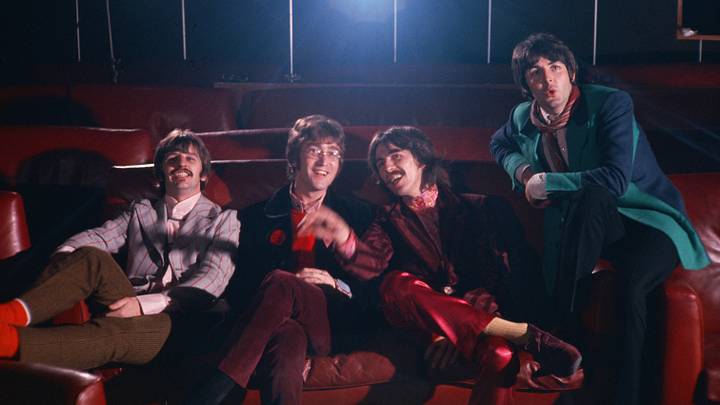
The world of pop and rock music was dominated by the Beatles for almost the entire 1960s until their breakup in 1970. Their debut hit “Love Me Do” launched them to superstardom almost immediately in 1962, and when their success in the UK was later matched by success in the U.S., the band for a time became—in the infamous words of John Lennon, at least—“more popular than Jesus.”
But, perhaps understandably for a band as big and influential as the Beatles became, their true story, impact, and reputation have long been muddled with myth and legend. Ultimately, music historians and fans alike will forever be faced with setting straight the endless misconceptions and misunderstandings that have emerged over the years.
Misconception #1: They Were Basically Just a Manufactured Boy Band That Got Lucky

Not everyone is a Beatles fan, of course, and their style of music isn’t for everyone either. But if there’s one thing some non-fans like to claim, it’s that the band was little more than a jumped-up, poppy boy band—or, in more generous terms, a basic rock-and-roll covers band that got lucky.
It’s certainly true that good fortune and good timing helped the band’s meteoric rise to fame, and were they not spotted in their early days by their eventual manager Brian Epstein, it’s at least possible they would have remained stuck on the British club circuit for rather longer than they did (leaving an opportunity open for another band to take their place on the A list).
It’s also true that their early lineup and sound were shaped by both Epstein and their producer, George Martin, in some ways that resemble how boy bands are manufactured by labels today. But though the band’s early discography was filled with covers of rock-and-roll standards, this was by no means a simple covers band or boy band pieced together by an enterprising management team.
The band consisted of self-taught musicians who honed their playing and songwriting craft over many years, and who had many hours of performance experience behind them before earning their place on the charts. The band was also continually experimenting with new sounds and writing techniques; tellingly, within just over three years of recording a cover of the rock standard “Twist and Shout” in 1963, they were writing Sgt. Pepper’s Lonely Hearts Club Band, now widely hailed as one of the most groundbreaking and experimental albums of all time.
Misconception #2: 'The Ed Sullivan Show' Introduced the Band in the States

A true watershed moment in the Beatles’ history was their appearance on The Ed Sullivan Show on February 9, 1964, which was watched by an audience of some 73 million people.
Contrary to the belief that the band’s appearance on the show introduced them in the States and effectively gave them an audience overnight, the band had actually already been causing a stir on both sides of the Atlantic prior to their appearance—and it was this that brought them to the show’s attention. In fact, by the time the band stepped foot on the Ed Sullivan stage that evening, they had already topped the Billboard charts in the U.S.
Interest in the Beatles had already been bubbling in the U.S. since 1963, and plans had been in place to have the band on the Ed Sullivan Show since the show’s talent booker, Jack Babb, saw them live in London at the height of the UK’s “Beatlemania” craze.
Listener demand had led to several U.S. radio stations playing some of the band’s music ahead of their Ed Sullivan appearance, too, and the band was already famous enough in America to be mobbed at the airport the moment they landed in New York prior to that performance.
Misconception #3: The Beatles Invented Guitar Feedback
Some overzealous Beatles fans might have you believe that the band was the first to utilize the sound of guitar feedback in their music—and even John Lennon himself would later claim that the band’s track “I Feel Fine” was the first time that guitar feedback was included on a record. The truth, rather like the sound itself, however, is a little hazier.
While it might certainly be the case that the Beatles were the first major artists to intentionally include feedback on a record, they certainly weren’t the first band or artist to use it, nor to make it. In fact, other artists had been using and experimenting with the sound of feedback before “I Feel Fine,” including early blues guitarists as far back as the ‘30s and ‘40s.
Misconception #4: Songwriting Was An Individual Affair

It’s fair to say the famed “Lennon-McCartney” pairing was the driving force behind many of the Beatles’ songs, but both George Harrison and Ringo Starr also penned many of the band’s songs over the years, including several of their most famous hits. There is a common misconception, however, that regardless of who the song in question is credited to, the Beatles wrote independently.
While it's certainly true the band members did occasionally come to the studio with their own songs, lyrics, and ideas already in place (Paul McCartney famously claimed that the melody to “Yesterday” came to him in a dream, for instance), the full process of putting a song together was frequently a collaborative affair—or, as John Lennon once referred to it, writing “together, one on one, eyeball to eyeball.”
Misconception #5: Yoko Broke Up the Band

It’s a rumor so widely known that even The Simpsons made a parodied reference to it: that the relationship between guitarist John Lennon and conceptual artist and musician Yoko Ono led to the band’s eventual breakup.
In truth, though, the band had been on somewhat shaky ground for rather a long time before Lennon and Ono married in 1969. Beatles legal documents that went on public sale in 2024 revealed that the cracks began to show as early as 1967, and were originally instigated by the death of the band’s long-time manager, Brian Epstein.
In his place, three of the band members agreed to bring in former Rolling Stones manager Allen Klein, but Paul McCartney objected and refused to sign Klein’s new contract. The rest of the band was happy to have Klein on board, though, and Klein soon began to impose his influence on the band’s direction, famously hiring Phil Spector to utilize his signature “wall of sound” technique on the band’s Let It Be recordings.
This too went against McCartney’s preferred “as-live” sound for the band, and lawyers were called in. As McCartney later recalled in an interview with David Frost, Yoko Ono “certainly didn’t break up the group—the group was breaking up.”
Misconception #6: They Never Repaired Their Friendships
The legal troubles and personal wrangling that dogged the band’s final years certainly left things on a rather frosty note when the Beatles went their separate ways in 1970, but a longstanding rumor that the band hated each other and remained distant is nothing more than yet another widely held misconception.
While it is certainly true that relationships within the band became complex and strained in the years before and after their breakup, the band members themselves remained close enough to continue collaborating throughout the 1970s and beyond. In fact, Ringo Starr’s self-titled solo album Ringo, released just three years after the band’s breakup in 1973, features all three of his former bandmates on vocals and various instruments.
Even John Lennon and Paul McCartney, whose relationship was perhaps the most strained by the time the band split up, eventually reconciled enough to hold an impromptu jam session in 1974. All told, although the band never reunited or recorded together again, various personal, musical, and professional events and projects led to them crossing paths for the rest of their careers; Ringo Starr even makes a guest appearance on Paul McCartney’s 2026 album, The Boys of Dungeon Lane.