%20%20--%3E%0A%3Csvg%20version%3D%221.1%22%20id%3D%22Layer_1%22%20xmlns%3D%22http%3A%2F%2Fwww.w3.org%2F2000%2Fsvg%22%20xmlns%3Axlink%3D%22http%3A%2F%2Fwww.w3.org%2F1999%2Fxlink%22%20x%3D%220px%22%20y%3D%220px%22%0A%09%20viewBox%3D%220%200%20684.6%2068.1%22%20style%3D%22enable-background%3Anew%200%200%20684.6%2068.1%3B%22%20xml%3Aspace%3D%22preserve%22%3E%0A%3Cg%3E%0A%09%3Cpath%20d%3D%22M444.1%2C29.3h-17.4v14.5h17.4V29.3z%20M36.4%2C68.1l29.3-50.8V0H50.4L32.9%2C36.8L15.5%2C0H0v68.1h16.7V45.8l12.4%2C22.3H36.4z%0A%09%09%20M49.1%2C68.1h16.6V23.4L49.1%2C52.1V68.1z%20M76.6%2C68.1h45V53.8H93.3V41.6h21V27.1h-21V14.8h28.3V0.1h-45V68.1z%20M175.6%2C68.1h17.3v-68%0A%09%09h-16.5v40.3L150%2C0.1h-17.6v68h16.7V27.7L175.6%2C68.1z%20M235.8%2C14.8h15.4V0.1h-47.4v14.7H219v53.2h16.8V14.8z%20M290.3%2C45.9h-17.1%0A%09%09l7.5-15.6h2L290.3%2C45.9z%20M298.7%2C68.1h18l-32.2-68h-5.7l-32%2C68h18l3.3-7.1h27.1L298.7%2C68.1z%20M325.2%2C68.1h46.2V53.8h-29.6V0.1h-16.7%0A%09%09V68.1z%20M423.7%2C14.8h27.2V0.1H407v68h16.7V14.8z%20M462%2C68.1h46.2V53.8h-29.6V0.1H462V68.1z%20M564.8%2C34.1c0%2C10.7-7.2%2C19.2-18.5%2C19.2%0A%09%09c-11.4%2C0-18.5-8.5-18.5-19.2s7.1-19.2%2C18.5-19.2C557.6%2C14.9%2C564.8%2C23.4%2C564.8%2C34.1%20M580.6%2C34.1c0-19-14.2-34-34.3-34%0A%09%09c-20.2%2C0-34.3%2C15-34.3%2C34c0%2C19%2C14.1%2C34%2C34.3%2C34C566.4%2C68.1%2C580.6%2C53.1%2C580.6%2C34.1%20M604.8%2C20.5c0-4.1%2C3.3-6.2%2C6.7-6.2%0A%09%09c4.4%2C0%2C6.6%2C3%2C6.6%2C6.6h14.7C631.8%2C9.1%2C625.1%2C0.1%2C611%2C0.1c-12%2C0-21.7%2C9.3-21.7%2C20.6c0%2C10.9%2C5.9%2C15.9%2C16.7%2C19.8%0A%09%09c5.2%2C1.8%2C11.5%2C3.2%2C11.5%2C8c0%2C3.3-2.4%2C5.5-6.4%2C5.5c-3.6%2C0-6.6-3-6.6-6.7h-15.2c0%2C11.5%2C7.9%2C20.8%2C21.8%2C20.8c12%2C0%2C21.6-9.3%2C21.6-20.6%0A%09%09c0-10-5.3-16.4-16.7-19.8C610.6%2C26.1%2C604.8%2C25.3%2C604.8%2C20.5%20M670%2C20.9h14.7C683.8%2C9.1%2C677.1%2C0.1%2C663%2C0.1c-12%2C0-21.7%2C9.3-21.7%2C20.6%0A%09%09c0%2C10.9%2C5.9%2C15.9%2C16.7%2C19.8c5.2%2C1.8%2C11.5%2C3.2%2C11.5%2C8c0%2C3.3-2.4%2C5.5-6.4%2C5.5c-3.6%2C0-6.6-3-6.6-6.7h-15.2c0%2C11.5%2C7.9%2C20.8%2C21.8%2C20.8%0A%09%09c12%2C0%2C21.6-9.3%2C21.6-20.6c0-10-5.3-16.4-16.7-19.8c-5.4-1.6-11.3-2.4-11.3-7.2c0-4.1%2C3.3-6.2%2C6.7-6.2C667.7%2C14.4%2C670%2C17.3%2C670%2C20.9%0A%09%09%22%2F%3E%0A%3C%2Fg%3E%0A%3C%2Fsvg%3E%0A)

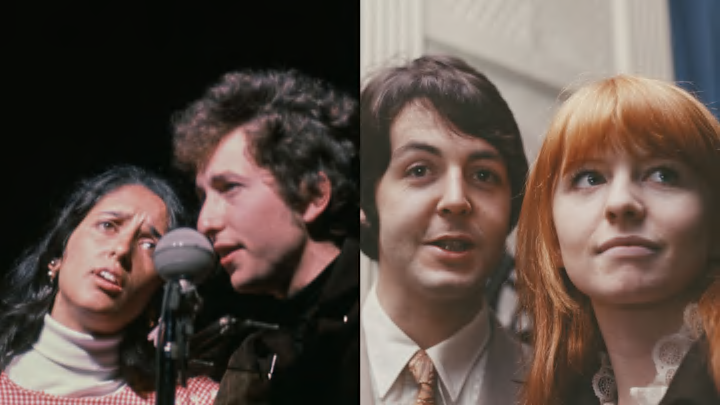
Heartbreak is a popular theme in countless classic songs, of course, but many high-profile romances, relationships, and marriages (and their subsequent breakups and dissolutions) have also been immortalized in song by the musicians and songwriters involved in them.
- The Beatles, “For No One” (1966)
- The Rolling Stones, “Angie” (1973)
- Joan Baez, “Diamonds and Rust” (1975)
- Fleetwood Mac, “Silver Springs” and “Go Your Own Way” (1976)
- ABBA, “The Winner Takes It All” (1980)
- Bruce Springsteen, “Brilliant Disguise” (1987)
- Alanis Morissette, “You Oughta Know” (1995)
- Sheryl Crow, “My Favorite Mistake” (1998)
- Taylor Swift, “All Too Well” (2012, 2021)
The Beatles, “For No One” (1966)
Paul McCartney wrote Revolver album track “For No One” while on holiday in Switzerland with his then-girlfriend, the actress Jane Asher, in 1966. The couple had been together since 1963, but by the mid-1960s, things were beginning to fall apart as the band began to take off, and Asher found herself pushed to the side. Of writing “For No One,” McCartney later admitted that it was probably inspired by “another argument”; the couple eventually went their separate ways after five years in 1968.
The Rolling Stones, “Angie” (1973)
Who exactly “Angie” was in the Stones’ classic 1973 hit of the same name has been the subject of debate among critics and fans for decades, with everyone from actress Angie Dickinson to David Bowie’s then-wife Angela Bowie among the potential inspirations. The song remains something of a mystery, though it has been rumored that the song was at least partly inspired by the intense heartbreak and loss lyricist Mick Jagger felt after his relationship with fellow rock star and muse Marianne Faithfull broke down.
Joan Baez, “Diamonds and Rust” (1975)
Folk icon Joan Baez wrote this song a full decade after her high-profile relationship with fellow icon Bob Dylan ended in the mid-1960s. Although Baez has since gone on record to claim she didn’t intend the song to be solely about Dylan, the pointed lyrics make his connection to the track clear. “Now you’re telling me you’re not nostalgic,” Baez finishes by saying, “Well, give me another word for it, you who are so good with words and keeping things vague.”
Fleetwood Mac, “Silver Springs” and “Go Your Own Way” (1976)
Two for the price of one here, with fellow bandmates and former beaus both writing blistering breakup songs about one another. Originally written for Fleetwood Mac’s classic album Rumours, Stevie Nicks’ “Silver Springs” instead went out as the B-side to the album’s 1976 lead single, “Go Your Own Way.” Nicks has admitted that “Silver Springs” is squarely about her relationship and eventual breakup with fellow band member Lindsey Buckingham, albeit turned into a metaphor inspired by a road sign Nicks saw while on a drive.
“I wrote Silver Springs about Lindsey,” she later explained. “We were in Maryland somewhere, driving under a freeway sign that said ‘Silver Spring, Maryland.’ And I loved the name … ‘You could be my silver springs.’ That’s just a whole symbolic thing, of what you could have been to me.” “Go Your Own Way,” meanwhile, was Buckingham’s own version of the couple’s breakup, which he wrote while he and the rest of the band were in Florida, mid-tour.
ABBA, “The Winner Takes It All” (1980)
While legendary ABBA songwriters Björn Ulvaeus and Benny Andersson were working on this track in the studio, Ulvaeus gave it the placeholder name “The Story of My Life.” But by the time the track was complete, it had become “The Winner Takes It All,” and the theme of the song had (allegedly, at least) shifted to that of his and fellow bandmember Agnetha Fältskog’s recent divorce.
Ulvaeus himself has always denied that the song is fully autobiographical, however, stating that it is about “the experience of a divorce, but it’s fiction.” Fältskog herself, however, seemingly took a different stance, and has since said outright that “Björn wrote [the song] about us, after the breakdown of our marriage.” Despite the potential awkwardness of the situation (i.e. performing a song about divorce written about you by your ex-husband), Fältskog used her experiences in her performance. “The fact that [Björn] wrote it exactly when we divorced is touching, really,” she admitted. “It was fantastic to do that song because I could put in such feeling.”
Bruce Springsteen, “Brilliant Disguise” (1987)
The lead single from The Boss’s 1987 album Tunnel of Love, the Top 10 hit Brilliant Disguise is rumored to have been inspired by Springsteen’s marital problems with his then-wife, the model and actress Julianna Phillips; the couple would go on to divorce two years later. If so, the lyrics make the couple’s troubles starkly clear, with lines like, “Look at me, baby / Struggling to do everything right / And then it all falls apart / When out go the lights.”
Alanis Morissette, “You Oughta Know” (1995)
Although Alanis Morissette herself has always refused to say who the ex-boyfriend in Jagged Little Pill’s second single “You Oughta Know” actually is, Full House actor and comedian Dave Coulier—who dated Morissette in the early 90s—has since claimed the song is about him. “I was listening to the lyrics,” Coulier said in an interview in 2022 in which he recalled his first listen to the song, “going, ‘Oh no. Oh, I can’t be this guy?!’” Despite their split (and the fierce track Morissette may or may not have written about it), however, Coulier went on to reconnect with Morissette, admitting that she “couldn’t be sweeter” when they got back in touch.
Sheryl Crow, “My Favorite Mistake” (1998)
Sheryl Crow was nominated for a Grammy for this reflective rock classic, which was the opening track on her Grammy-winning third album, The Globe Sessions. Although she has long remained tight-lipped on who the song might be referencing, fans have long assumed the song was written in response to the end of Crow’s relationship with fellow rock icon Eric Clapton. Even her longtime collaborator Jeff Trott admitted that Clapton’s name has long been attached to the song (although he assumed the “mistake” in question was Jakob Dylan).
Taylor Swift, “All Too Well” (2012, 2021)
Taylor Swift is no stranger to a breakup song, and this critically lauded track from her fourth album, Red, is often cited as one of her best—especially after it was expanded and rerecorded in its full 10-minute glory in 2021 (becoming the longest Number 1 hit in history in the process). There has long been speculation that the song is about Swift’s high-profile relationship with the actor Jake Gyllenhaal, with the rumors understandably re-emerging after the song’s re-release and chart success almost a decade later. In an effort to unearth the truth, Swifties have pored over the finest details of the song’s lyrics—to such an extent, in fact, that in 2017, Gyllenhaal’s sister, fellow actor Maggie Gyllenhaal, felt compelled to address the mysterious whereabouts of the scarf mentioned in the song. “I am in the dark about the scarf,” she said. “It’s totally possible. I don’t know. I have been asked this before.”