%20%20--%3E%0A%3Csvg%20version%3D%221.1%22%20id%3D%22Layer_1%22%20xmlns%3D%22http%3A%2F%2Fwww.w3.org%2F2000%2Fsvg%22%20xmlns%3Axlink%3D%22http%3A%2F%2Fwww.w3.org%2F1999%2Fxlink%22%20x%3D%220px%22%20y%3D%220px%22%0A%09%20viewBox%3D%220%200%20684.6%2068.1%22%20style%3D%22enable-background%3Anew%200%200%20684.6%2068.1%3B%22%20xml%3Aspace%3D%22preserve%22%3E%0A%3Cg%3E%0A%09%3Cpath%20d%3D%22M444.1%2C29.3h-17.4v14.5h17.4V29.3z%20M36.4%2C68.1l29.3-50.8V0H50.4L32.9%2C36.8L15.5%2C0H0v68.1h16.7V45.8l12.4%2C22.3H36.4z%0A%09%09%20M49.1%2C68.1h16.6V23.4L49.1%2C52.1V68.1z%20M76.6%2C68.1h45V53.8H93.3V41.6h21V27.1h-21V14.8h28.3V0.1h-45V68.1z%20M175.6%2C68.1h17.3v-68%0A%09%09h-16.5v40.3L150%2C0.1h-17.6v68h16.7V27.7L175.6%2C68.1z%20M235.8%2C14.8h15.4V0.1h-47.4v14.7H219v53.2h16.8V14.8z%20M290.3%2C45.9h-17.1%0A%09%09l7.5-15.6h2L290.3%2C45.9z%20M298.7%2C68.1h18l-32.2-68h-5.7l-32%2C68h18l3.3-7.1h27.1L298.7%2C68.1z%20M325.2%2C68.1h46.2V53.8h-29.6V0.1h-16.7%0A%09%09V68.1z%20M423.7%2C14.8h27.2V0.1H407v68h16.7V14.8z%20M462%2C68.1h46.2V53.8h-29.6V0.1H462V68.1z%20M564.8%2C34.1c0%2C10.7-7.2%2C19.2-18.5%2C19.2%0A%09%09c-11.4%2C0-18.5-8.5-18.5-19.2s7.1-19.2%2C18.5-19.2C557.6%2C14.9%2C564.8%2C23.4%2C564.8%2C34.1%20M580.6%2C34.1c0-19-14.2-34-34.3-34%0A%09%09c-20.2%2C0-34.3%2C15-34.3%2C34c0%2C19%2C14.1%2C34%2C34.3%2C34C566.4%2C68.1%2C580.6%2C53.1%2C580.6%2C34.1%20M604.8%2C20.5c0-4.1%2C3.3-6.2%2C6.7-6.2%0A%09%09c4.4%2C0%2C6.6%2C3%2C6.6%2C6.6h14.7C631.8%2C9.1%2C625.1%2C0.1%2C611%2C0.1c-12%2C0-21.7%2C9.3-21.7%2C20.6c0%2C10.9%2C5.9%2C15.9%2C16.7%2C19.8%0A%09%09c5.2%2C1.8%2C11.5%2C3.2%2C11.5%2C8c0%2C3.3-2.4%2C5.5-6.4%2C5.5c-3.6%2C0-6.6-3-6.6-6.7h-15.2c0%2C11.5%2C7.9%2C20.8%2C21.8%2C20.8c12%2C0%2C21.6-9.3%2C21.6-20.6%0A%09%09c0-10-5.3-16.4-16.7-19.8C610.6%2C26.1%2C604.8%2C25.3%2C604.8%2C20.5%20M670%2C20.9h14.7C683.8%2C9.1%2C677.1%2C0.1%2C663%2C0.1c-12%2C0-21.7%2C9.3-21.7%2C20.6%0A%09%09c0%2C10.9%2C5.9%2C15.9%2C16.7%2C19.8c5.2%2C1.8%2C11.5%2C3.2%2C11.5%2C8c0%2C3.3-2.4%2C5.5-6.4%2C5.5c-3.6%2C0-6.6-3-6.6-6.7h-15.2c0%2C11.5%2C7.9%2C20.8%2C21.8%2C20.8%0A%09%09c12%2C0%2C21.6-9.3%2C21.6-20.6c0-10-5.3-16.4-16.7-19.8c-5.4-1.6-11.3-2.4-11.3-7.2c0-4.1%2C3.3-6.2%2C6.7-6.2C667.7%2C14.4%2C670%2C17.3%2C670%2C20.9%0A%09%09%22%2F%3E%0A%3C%2Fg%3E%0A%3C%2Fsvg%3E%0A)

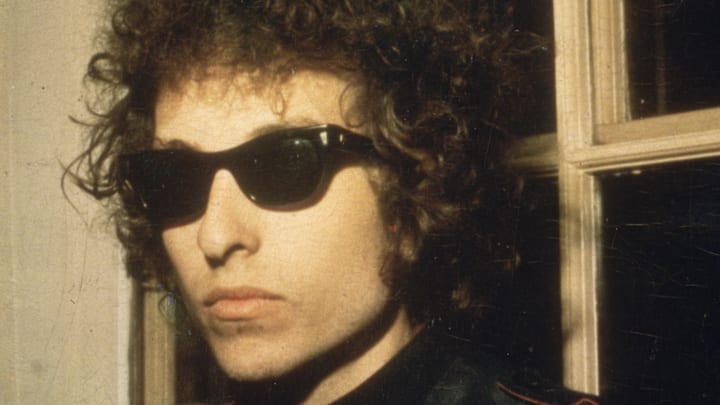
Bob Dylan is one of the world’s most iconic songwriters—so much so that he was awarded the Nobel Prize in Literature in 2016. Some of his most famous songs are undeniably associated with him, such as “Like a Rolling Stone” and “Blowin’ in the Wind.” Yet some of his other songs are much better known through other artists’ covers of them.
Here are five songs that—depending on your familiarity with music history and Dylan lore—you might be surprised to learn were written by Dylan himself.
- “All Along the Watchtower”
- “Make You Feel My Love”
- “Mr. Tambourine Man”
- “Knockin’ on Heaven’s Door”
- “If Not for You”
“All Along the Watchtower”
Dylan penned this song, but Jimi Hendrix made it immortal when he recorded it for his 1968 album Electric Ladyland. Dylan originally wrote the song during an 18-month period he spent recovering from a motorcycle accident in Woodstock, New York, and its enigmatic lyrics have provided fodder for many different interpretations. Chronicling an imagery-loaded conversation between a joker and a thief, the song has been linked to the Bible’s Book of Isaiah.
Dylan was personally a fan of this song, performing it live more than any of his other songs, but the track will always be connected to Hendrix’s version in popular imagination. Dylan even felt this way, and in the liner notes for Biograph, he described the song by writing, “strange how when I sing it, I always feel it’s a tribute to [Hendrix] in some kind of way.”
“Make You Feel My Love”
This song has been deftly covered by everyone from Garth Brooks to Adele, but it was originally written by Dylan himself. It appeared on his 1997 album Time Out of Mind, which was released when Dylan was 56. However, the song was actually initially released as a cover by Billy Joel.
Fans have long speculated about the song’s meaning, with some arguing that it might be about Dylan’s divorce from his second wife and others theorizing it might be about his relationship with God. Regardless, the song has become most famous due to all the artists who have covered it—reportedly over 450 since its release.
“Mr. Tambourine Man”
Dylan’s “Mr. Tambourine Man” is a psychedelic ode to the bohemian and creative life, at least according to some interpretations. The song was actually inspired by Bruce Langhorne, a musician who played guitar on the record.
Originally trained as a classical violinist, Langhorne lost two fingers in an accident at the age of 12, and soon switched to the guitar—and occasionally, the tambourine. “‘Mr. Tambourine Man,’ I think, was inspired by Bruce Langhorne. Bruce was playing guitar with me on a bunch of the early records. On one session, [producer] Tom Wilson had asked him to play tambourine,” Dylan wrote in the liner notes for Biograph. “And he had this gigantic tambourine. It was like, really big. It was as big as a wagon wheel. He was playing, and this vision of him playing this tambourine just stuck in my mind.”
While Dylan may have penned the track, it became famous when a cover was released by the Byrds in 1965 shortly after Dylan released his version. The Byrds' rendition reached number one on the Billboard Hot 100 charts, and helped shape modern folk rock and jangle pop. The versions are slightly different, though, as the Byrds’ song only uses one verse, whereas Dylan’s version has four.
“Knockin’ on Heaven’s Door”
Dylan originally penned this song for the movie Pat Garrett and Billy the Kid, and wrote it while on a plane flight to the set. It has been covered by everyone from Eric Clapton to Neil Young, though perhaps its most famous cover was recorded by Guns N’ Roses. The track is unique in Dylan’s songbook for its relative lyrical simplicity.
“If Not for You”
“If Not for You” is often associated with George Harrison’s version of the tune, but it’s actually a Dylan original. The song, which is believed to be a love song to Dylan’s first wife Sara, was released in 1970. Dylan also recorded a version with Harrison shortly after the song’s release, though that version remained unreleased until 1991. Harrison recorded his own version later that year, which was released on his album All Things Must Pass. The song was also covered by Olivia Newton-John in 1971, and the song became her first hit single.