%20%20--%3E%0A%3Csvg%20version%3D%221.1%22%20id%3D%22Layer_1%22%20xmlns%3D%22http%3A%2F%2Fwww.w3.org%2F2000%2Fsvg%22%20xmlns%3Axlink%3D%22http%3A%2F%2Fwww.w3.org%2F1999%2Fxlink%22%20x%3D%220px%22%20y%3D%220px%22%0A%09%20viewBox%3D%220%200%20684.6%2068.1%22%20style%3D%22enable-background%3Anew%200%200%20684.6%2068.1%3B%22%20xml%3Aspace%3D%22preserve%22%3E%0A%3Cg%3E%0A%09%3Cpath%20d%3D%22M444.1%2C29.3h-17.4v14.5h17.4V29.3z%20M36.4%2C68.1l29.3-50.8V0H50.4L32.9%2C36.8L15.5%2C0H0v68.1h16.7V45.8l12.4%2C22.3H36.4z%0A%09%09%20M49.1%2C68.1h16.6V23.4L49.1%2C52.1V68.1z%20M76.6%2C68.1h45V53.8H93.3V41.6h21V27.1h-21V14.8h28.3V0.1h-45V68.1z%20M175.6%2C68.1h17.3v-68%0A%09%09h-16.5v40.3L150%2C0.1h-17.6v68h16.7V27.7L175.6%2C68.1z%20M235.8%2C14.8h15.4V0.1h-47.4v14.7H219v53.2h16.8V14.8z%20M290.3%2C45.9h-17.1%0A%09%09l7.5-15.6h2L290.3%2C45.9z%20M298.7%2C68.1h18l-32.2-68h-5.7l-32%2C68h18l3.3-7.1h27.1L298.7%2C68.1z%20M325.2%2C68.1h46.2V53.8h-29.6V0.1h-16.7%0A%09%09V68.1z%20M423.7%2C14.8h27.2V0.1H407v68h16.7V14.8z%20M462%2C68.1h46.2V53.8h-29.6V0.1H462V68.1z%20M564.8%2C34.1c0%2C10.7-7.2%2C19.2-18.5%2C19.2%0A%09%09c-11.4%2C0-18.5-8.5-18.5-19.2s7.1-19.2%2C18.5-19.2C557.6%2C14.9%2C564.8%2C23.4%2C564.8%2C34.1%20M580.6%2C34.1c0-19-14.2-34-34.3-34%0A%09%09c-20.2%2C0-34.3%2C15-34.3%2C34c0%2C19%2C14.1%2C34%2C34.3%2C34C566.4%2C68.1%2C580.6%2C53.1%2C580.6%2C34.1%20M604.8%2C20.5c0-4.1%2C3.3-6.2%2C6.7-6.2%0A%09%09c4.4%2C0%2C6.6%2C3%2C6.6%2C6.6h14.7C631.8%2C9.1%2C625.1%2C0.1%2C611%2C0.1c-12%2C0-21.7%2C9.3-21.7%2C20.6c0%2C10.9%2C5.9%2C15.9%2C16.7%2C19.8%0A%09%09c5.2%2C1.8%2C11.5%2C3.2%2C11.5%2C8c0%2C3.3-2.4%2C5.5-6.4%2C5.5c-3.6%2C0-6.6-3-6.6-6.7h-15.2c0%2C11.5%2C7.9%2C20.8%2C21.8%2C20.8c12%2C0%2C21.6-9.3%2C21.6-20.6%0A%09%09c0-10-5.3-16.4-16.7-19.8C610.6%2C26.1%2C604.8%2C25.3%2C604.8%2C20.5%20M670%2C20.9h14.7C683.8%2C9.1%2C677.1%2C0.1%2C663%2C0.1c-12%2C0-21.7%2C9.3-21.7%2C20.6%0A%09%09c0%2C10.9%2C5.9%2C15.9%2C16.7%2C19.8c5.2%2C1.8%2C11.5%2C3.2%2C11.5%2C8c0%2C3.3-2.4%2C5.5-6.4%2C5.5c-3.6%2C0-6.6-3-6.6-6.7h-15.2c0%2C11.5%2C7.9%2C20.8%2C21.8%2C20.8%0A%09%09c12%2C0%2C21.6-9.3%2C21.6-20.6c0-10-5.3-16.4-16.7-19.8c-5.4-1.6-11.3-2.4-11.3-7.2c0-4.1%2C3.3-6.2%2C6.7-6.2C667.7%2C14.4%2C670%2C17.3%2C670%2C20.9%0A%09%09%22%2F%3E%0A%3C%2Fg%3E%0A%3C%2Fsvg%3E%0A)

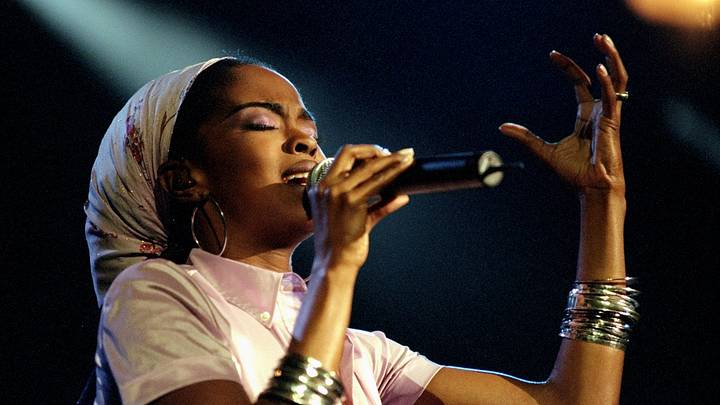
Lauryn Hill took home the inaugural Living Legend Icon Award at the BET Awards on June 28, 2026. “Across every era, she has never chased the moment; she has shaped it,” said Connie Orlando, BET’s EVP of Specials, Music Programming & Music Strategy, per Billboard.
“Her artistry redefined what was possible in our music and gave a generation permission to be fearless, spiritual and free,” Orlando added. “Her influence is woven into the fabric of the culture, and it is a profound honor to celebrate her legacy on Culture’s Biggest Night.”
Hill delivered a powerful acceptance speech after receiving the award. “I fight for y’all,” she said. “Everybody may not know about it, but I fight for y’all. And fighting for y’all is me fighting for myself, it’s me fighting for my children, it’s me fighting for my parents, it’s me fighting for my grandparents, it’s me fighting for my community. I have a desire to make music as well as I can, or to communicate with people as well as I can because I want people to know that’s what we do. I want people to know what we can do.”
Hill also surprised the audience with an impromptu performance of her hit “Ex-Factor.” She finished the show with “Everything Is Everything,” wowing the audience with her songs and inspiring words—characteristic of a star whose work has long broken records and impacted countless lives.
Always precociously talented, Hill began performing at a young age and pursued both music and acting in her early life. While in high school, she met two young Haitian immigrants named Pras Michel and Wyclef Jean, and together they formed the Fugees. Hill was a rapper and songwriter in the group, and their blend of reggae, hip-hop, soul, and R&B helped catapult them to the top of the charts.
In 1998, Hill released her debut album, The Miseducation of Lauryn Hill. Her one-of-a-kind voice, musicianship, and message made an enduring impact, helping the album soar to the top of the charts and immortalizing her in music history. Hill was nominated for 10 Grammys in 1999, five of which she won—a record for a woman at the time. In 2014, the Library of Congress added The Miseducation of Lauryn Hill to its National Recording Registry.
Hill’s voice and music has also been featured and sampled in countless hit songs by other artists, but she only lent her pen to other artists a few times over the years. Here are three songs you might not know Hill was behind.
- “A Rose Is Still a Rose” // Aretha Franklin
- “All That I Can Say” // Mary J. Blige
- "On That Day" // CeCe Winans
“A Rose Is Still a Rose” // Aretha Franklin
Lauryn Hill was in the midst of working on The Miseducation of Lauryn Hill and was well on her way to becoming a mega-star when she wrote the song “A Rose Is Still a Rose” for another icon: Aretha Franklin.
At the time, Hill was already well known as a member of the Fugees and for her roles in the soap opera As the World Turns and the movie Sister Act II. In 1997, the Fugees began working on solo projects. Hill’s creativity was clearly flowing, and as she was writing The Miseucation of Lauryn Hill, she also penned a song with Franklin in mind.
She was inspired to write “A Rose Is Still a Rose” after hearing Franklin’s cover of Ben E. King’s “Spanish Harlem,” which uses a rose as a metaphor for the object of the narrator’s affection.
In Franklin’s cover, she shifts the song from first-person to third-person, becoming an observer rather than a narrator. In “A Rose Is Still a Rose,” Hill builds on those themes, weaving a powerful song about empowerment and maintaining self-worth no matter what kind of heartbreak you’re going through.
Drew Dixon, who was VP of A&R at Arista Records at the time, was responsible for persuading label head Clive Davis to invest in a demo of the song after hearing Hill’s concept. “When Lauryn called me one afternoon and sang her idea for an Aretha song inspired by ‘A Rose In Spanish Harlem,‘ I was blown away,” Dixon recalled.
Davis encouraged Hill to write a bridge, which she did. He then asked Dixon to hire a producer for the track—and Dixon chose Hill, making “A Rose Is Still a Rose” into Hill’s first solo production credit.
In 1997, Hill went to Detroit with her mother and baby son Zion to record “A Rose Is Still a Rose” with Franklin. Hill recalled the experience in a Rolling Stone interview, saying it was “amazing to have Aretha singing words that you wrote.”
She also recalled the ambiance Franklin exuded. “I went into the vocal booth after she came out, and it smelled like church, like paper fans with wooden sticks,” Hill said. “I’m not kidding. Like it came out of her pores.”
Dixon also persuaded Davis to let Hill direct the music video, which she did, serving as a music video director for the second time after helming the video for Common’s 1997 “Retrospect For Life.” Meanwhile, “A Rose Is Still a Rose” became Franklin’s last top 40 hit on the Billboard Hot 100, and remains a beloved piece of her discography.
“All That I Can Say” // Mary J. Blige
R&B legend Mary J. Blige collaborated with Lauryn Hill on the song “I Used to Love Him” on The Miseducation of Lauryn Hill. Hill then lent her songwriting skills to Blige by writing the song “All That I Can Say,” which was the first track on Blige’s fourth album, Mary.
Hill also sang backup on the tune, and produced and arranged it herself. The track wound up hitting No. 6 on the Billboard R&B Charts, and earned Blige a Grammy nomination for Best Female R&B Vocal Performance.
Blige and Hill share a close friendship and a mutual admiration. “Working with Lauryn was just like being here right now, like being with my sister sitting around. She’s truly like a sister to me in her spirit. I think that she was sent so I won’t be discouraged of women anymore. So I can know that I do have a friend,” Blige said in an interview when asked about the pair’s relationship.
“Outside of being around her every day, I do have somebody that cares about me in the music business and wants to make sure that she gets the best out of Mary, and not the best—of course the best out of her, but she wanted to get the best out of me first, in the studio, and that was [by] allowing me to be me,” Blige continued.
Hill also shared similar sentiments about Blige. “I really feel Mary. I think she’s such an emotional singer,” she said in an interview, going on to recall the pair’s collaboration on “I Used to Love Him.”
“So when we got on the song, it was about coming out of a difficult and hard relationship and learning that it’s not about allowing someone to take advantage of you and treat you bad, but loving yourself,” she added. “And it was a beautiful song.”
"On That Day" // CeCe Winans
Hill also wrote and produced the song “On That Day” by CeCe Winans. The track was released on Winans’ 1998 album Everlasting Love. The lyrics encourage leaving behind “worldly vanity” for connection with God.
“A funny story is that my son was born the day after we went to the studio to first lay that track down on that day,” Hill recalled in an interview about the song, joking that a lot did indeed happen “On That Day.”
Winans went on to become one of the best-selling and most-awarded gospel artists ever, and her collaboration with Hill remains a beloved example of both artists' ability to merge contemporary R&B and neo-soul with gospel and spiritual themes.