%20%20--%3E%0A%3Csvg%20version%3D%221.1%22%20id%3D%22Layer_1%22%20xmlns%3D%22http%3A%2F%2Fwww.w3.org%2F2000%2Fsvg%22%20xmlns%3Axlink%3D%22http%3A%2F%2Fwww.w3.org%2F1999%2Fxlink%22%20x%3D%220px%22%20y%3D%220px%22%0A%09%20viewBox%3D%220%200%20684.6%2068.1%22%20style%3D%22enable-background%3Anew%200%200%20684.6%2068.1%3B%22%20xml%3Aspace%3D%22preserve%22%3E%0A%3Cg%3E%0A%09%3Cpath%20d%3D%22M444.1%2C29.3h-17.4v14.5h17.4V29.3z%20M36.4%2C68.1l29.3-50.8V0H50.4L32.9%2C36.8L15.5%2C0H0v68.1h16.7V45.8l12.4%2C22.3H36.4z%0A%09%09%20M49.1%2C68.1h16.6V23.4L49.1%2C52.1V68.1z%20M76.6%2C68.1h45V53.8H93.3V41.6h21V27.1h-21V14.8h28.3V0.1h-45V68.1z%20M175.6%2C68.1h17.3v-68%0A%09%09h-16.5v40.3L150%2C0.1h-17.6v68h16.7V27.7L175.6%2C68.1z%20M235.8%2C14.8h15.4V0.1h-47.4v14.7H219v53.2h16.8V14.8z%20M290.3%2C45.9h-17.1%0A%09%09l7.5-15.6h2L290.3%2C45.9z%20M298.7%2C68.1h18l-32.2-68h-5.7l-32%2C68h18l3.3-7.1h27.1L298.7%2C68.1z%20M325.2%2C68.1h46.2V53.8h-29.6V0.1h-16.7%0A%09%09V68.1z%20M423.7%2C14.8h27.2V0.1H407v68h16.7V14.8z%20M462%2C68.1h46.2V53.8h-29.6V0.1H462V68.1z%20M564.8%2C34.1c0%2C10.7-7.2%2C19.2-18.5%2C19.2%0A%09%09c-11.4%2C0-18.5-8.5-18.5-19.2s7.1-19.2%2C18.5-19.2C557.6%2C14.9%2C564.8%2C23.4%2C564.8%2C34.1%20M580.6%2C34.1c0-19-14.2-34-34.3-34%0A%09%09c-20.2%2C0-34.3%2C15-34.3%2C34c0%2C19%2C14.1%2C34%2C34.3%2C34C566.4%2C68.1%2C580.6%2C53.1%2C580.6%2C34.1%20M604.8%2C20.5c0-4.1%2C3.3-6.2%2C6.7-6.2%0A%09%09c4.4%2C0%2C6.6%2C3%2C6.6%2C6.6h14.7C631.8%2C9.1%2C625.1%2C0.1%2C611%2C0.1c-12%2C0-21.7%2C9.3-21.7%2C20.6c0%2C10.9%2C5.9%2C15.9%2C16.7%2C19.8%0A%09%09c5.2%2C1.8%2C11.5%2C3.2%2C11.5%2C8c0%2C3.3-2.4%2C5.5-6.4%2C5.5c-3.6%2C0-6.6-3-6.6-6.7h-15.2c0%2C11.5%2C7.9%2C20.8%2C21.8%2C20.8c12%2C0%2C21.6-9.3%2C21.6-20.6%0A%09%09c0-10-5.3-16.4-16.7-19.8C610.6%2C26.1%2C604.8%2C25.3%2C604.8%2C20.5%20M670%2C20.9h14.7C683.8%2C9.1%2C677.1%2C0.1%2C663%2C0.1c-12%2C0-21.7%2C9.3-21.7%2C20.6%0A%09%09c0%2C10.9%2C5.9%2C15.9%2C16.7%2C19.8c5.2%2C1.8%2C11.5%2C3.2%2C11.5%2C8c0%2C3.3-2.4%2C5.5-6.4%2C5.5c-3.6%2C0-6.6-3-6.6-6.7h-15.2c0%2C11.5%2C7.9%2C20.8%2C21.8%2C20.8%0A%09%09c12%2C0%2C21.6-9.3%2C21.6-20.6c0-10-5.3-16.4-16.7-19.8c-5.4-1.6-11.3-2.4-11.3-7.2c0-4.1%2C3.3-6.2%2C6.7-6.2C667.7%2C14.4%2C670%2C17.3%2C670%2C20.9%0A%09%09%22%2F%3E%0A%3C%2Fg%3E%0A%3C%2Fsvg%3E%0A)

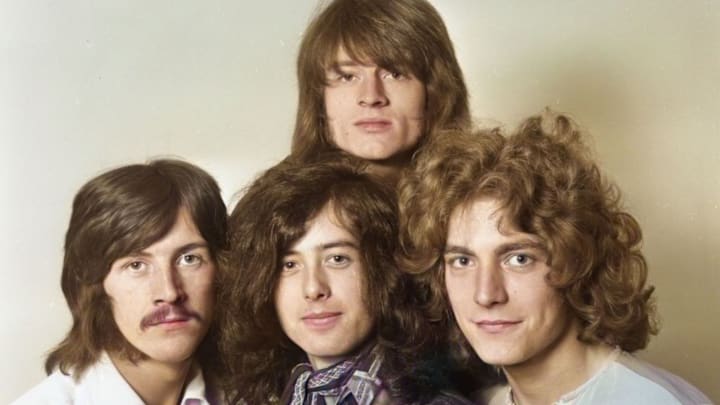
Led Zeppelin was the gold standard during the golden age of rock music.
It was the late 1960s. Rock 'n' roll, shaped by a decade of blues influence, began to evolve into a more experimental genre refined by artistic compositions and high-energy hits that shaped the soundtrack of one generation’s youth and was immortalized as "classic rock" by later generations.
British guitarist Jimmy Page, then a member of The Yardbirds, first crossed paths with bassist and keyboardist John Paul Jones in 1964, who would go on to play on the band's 1967 album, Little Games. After The Yardbirds' breakup in 1968, Page recruited Jones, along with vocalist Robert Plant and drummer John Bonham, to form The New Yardbirds. Together, they crafted a sound that blended heavy blues, hard rock, and explosive energy, forging a musical identity unlike anything the industry had experienced; an alchemy that would soon be known around the world as Led Zeppelin.
Despite their storied legacy, one of their most fascinating anecdotes isn't about a particular song or performance; it's about how they settled on their iconic moniker.
Here’s the surprising story behind how Led Zeppelin got their name.
THE JOKE THAT MADE MUSIC HISTORY
Before they became one of rock's biggest acts, the band began as a new project led by Page. The guitarist had built a reputation as a talented session musician, where he met Jones, and the two agreed to collaborate on a musical venture after the initial bassist abandoned the vision.
In August 1968, Page invited Plant and Bonham to join the lineup for a Scandinavian tour. At the time, they performed under the name The New Yardbirds, essentially serving as a transitional group of the band that would soon dominate rock music.
The famous name was officially launched later that year, and its origin was, for lack of better words, very out of the blue. The idea reportedly came from Keith Moon, the eccentric drummer of The Who. While discussing the idea of forming a supergroup with Page and other musicians, Moon joked that the project would fail miserably, saying it would go down like a "lead balloon."
Instead of dismissing the comment, Page found inspiration in it. The phrase evolved from "lead balloon" into something even bigger and more dramatic: a zeppelin, the massive airships that floated through the sky in the early 20th century. The result was the bold and memorable name Led Zeppelin. Page later recalled that Moon had mentioned the name in conversation, and he simply asked if he could use it for his new band.
There has been debate over who originally coined the phrase, with some attributing it to The Who’s John Entwistle. Regardless of who said it first, the joke became one of rock’s most legendary band names.
A LEGACY LARGER THAN LIFE
Once the group officially adopted the name Led Zeppelin, their rise was rapid and electrifying. Their music featured pounding drums, powerful guitar riffs, and dynamic vocals. This distinctive sound, displayed in tracks such as "Stairway to Heaven," "Kashmir," "Black Dog," and "Immigrant Song," defined an entire era of rock music.
Throughout their early releases, numerous awards, and eventual split in 1980 after Bonham's death, the band was recognized for their intense performances and undeniable sound. Basically, if Led Zeppelin was playing on the radio, you knew it was Led Zeppelin.
Their music struck a chord with audiences worldwide, placing them on the front page of every rock magazine from London to Los Angeles. Both fans and critics praised their experimental approach to music, technical mastery, and commanding stage presence.
Their legacy goes beyond chart-topping songs and best-selling albums; they fundamentally changed the trajectory of rock music.
THE LEAD BALLON TAKES FLIGHT
What began as a humorous comment about failure turned into a name synonymous with rock 'n' roll.
With Page, Plant, Jones, and Bonham at the helm, Led Zeppelin evolved into a timeless rock figure admired across generations. It all started with four skilled musicians and a joke that launched them further than anyone ever thought possible, well above the fate of a lead balloon.