%20%20--%3E%0A%3Csvg%20version%3D%221.1%22%20id%3D%22Layer_1%22%20xmlns%3D%22http%3A%2F%2Fwww.w3.org%2F2000%2Fsvg%22%20xmlns%3Axlink%3D%22http%3A%2F%2Fwww.w3.org%2F1999%2Fxlink%22%20x%3D%220px%22%20y%3D%220px%22%0A%09%20viewBox%3D%220%200%20684.6%2068.1%22%20style%3D%22enable-background%3Anew%200%200%20684.6%2068.1%3B%22%20xml%3Aspace%3D%22preserve%22%3E%0A%3Cg%3E%0A%09%3Cpath%20d%3D%22M444.1%2C29.3h-17.4v14.5h17.4V29.3z%20M36.4%2C68.1l29.3-50.8V0H50.4L32.9%2C36.8L15.5%2C0H0v68.1h16.7V45.8l12.4%2C22.3H36.4z%0A%09%09%20M49.1%2C68.1h16.6V23.4L49.1%2C52.1V68.1z%20M76.6%2C68.1h45V53.8H93.3V41.6h21V27.1h-21V14.8h28.3V0.1h-45V68.1z%20M175.6%2C68.1h17.3v-68%0A%09%09h-16.5v40.3L150%2C0.1h-17.6v68h16.7V27.7L175.6%2C68.1z%20M235.8%2C14.8h15.4V0.1h-47.4v14.7H219v53.2h16.8V14.8z%20M290.3%2C45.9h-17.1%0A%09%09l7.5-15.6h2L290.3%2C45.9z%20M298.7%2C68.1h18l-32.2-68h-5.7l-32%2C68h18l3.3-7.1h27.1L298.7%2C68.1z%20M325.2%2C68.1h46.2V53.8h-29.6V0.1h-16.7%0A%09%09V68.1z%20M423.7%2C14.8h27.2V0.1H407v68h16.7V14.8z%20M462%2C68.1h46.2V53.8h-29.6V0.1H462V68.1z%20M564.8%2C34.1c0%2C10.7-7.2%2C19.2-18.5%2C19.2%0A%09%09c-11.4%2C0-18.5-8.5-18.5-19.2s7.1-19.2%2C18.5-19.2C557.6%2C14.9%2C564.8%2C23.4%2C564.8%2C34.1%20M580.6%2C34.1c0-19-14.2-34-34.3-34%0A%09%09c-20.2%2C0-34.3%2C15-34.3%2C34c0%2C19%2C14.1%2C34%2C34.3%2C34C566.4%2C68.1%2C580.6%2C53.1%2C580.6%2C34.1%20M604.8%2C20.5c0-4.1%2C3.3-6.2%2C6.7-6.2%0A%09%09c4.4%2C0%2C6.6%2C3%2C6.6%2C6.6h14.7C631.8%2C9.1%2C625.1%2C0.1%2C611%2C0.1c-12%2C0-21.7%2C9.3-21.7%2C20.6c0%2C10.9%2C5.9%2C15.9%2C16.7%2C19.8%0A%09%09c5.2%2C1.8%2C11.5%2C3.2%2C11.5%2C8c0%2C3.3-2.4%2C5.5-6.4%2C5.5c-3.6%2C0-6.6-3-6.6-6.7h-15.2c0%2C11.5%2C7.9%2C20.8%2C21.8%2C20.8c12%2C0%2C21.6-9.3%2C21.6-20.6%0A%09%09c0-10-5.3-16.4-16.7-19.8C610.6%2C26.1%2C604.8%2C25.3%2C604.8%2C20.5%20M670%2C20.9h14.7C683.8%2C9.1%2C677.1%2C0.1%2C663%2C0.1c-12%2C0-21.7%2C9.3-21.7%2C20.6%0A%09%09c0%2C10.9%2C5.9%2C15.9%2C16.7%2C19.8c5.2%2C1.8%2C11.5%2C3.2%2C11.5%2C8c0%2C3.3-2.4%2C5.5-6.4%2C5.5c-3.6%2C0-6.6-3-6.6-6.7h-15.2c0%2C11.5%2C7.9%2C20.8%2C21.8%2C20.8%0A%09%09c12%2C0%2C21.6-9.3%2C21.6-20.6c0-10-5.3-16.4-16.7-19.8c-5.4-1.6-11.3-2.4-11.3-7.2c0-4.1%2C3.3-6.2%2C6.7-6.2C667.7%2C14.4%2C670%2C17.3%2C670%2C20.9%0A%09%09%22%2F%3E%0A%3C%2Fg%3E%0A%3C%2Fsvg%3E%0A)

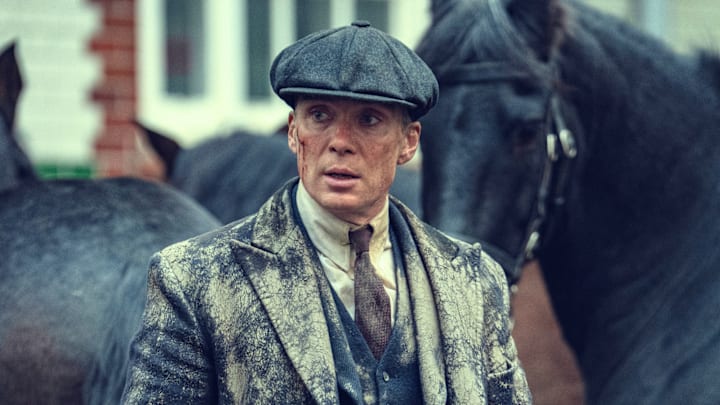
Since it was first broadcast in 2013, acclaimed British crime drama series Peaky Blinders has become a true cultural phenomenon, with the so-called “Peaky Effect” sparking an unexpected resurgence in interest in everything from men’s undercut hair and tweed suits to long-fitting greatcoats and even traditional flat caps (which saw an 83% spike in sales in the mid 2010s).
The popularity of the show—and now its spinoff movie, which is now streaming on Netflix—has likewise caused a noticeable spike in tourism in Birmingham and England’s West Midlands region, where its events are set among a band of gangsters in the early 20th century.
But just how accurate is the series’s portrayal of life in the 1900s in industrial England, and among the gangs that operated there at the time? Were things really as brutal and as grim and as gritty as Peaky Blinders makes out, or is there a little poetic license going on behind the scenes?
THE CITY

Although filmed at various urban locations across the UK (including the cities of Liverpool, Manchester, and Leeds), Peaky Blinders is chiefly set in the city of Birmingham, one of the most important industrial centers of England’s manufacturing past, particularly in the production of iron and steel.
By the early 1900s, Birmingham had emerged as a “city of a thousand trades,” where expert engineers, inventors, manufacturers and industrialists plied a host of different trades, across a variety of different industries. And, as a result, the smog, smoke, noise, and clamor of the city as portrayed in Peaky Blinders is a fair representation of how a city that was at one point crisscrossed by more than 200 steam engines would have looked and sounded.
Series creator Steven Knight used his own mother’s memories of growing up in Birmingham in the first half of the 20th century in recreating the city in the show. In an interview with The Guardian in 2016, Knight explained, “When my mum was growing up, all you could hear, 24 hours a day, was bang-bang, the thump of the steam hammers and the smell and the smoke—the air was green sometimes. I wanted to keep all that in the programme.”
The show secured an extra dash of hyper-realism by filming much of its Birmingham-set action in the West Midlands Black Country Living Museum in Dudley, on the western outskirts of the city. The open-air museum comprises more than 50 buildings from across the Black Country (the name given to the industrial region around Birmingham, in allusion to the intense smoke, soot and pollution once found there) that have been painstakingly been moved there, brick by brick, to create a walkable, true-to-life turn-of-the-last century village.
Alongside the likes of a chapel and local stores, the museum is also home to a working canal dockyard, industrial lime kilns, and even the remains of an old coal mine, all looking precisely how they would have looked a century ago.
THE HOUSES

To celebrate the release of the fifth season of Peaky Blinders in 2019, the Birmingham Corporation released a series of photographs from its archives showing what the homes and lives of people there were like in the early 1900s: perhaps unsurprisingly in such an overcrowded and an intensely industrial city, life was hard in early 1900s Birmingham, with the photographs showing impoverished workers and their young families were routinely packed into row upon row of small, cramped, untidy slum houses, just like those shown in the show.
These houses were typically built quickly, to keep up with the pace of change and demand for ever more workmen in the nearby factories and foundries, and with little thought to quality or comfort. Uncarpeted brick floors or even tiles laid directly onto the earth were standard, while the buildings themselves reportedly shook and rattled when the factories’ machinery was in use.
As such, issues with dampness, cleanliness, and sanitation were commonplace, and both disease and infant mortality rates were shockingly high.
THE GANGS

With conditions so grim, and pay so slight, predictably many young men and boys living in the slums of industrial Birmingham turned to a life of crime to make ends meet. Simple acts of theft and pickpocketing in the late 1800s quickly developed into more organized crime in the early 1900s, and before long a violent youth culture of underpaid, undervalued, and disenfranchised men had emerged across the city.
Not content with simply robbing their victims, these gangs began embarking on ever more violent assaults—as well as the likes of illegal bookmaking and racketeering—and before long their activities were being reported int the national press.
As multiple various organized groups of criminals began to emerge across the city, different parts of Birmingham fell under the control of different gangs. The Peaky Blinders themselves (yes, they were a real gang) were based around the city’s Small Heath area, but turf wars with other nearby rival gangs were common.
The Blinders’ main rivals were the Cheapside Sloggers, with whom they clashed for over 30 years in an effort to maintain control of their territory, but other rivals included the Italian Sabini gang, and the so-called Birmingham Boys (who would eventually supersede the Peaky Blinders in the mid 1900s), both of whom are portrayed in the series.
THE FASHIONS

Alas, if there’s one way in which the TV and movie portrayal of the Peaky Blinders doesn’t quite stick to real life it’s in their fashions. The gang were certainly well known for their distinctive appearance and clothing, but as much as the Peaky Blinders franchise might have sparked a newfound fashion for men’s flat caps, not all the Blinders themselves wore them (and it’s also highly unlikely they kept razor blades in their brims).
As some historians have pointed out, although contemporary mugshots of the Peaky Blinders often show them wearing soft caps, the gang themselves typically wore so-called “billycock” hats—a style of bowler or derby hat with a tall rounded crown and a broad two-and-a-half-inch brim. The gang supposedly shaped this brim to a point and wore it tilted downwards, obscuring one eye, hence their name.
Contrary to the legend that they used secreted razor blades to “blind” their rivals and victims, the gang were more likely to use simple knives, belts, and buckles—not least because razor blades were still something of a luxury item at the time the gang were in operation.