%20%20--%3E%0A%3Csvg%20version%3D%221.1%22%20id%3D%22Layer_1%22%20xmlns%3D%22http%3A%2F%2Fwww.w3.org%2F2000%2Fsvg%22%20xmlns%3Axlink%3D%22http%3A%2F%2Fwww.w3.org%2F1999%2Fxlink%22%20x%3D%220px%22%20y%3D%220px%22%0A%09%20viewBox%3D%220%200%20684.6%2068.1%22%20style%3D%22enable-background%3Anew%200%200%20684.6%2068.1%3B%22%20xml%3Aspace%3D%22preserve%22%3E%0A%3Cg%3E%0A%09%3Cpath%20d%3D%22M444.1%2C29.3h-17.4v14.5h17.4V29.3z%20M36.4%2C68.1l29.3-50.8V0H50.4L32.9%2C36.8L15.5%2C0H0v68.1h16.7V45.8l12.4%2C22.3H36.4z%0A%09%09%20M49.1%2C68.1h16.6V23.4L49.1%2C52.1V68.1z%20M76.6%2C68.1h45V53.8H93.3V41.6h21V27.1h-21V14.8h28.3V0.1h-45V68.1z%20M175.6%2C68.1h17.3v-68%0A%09%09h-16.5v40.3L150%2C0.1h-17.6v68h16.7V27.7L175.6%2C68.1z%20M235.8%2C14.8h15.4V0.1h-47.4v14.7H219v53.2h16.8V14.8z%20M290.3%2C45.9h-17.1%0A%09%09l7.5-15.6h2L290.3%2C45.9z%20M298.7%2C68.1h18l-32.2-68h-5.7l-32%2C68h18l3.3-7.1h27.1L298.7%2C68.1z%20M325.2%2C68.1h46.2V53.8h-29.6V0.1h-16.7%0A%09%09V68.1z%20M423.7%2C14.8h27.2V0.1H407v68h16.7V14.8z%20M462%2C68.1h46.2V53.8h-29.6V0.1H462V68.1z%20M564.8%2C34.1c0%2C10.7-7.2%2C19.2-18.5%2C19.2%0A%09%09c-11.4%2C0-18.5-8.5-18.5-19.2s7.1-19.2%2C18.5-19.2C557.6%2C14.9%2C564.8%2C23.4%2C564.8%2C34.1%20M580.6%2C34.1c0-19-14.2-34-34.3-34%0A%09%09c-20.2%2C0-34.3%2C15-34.3%2C34c0%2C19%2C14.1%2C34%2C34.3%2C34C566.4%2C68.1%2C580.6%2C53.1%2C580.6%2C34.1%20M604.8%2C20.5c0-4.1%2C3.3-6.2%2C6.7-6.2%0A%09%09c4.4%2C0%2C6.6%2C3%2C6.6%2C6.6h14.7C631.8%2C9.1%2C625.1%2C0.1%2C611%2C0.1c-12%2C0-21.7%2C9.3-21.7%2C20.6c0%2C10.9%2C5.9%2C15.9%2C16.7%2C19.8%0A%09%09c5.2%2C1.8%2C11.5%2C3.2%2C11.5%2C8c0%2C3.3-2.4%2C5.5-6.4%2C5.5c-3.6%2C0-6.6-3-6.6-6.7h-15.2c0%2C11.5%2C7.9%2C20.8%2C21.8%2C20.8c12%2C0%2C21.6-9.3%2C21.6-20.6%0A%09%09c0-10-5.3-16.4-16.7-19.8C610.6%2C26.1%2C604.8%2C25.3%2C604.8%2C20.5%20M670%2C20.9h14.7C683.8%2C9.1%2C677.1%2C0.1%2C663%2C0.1c-12%2C0-21.7%2C9.3-21.7%2C20.6%0A%09%09c0%2C10.9%2C5.9%2C15.9%2C16.7%2C19.8c5.2%2C1.8%2C11.5%2C3.2%2C11.5%2C8c0%2C3.3-2.4%2C5.5-6.4%2C5.5c-3.6%2C0-6.6-3-6.6-6.7h-15.2c0%2C11.5%2C7.9%2C20.8%2C21.8%2C20.8%0A%09%09c12%2C0%2C21.6-9.3%2C21.6-20.6c0-10-5.3-16.4-16.7-19.8c-5.4-1.6-11.3-2.4-11.3-7.2c0-4.1%2C3.3-6.2%2C6.7-6.2C667.7%2C14.4%2C670%2C17.3%2C670%2C20.9%0A%09%09%22%2F%3E%0A%3C%2Fg%3E%0A%3C%2Fsvg%3E%0A)

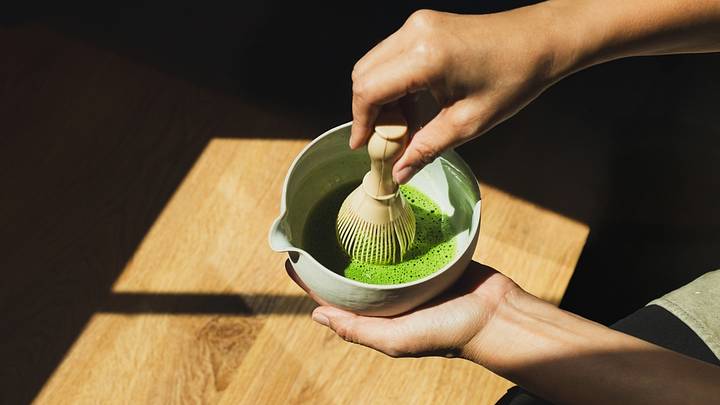
You might have seen matcha popping up on the menu at your local cafe in the last few years. Matcha also has a very long history rooted in Chinese and Japanese traditions. Here’s a look at what it is, how it’s made, and what it means—so you can get the most out of your next cup of this grounding and invigorating tea.
How Is Matcha Made?

In essence, matcha is finely ground green tea leaves. The word matcha refers to a powder derived from the leaves of the Camellia sinensis plant, which produces all forms of tea. Matcha is made specifically from tencha leaves.
To make matcha, tea bushes are covered to block out sunlight. Farmers often carefully work to determine exactly how much shade to give the plants. The shade causes them to produce more chlorophyll and L-theanine, which gives matcha its distinctive flavor and some of its unique nutritional value. The leaves are then carefully steamed, which stops the oxidation process, and de-veined and de-stemmed.
They are then placed in granite mills that carefully grind them into fine powder. This delicate process results in matcha’s creamy, smooth quality. Matcha can vary in refinement and quality depending on the quality of the tencha leaves and the care taken during cultivation.
What Determines Quality Matcha?

Today, matcha has become extremely popular around the world. However, there is considerable variation in the quality and refinement of matcha powders used today.
In Japan, the best matcha is generally said to have the most vivid green color and the richest flavor. This matcha is sometimes called “ceremonial grade,” which is a contemporary term, and is usually consumed without any sweeteners or additives. Matcha that is more bitter and less green is called culinary grade, and this is what you’ll often find in mixed drinks, ice cream, and other treats.
Additionally, according to the Japanese Matcha Association, matcha’s popularity has led to widespread false advertising, with many companies selling powders that are not technically matcha under that name. Matcha’s recent surge in popularity has also strained supply chains, overwhelming matcha farmers and leading to shortages and price spikes. Because of this, efforts to standardize and regulate the sale of matcha are underway.
The Meaning and Origins of Matcha

The word matcha means “ground tea” in Japanese. It consists of two Japanese words: matsu, which means “to rub” or “to grind,” and cha, meaning “tea.”
The earliest precursor to matcha was green tea cultivated in China. There are many theories about how green tea’s medicinal properties were discovered. Per the Japanese Matcha Association, one popular legend holds that Shen Nong, the founder of Chinese medicine, was on a journey to study medicinal plants across China’s fields and mountains, and would chew green tea leaves to detoxify himself after being exposed to poisonous plants.
During the Tang dynasty, tea producers are said to have begun steaming and pressing tea leaves into bricks to facilitate transport. This is believed to have led to the development of powdered tea, which Buddhist monks began using during the Song dynasty to aid their meditations.
This practice was first brought to Japan in the 1100s by a Zen Buddhist monk named Myōan Eisai, who acquired tea seeds on a visit to China. Upon his return, he established new traditions involving the cultivation and brewing of green tea as a devotional and ceremonial act. Carefully and mindfully making and serving tea, in this school of thought, is a way to cultivate beauty, simplicity, and peace in a world that can be damaged and chaotic.
Eisai is also said to have ordered the monk Myoe Shonin to plant the tea seeds he brought on the grounds of his temple in Toganoo, a region north of Kyoto. However, Myoe Shonin found the perfect climate for the seeds in an area called Uji, which is widely regarded as the location that produces the gold standard of Japanese teas to this day. Over the years, farmers in Japan developed the practice of shading the tea leaves, and the contemporary method of cultivating matcha was born.
How to Prepare Matcha

There is no one way to drink matcha, but traditional tea ceremonies often follow a specific blueprint: the matcha is placed in a tea bowl with hot water and mixed with a bamboo whisk.
There are two primary traditional ways to prepare matcha. One is Koicha, which means “thick tea” and involves a higher ratio of matcha to water. Here, the matcha is slowly kneaded with the bamboo whisk until it forms a thick, dark green liquid. This method is typically used in ceremonies and special occasions. Alternatively, Usucha is a method that involves using more water and less matcha. Here, the matcha is whisked into a frothy brew, and is typically served more informally.
Matcha can, of course, be made in many different ways. But an intentional ritual around the drink is certainly the best way to tap into its ceremonial roots.
The Spiritual Meaning of Matcha

Matcha’s early association with Zen Buddhism is said to have made it a favorite among Buddhist monks, who used the drink to support long meditations on their path to enlightenment.
In the 16th century, tea ceremonies began to gain popularity across Japan, helping spread matcha more widely. These ceremonies, which were popularized by the tea master Sen no Rikyū, persist to this day and focus on deep presence, patience, and reverence.
They are said to be a way to cultivate wabi-sabi, a worldview that focuses on finding beauty in imperfection and impermanence. The simplicity and elegance of these ceremonies often extends to the room, utensils, and preparation of the tea ceremony from start to finish.
Tea ceremonies can also be ways to honor nature and its elements. The water used to brew matcha is sometimes associated with the element of yin, while the fire that brews the tea represents yang, and together they form harmonious balance. Every aspect of the ceremony can be seen as a way to awaken connection to the five senses, to purify the mind, body, and spirit, and to honor the power of simply slowing down and paying attention.
So the next time you order matcha at your local cafe, it might be a good idea to take an extra moment to pause and be present with your beverage, and to spend some time contemplating the unique magnificence of our flawed, ephemeral existence as you take your first sip.