%20%20--%3E%0A%3Csvg%20version%3D%221.1%22%20id%3D%22Layer_1%22%20xmlns%3D%22http%3A%2F%2Fwww.w3.org%2F2000%2Fsvg%22%20xmlns%3Axlink%3D%22http%3A%2F%2Fwww.w3.org%2F1999%2Fxlink%22%20x%3D%220px%22%20y%3D%220px%22%0A%09%20viewBox%3D%220%200%20684.6%2068.1%22%20style%3D%22enable-background%3Anew%200%200%20684.6%2068.1%3B%22%20xml%3Aspace%3D%22preserve%22%3E%0A%3Cg%3E%0A%09%3Cpath%20d%3D%22M444.1%2C29.3h-17.4v14.5h17.4V29.3z%20M36.4%2C68.1l29.3-50.8V0H50.4L32.9%2C36.8L15.5%2C0H0v68.1h16.7V45.8l12.4%2C22.3H36.4z%0A%09%09%20M49.1%2C68.1h16.6V23.4L49.1%2C52.1V68.1z%20M76.6%2C68.1h45V53.8H93.3V41.6h21V27.1h-21V14.8h28.3V0.1h-45V68.1z%20M175.6%2C68.1h17.3v-68%0A%09%09h-16.5v40.3L150%2C0.1h-17.6v68h16.7V27.7L175.6%2C68.1z%20M235.8%2C14.8h15.4V0.1h-47.4v14.7H219v53.2h16.8V14.8z%20M290.3%2C45.9h-17.1%0A%09%09l7.5-15.6h2L290.3%2C45.9z%20M298.7%2C68.1h18l-32.2-68h-5.7l-32%2C68h18l3.3-7.1h27.1L298.7%2C68.1z%20M325.2%2C68.1h46.2V53.8h-29.6V0.1h-16.7%0A%09%09V68.1z%20M423.7%2C14.8h27.2V0.1H407v68h16.7V14.8z%20M462%2C68.1h46.2V53.8h-29.6V0.1H462V68.1z%20M564.8%2C34.1c0%2C10.7-7.2%2C19.2-18.5%2C19.2%0A%09%09c-11.4%2C0-18.5-8.5-18.5-19.2s7.1-19.2%2C18.5-19.2C557.6%2C14.9%2C564.8%2C23.4%2C564.8%2C34.1%20M580.6%2C34.1c0-19-14.2-34-34.3-34%0A%09%09c-20.2%2C0-34.3%2C15-34.3%2C34c0%2C19%2C14.1%2C34%2C34.3%2C34C566.4%2C68.1%2C580.6%2C53.1%2C580.6%2C34.1%20M604.8%2C20.5c0-4.1%2C3.3-6.2%2C6.7-6.2%0A%09%09c4.4%2C0%2C6.6%2C3%2C6.6%2C6.6h14.7C631.8%2C9.1%2C625.1%2C0.1%2C611%2C0.1c-12%2C0-21.7%2C9.3-21.7%2C20.6c0%2C10.9%2C5.9%2C15.9%2C16.7%2C19.8%0A%09%09c5.2%2C1.8%2C11.5%2C3.2%2C11.5%2C8c0%2C3.3-2.4%2C5.5-6.4%2C5.5c-3.6%2C0-6.6-3-6.6-6.7h-15.2c0%2C11.5%2C7.9%2C20.8%2C21.8%2C20.8c12%2C0%2C21.6-9.3%2C21.6-20.6%0A%09%09c0-10-5.3-16.4-16.7-19.8C610.6%2C26.1%2C604.8%2C25.3%2C604.8%2C20.5%20M670%2C20.9h14.7C683.8%2C9.1%2C677.1%2C0.1%2C663%2C0.1c-12%2C0-21.7%2C9.3-21.7%2C20.6%0A%09%09c0%2C10.9%2C5.9%2C15.9%2C16.7%2C19.8c5.2%2C1.8%2C11.5%2C3.2%2C11.5%2C8c0%2C3.3-2.4%2C5.5-6.4%2C5.5c-3.6%2C0-6.6-3-6.6-6.7h-15.2c0%2C11.5%2C7.9%2C20.8%2C21.8%2C20.8%0A%09%09c12%2C0%2C21.6-9.3%2C21.6-20.6c0-10-5.3-16.4-16.7-19.8c-5.4-1.6-11.3-2.4-11.3-7.2c0-4.1%2C3.3-6.2%2C6.7-6.2C667.7%2C14.4%2C670%2C17.3%2C670%2C20.9%0A%09%09%22%2F%3E%0A%3C%2Fg%3E%0A%3C%2Fsvg%3E%0A)

The world is filled with a diverse number of religions, each with its own unique view. Religions can have different gods—or one god, different regions of origin, different spiritual texts or no texts, and other tenets and beliefs that make them appealing to people around the world, regardless of political borders.
At the same time, religion can also be an important part of a country’s culture or identity, especially in terms of how closely a nation is tied to a particular faith or how diverse its religious landscape is. And levels of religious diversity or homogeneity can vary widely, with some countries dominated by a single religion and others featuring a wide range of different religions clustered in one place.
A Pew Research Center study found wide variation in religious diversity—or lack thereof—around the world, shown in a map that highlights how different countries view religion.

Asia’s Most Religiously Diverse Nations

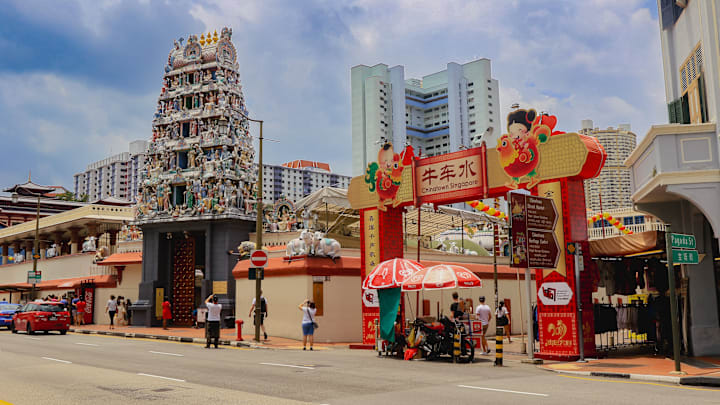
Asia holds three of the top five most diverse countries, with Singapore leading the list. The country has a religious diversity score of 9.3 out of 10, according to Pew Research Center calculations. The largest religion in Singapore is Buddhism, accounting for 31% of the population, followed by the religiously unaffiliated at 20%, Christians at 19%, Muslims at 16%, Hindus at 5%, and other religions at 9%.
Second on the list is Suriname—the only country in the Americas in the top 10 most religiously diverse countries. A little more than half of the country's population is Christian, along with sizable Muslim and Hindu populations. Third and fourth place are the Asian nations of Taiwan and South Korea, while fifth place is the island nation of Mauritius in the Indian Ocean.
In addition to a diverse group of religions, the religiously unaffiliated also dominate some of the countries in the top 10. South Korea, for example, is in the top 10 in part due to 48% of its population being religiously unaffiliated, which is higher than any percentage of religious affiliation in the country. Australia and France, which came in at ninth and 10th on the list, have religiously unaffiliated populations that are almost equal to the number of Christians in their countries.
Least Religious Diversity in the Middle East

Three of the top five least religiously diverse countries are found in the Middle East, with Yemen, Afghanistan, and Iran in the top five, along with two African countries: Somalia and Morocco. All five have strong Muslim populations, with at least 99.7% of their populations being made up of the Muslim religion.
In fact, Islam dominates the list of least religiously diverse countries, with eight of the top 10 least diverse countries having at least 99% of their population identifying as Muslim.
Two countries in the top 10—Moldova and Timor-Leste—make the top 10 with large Christian populations. Each country counts 99.5% of its population as Christian.
How the United States Compares

The United States has high levels of diversity when it comes to religious affiliation, scoring 5.8 out of 10 on the Pew Research Center's scale. It's also the most diverse of the 10 most populous countries in the world.
An estimated 64% of the population is Christian, followed by 30% of the population being religiously unaffiliated. Among the remaining 6% of the population is a mix of Muslims, Hindus, Buddhists, and Jews, as well as other religions.
Religious diversity levels didn't change much between 2010 and 2020, according to the Pew Research Center, but that wasn't the case for the U.S. The country rose from a "moderate" diversity level to a "high" level due to a rise in religiously unaffiliated and a drop in Christians. In 2010, 78% of Americans identified themselves as Christians, while 16% were religiously unaffiliated. But a decade later, 64% of Americans considered themselves Christian while 30% were religiously unaffiliated.