%20%20--%3E%0A%3Csvg%20version%3D%221.1%22%20id%3D%22Layer_1%22%20xmlns%3D%22http%3A%2F%2Fwww.w3.org%2F2000%2Fsvg%22%20xmlns%3Axlink%3D%22http%3A%2F%2Fwww.w3.org%2F1999%2Fxlink%22%20x%3D%220px%22%20y%3D%220px%22%0A%09%20viewBox%3D%220%200%20684.6%2068.1%22%20style%3D%22enable-background%3Anew%200%200%20684.6%2068.1%3B%22%20xml%3Aspace%3D%22preserve%22%3E%0A%3Cg%3E%0A%09%3Cpath%20d%3D%22M444.1%2C29.3h-17.4v14.5h17.4V29.3z%20M36.4%2C68.1l29.3-50.8V0H50.4L32.9%2C36.8L15.5%2C0H0v68.1h16.7V45.8l12.4%2C22.3H36.4z%0A%09%09%20M49.1%2C68.1h16.6V23.4L49.1%2C52.1V68.1z%20M76.6%2C68.1h45V53.8H93.3V41.6h21V27.1h-21V14.8h28.3V0.1h-45V68.1z%20M175.6%2C68.1h17.3v-68%0A%09%09h-16.5v40.3L150%2C0.1h-17.6v68h16.7V27.7L175.6%2C68.1z%20M235.8%2C14.8h15.4V0.1h-47.4v14.7H219v53.2h16.8V14.8z%20M290.3%2C45.9h-17.1%0A%09%09l7.5-15.6h2L290.3%2C45.9z%20M298.7%2C68.1h18l-32.2-68h-5.7l-32%2C68h18l3.3-7.1h27.1L298.7%2C68.1z%20M325.2%2C68.1h46.2V53.8h-29.6V0.1h-16.7%0A%09%09V68.1z%20M423.7%2C14.8h27.2V0.1H407v68h16.7V14.8z%20M462%2C68.1h46.2V53.8h-29.6V0.1H462V68.1z%20M564.8%2C34.1c0%2C10.7-7.2%2C19.2-18.5%2C19.2%0A%09%09c-11.4%2C0-18.5-8.5-18.5-19.2s7.1-19.2%2C18.5-19.2C557.6%2C14.9%2C564.8%2C23.4%2C564.8%2C34.1%20M580.6%2C34.1c0-19-14.2-34-34.3-34%0A%09%09c-20.2%2C0-34.3%2C15-34.3%2C34c0%2C19%2C14.1%2C34%2C34.3%2C34C566.4%2C68.1%2C580.6%2C53.1%2C580.6%2C34.1%20M604.8%2C20.5c0-4.1%2C3.3-6.2%2C6.7-6.2%0A%09%09c4.4%2C0%2C6.6%2C3%2C6.6%2C6.6h14.7C631.8%2C9.1%2C625.1%2C0.1%2C611%2C0.1c-12%2C0-21.7%2C9.3-21.7%2C20.6c0%2C10.9%2C5.9%2C15.9%2C16.7%2C19.8%0A%09%09c5.2%2C1.8%2C11.5%2C3.2%2C11.5%2C8c0%2C3.3-2.4%2C5.5-6.4%2C5.5c-3.6%2C0-6.6-3-6.6-6.7h-15.2c0%2C11.5%2C7.9%2C20.8%2C21.8%2C20.8c12%2C0%2C21.6-9.3%2C21.6-20.6%0A%09%09c0-10-5.3-16.4-16.7-19.8C610.6%2C26.1%2C604.8%2C25.3%2C604.8%2C20.5%20M670%2C20.9h14.7C683.8%2C9.1%2C677.1%2C0.1%2C663%2C0.1c-12%2C0-21.7%2C9.3-21.7%2C20.6%0A%09%09c0%2C10.9%2C5.9%2C15.9%2C16.7%2C19.8c5.2%2C1.8%2C11.5%2C3.2%2C11.5%2C8c0%2C3.3-2.4%2C5.5-6.4%2C5.5c-3.6%2C0-6.6-3-6.6-6.7h-15.2c0%2C11.5%2C7.9%2C20.8%2C21.8%2C20.8%0A%09%09c12%2C0%2C21.6-9.3%2C21.6-20.6c0-10-5.3-16.4-16.7-19.8c-5.4-1.6-11.3-2.4-11.3-7.2c0-4.1%2C3.3-6.2%2C6.7-6.2C667.7%2C14.4%2C670%2C17.3%2C670%2C20.9%0A%09%09%22%2F%3E%0A%3C%2Fg%3E%0A%3C%2Fsvg%3E%0A)

Ghost towns are eerie enough on their own. But a ghost town that rises out of a lake from time to time? That might sound like something out of a horror story or a surrealist painting rather than an actual place you can visit.
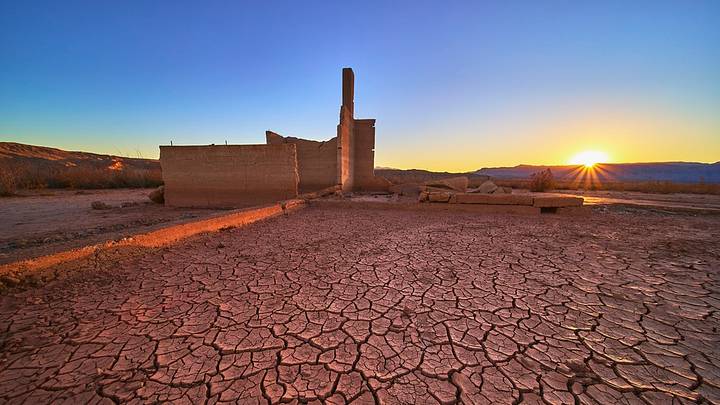
For years, though, this has been the reality for the town of St. Thomas, a ghost town located in Nevada’s Lake Mead National Recreation Area. The town was abandoned and flooded during the construction of the Hoover Dam. Over the years, droughts caused it to resurface multiple times before being reclaimed by the waters.
After being underwater for well over half a century, the town resurfaced in the early 2000s and has remained exposed ever since. Today, it has become a popular tourist attraction for those looking to submerge themselves in a particularly unique remnant of the past that ties into a present-day threat.
The Dawn of St. Thomas

Located near the Overton Arm of the Muddy River, which feeds into the Colorado River, the land that would become St. Thomas was originally inhabited by Pueblo and Basketmaker cultures. Intriguingly, there is evidence that the area was subject to regular flooding from the nearby Muddy and Colorado Rivers in the millennia prior to colonization.
In 1865, St. Thomas was founded by Mormon settlers, who believed it was located in the Utah and Arizona region. Eventually, a land survey officially placed the town in Nevada.
All of the inhabitants subsequently left after realizing they would be subject to Nevada taxes—except for one family, a couple named Daniel and Ana Bonelli, who raised livestock and operated a ferry service on the Colorado River.
In the 1880s, new people began to arrive in the town, and many stayed due to the area’s fertile soil. At one point, over 500 people lived in this desert establishment, which offered a place to stop on the Arrowhead Trail in between Salt Lake City and Los Angeles.
While no one there had plumbing or electricity, the town did have a school, church, and a soda fountain, as well as garages designed to hold one of the most popular new inventions of the day: Automobiles.
A Dam Changes Everything

In 1928, President Calvin Coolidge signed the Boulder Canyon Project Act, which authorized construction of the Hoover Dam. To create the dam, which was then called the Boulder Dam, a gigantic lake had to be created and the surrounding areas flooded. These areas included St. Thomas.
All of the town’s inhabitants were told to relocate, and were reimbursed—albeit reportedly quite sparingly—for their troubles. Some tried to resist, but ultimately their efforts were unsuccessful. All wooden buildings were dismantled and the cemetery was transferred to nearby Overton.
By 1935, waters began to slowly flood St. Thomas. Some residents remained even then, though. The last resident to leave, a man named Hugh Lord, left the town in a rowboat after water reached his front door.
In 1938, St. Thomas was sixty feet below the surface of the newly formed Lake Mead. Its ice cream parlor and school classrooms were now submerged and empty. Only the tips of cottonwood trees peeked out above the waters.
The Town That Rose From the Depths

The little town, however, has historically refused to stay under the surface.
Throughout the remainder of the 20th century, drought caused the town to occasionally peek above the lake's surface before disappearing beneath it again. Former residents held a reunion there when the town resurfaced in 1945.
They did the same when it reappeared again in 1962, and the town remained exposed for a full nine years until the waters returned. It then remained sunken from 1972 to 2002. That year, another reunion was held when the town emerged once again. It has remained exposed ever since.
Today, the town seems to have potentially re-entered the realm of air and wind for good. Lake Mead still exists, of course, as does the Hoover Dam, but drought has caused the lake's level to recede significantly.
In 2026, the lake’s surface hit a historical low due to severe drought. This means the hydroelectric power generated by the dam has been significantly compromised due to the drought, which poses a major threat to water supply overall. It also means that the ice cream parlors and cisterns of St. Thomas will be exposed, it seems, for the long haul.
Visiting St. Thomas Today

Today, it’s possible to wander around the abandoned remains of St. Thomas. There, you can see just how profoundly water can reshape a civilization, wearing it down to its barest bones in a relatively short amount of time.
At the site, you’ll also adobe steps leading nowhere, abandoned cisterns, and worn-down concrete foundations. Two of the best-loved ruins are the remains of the schoolhouse and the ice cream parlor, which has historically been the first building to peek above the water.
You’ll likely want to visit wearing long pants and closed-toed shoes, as much of the place is covered in a layer of salt-encrusted silt and remnants of seashells. Fortunately, the site is maintained by the National Park Service, so you can be sure that lake water won’t suddenly come flooding in once again—at least without warning.
Instead, it seems that for now, the little town that was underwater for decades has been mostly reclaimed by the parched desert landscape it was built upon.