%20%20--%3E%0A%3Csvg%20version%3D%221.1%22%20id%3D%22Layer_1%22%20xmlns%3D%22http%3A%2F%2Fwww.w3.org%2F2000%2Fsvg%22%20xmlns%3Axlink%3D%22http%3A%2F%2Fwww.w3.org%2F1999%2Fxlink%22%20x%3D%220px%22%20y%3D%220px%22%0A%09%20viewBox%3D%220%200%20684.6%2068.1%22%20style%3D%22enable-background%3Anew%200%200%20684.6%2068.1%3B%22%20xml%3Aspace%3D%22preserve%22%3E%0A%3Cg%3E%0A%09%3Cpath%20d%3D%22M444.1%2C29.3h-17.4v14.5h17.4V29.3z%20M36.4%2C68.1l29.3-50.8V0H50.4L32.9%2C36.8L15.5%2C0H0v68.1h16.7V45.8l12.4%2C22.3H36.4z%0A%09%09%20M49.1%2C68.1h16.6V23.4L49.1%2C52.1V68.1z%20M76.6%2C68.1h45V53.8H93.3V41.6h21V27.1h-21V14.8h28.3V0.1h-45V68.1z%20M175.6%2C68.1h17.3v-68%0A%09%09h-16.5v40.3L150%2C0.1h-17.6v68h16.7V27.7L175.6%2C68.1z%20M235.8%2C14.8h15.4V0.1h-47.4v14.7H219v53.2h16.8V14.8z%20M290.3%2C45.9h-17.1%0A%09%09l7.5-15.6h2L290.3%2C45.9z%20M298.7%2C68.1h18l-32.2-68h-5.7l-32%2C68h18l3.3-7.1h27.1L298.7%2C68.1z%20M325.2%2C68.1h46.2V53.8h-29.6V0.1h-16.7%0A%09%09V68.1z%20M423.7%2C14.8h27.2V0.1H407v68h16.7V14.8z%20M462%2C68.1h46.2V53.8h-29.6V0.1H462V68.1z%20M564.8%2C34.1c0%2C10.7-7.2%2C19.2-18.5%2C19.2%0A%09%09c-11.4%2C0-18.5-8.5-18.5-19.2s7.1-19.2%2C18.5-19.2C557.6%2C14.9%2C564.8%2C23.4%2C564.8%2C34.1%20M580.6%2C34.1c0-19-14.2-34-34.3-34%0A%09%09c-20.2%2C0-34.3%2C15-34.3%2C34c0%2C19%2C14.1%2C34%2C34.3%2C34C566.4%2C68.1%2C580.6%2C53.1%2C580.6%2C34.1%20M604.8%2C20.5c0-4.1%2C3.3-6.2%2C6.7-6.2%0A%09%09c4.4%2C0%2C6.6%2C3%2C6.6%2C6.6h14.7C631.8%2C9.1%2C625.1%2C0.1%2C611%2C0.1c-12%2C0-21.7%2C9.3-21.7%2C20.6c0%2C10.9%2C5.9%2C15.9%2C16.7%2C19.8%0A%09%09c5.2%2C1.8%2C11.5%2C3.2%2C11.5%2C8c0%2C3.3-2.4%2C5.5-6.4%2C5.5c-3.6%2C0-6.6-3-6.6-6.7h-15.2c0%2C11.5%2C7.9%2C20.8%2C21.8%2C20.8c12%2C0%2C21.6-9.3%2C21.6-20.6%0A%09%09c0-10-5.3-16.4-16.7-19.8C610.6%2C26.1%2C604.8%2C25.3%2C604.8%2C20.5%20M670%2C20.9h14.7C683.8%2C9.1%2C677.1%2C0.1%2C663%2C0.1c-12%2C0-21.7%2C9.3-21.7%2C20.6%0A%09%09c0%2C10.9%2C5.9%2C15.9%2C16.7%2C19.8c5.2%2C1.8%2C11.5%2C3.2%2C11.5%2C8c0%2C3.3-2.4%2C5.5-6.4%2C5.5c-3.6%2C0-6.6-3-6.6-6.7h-15.2c0%2C11.5%2C7.9%2C20.8%2C21.8%2C20.8%0A%09%09c12%2C0%2C21.6-9.3%2C21.6-20.6c0-10-5.3-16.4-16.7-19.8c-5.4-1.6-11.3-2.4-11.3-7.2c0-4.1%2C3.3-6.2%2C6.7-6.2C667.7%2C14.4%2C670%2C17.3%2C670%2C20.9%0A%09%09%22%2F%3E%0A%3C%2Fg%3E%0A%3C%2Fsvg%3E%0A)

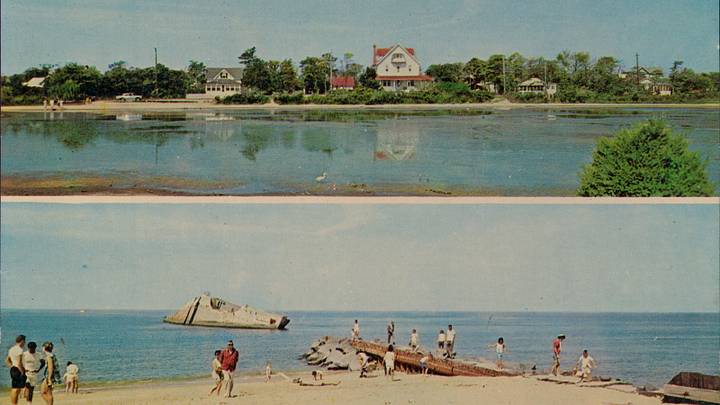
The average American ghost town is covered in a thick layer of dust, filled with dilapidated buildings, and completely lifeless, save for the stray tumbleweed or ghost sighting. South Cape May in New Jersey is much different.
Teeming with wildlife, lush freshwater wetlands, and rolling sand dunes, South Cape May Meadows' scenery suggests that it has always been a coastal nature preserve. Linger long enough by the shore, though, and you may spot something strange drifting past the waving grasses.
That's because, before it became a sanctuary for native birds, it was a summer sanctuary for native New Jerseyans—humans, that is. Or, more specifically, the vibrant Victorian resort town that once stood on this very soil has been completely claimed by the Atlantic Ocean since 1944.
The History of South Cape May

At its heyday, South Cape May was a charming summer city complete with a boardwalk, a trolley, and even a 58-foot wooden elephant called the "Light of Asia." Incorporated as an independent borough in 1894, South Cape May—like the still-standing Cape May and Spring Lake— was a byproduct of the late-19th-century boom of the "Cottage Era" along the Jersey Shore. A solution to the stifling city heat of Baltimore and Philadelphia, wealthy families flocked to the Shore for seaside respite. And developers, like South Cape May's mastermind Theodore Reger, gave them just that.
From "Jumbo," the elephant-shaped oddity that also doubled as Reger's real estate offices, to the New Mount Vernon Hotel, which was built to be the largest in the world, South Cape May seemed to be the perfect recipe for paradise. But the town's grand ambitions were fundamentally flawed: it was built on a shifting, low-lying marsh directly in the line of fire—or rather saltwater—of the tumultuous tides. Decades of coastal erosion slowly eroded the town block by block.
First came a ferocious Nor’easter in 1936 that demolished multiple beachfront homes, including that of the town's mayor, Harvey Mentzer. Mentzer spent the rest of his term pleading for shoreline protection, but the funding and geography simply weren't on his side. A few years later, the Great Atlantic Hurricane of 1944 delivered the devastating final blow. Accepting that fighting the rising tides was a losing battle, the borough officially dissolved on April 30, 1945.
For decades, the water-logged remains of the town sat abandoned, slowly being reclaimed by nature.
The Calm After the Storm

Today, while a handful of its historic homes persist miles inland—having been physically rolled away on logs—the vast majority of the resort town rests silently on the ocean floor. Yet, somehow, South Cape May has found a second life. Instead of being rebuilt for humans, the 200-acre plot of remaining marshland was acquired by The Nature Conservancy and transformed into the South Cape May Meadows preserve.
Not only does it provide a pitstop for migratory birds along the Atlantic Flyway, but the shifting sands and freshwater wetlands act as a natural sponge that protects the rest of Cape May from storm surges. Similar to its original mission to provide Victorian-era vacationers with a natural haven, the two-mile trails looping through the meadows, with views of the many birds and Cape May Lighthouse, now welcome thousands of modern visitors each year.
At the end of the day, South Cape May serves as a reminder that when we try to build our castles directly on the sand, the ocean always wins in the end.