%20%20--%3E%0A%3Csvg%20version%3D%221.1%22%20id%3D%22Layer_1%22%20xmlns%3D%22http%3A%2F%2Fwww.w3.org%2F2000%2Fsvg%22%20xmlns%3Axlink%3D%22http%3A%2F%2Fwww.w3.org%2F1999%2Fxlink%22%20x%3D%220px%22%20y%3D%220px%22%0A%09%20viewBox%3D%220%200%20684.6%2068.1%22%20style%3D%22enable-background%3Anew%200%200%20684.6%2068.1%3B%22%20xml%3Aspace%3D%22preserve%22%3E%0A%3Cg%3E%0A%09%3Cpath%20d%3D%22M444.1%2C29.3h-17.4v14.5h17.4V29.3z%20M36.4%2C68.1l29.3-50.8V0H50.4L32.9%2C36.8L15.5%2C0H0v68.1h16.7V45.8l12.4%2C22.3H36.4z%0A%09%09%20M49.1%2C68.1h16.6V23.4L49.1%2C52.1V68.1z%20M76.6%2C68.1h45V53.8H93.3V41.6h21V27.1h-21V14.8h28.3V0.1h-45V68.1z%20M175.6%2C68.1h17.3v-68%0A%09%09h-16.5v40.3L150%2C0.1h-17.6v68h16.7V27.7L175.6%2C68.1z%20M235.8%2C14.8h15.4V0.1h-47.4v14.7H219v53.2h16.8V14.8z%20M290.3%2C45.9h-17.1%0A%09%09l7.5-15.6h2L290.3%2C45.9z%20M298.7%2C68.1h18l-32.2-68h-5.7l-32%2C68h18l3.3-7.1h27.1L298.7%2C68.1z%20M325.2%2C68.1h46.2V53.8h-29.6V0.1h-16.7%0A%09%09V68.1z%20M423.7%2C14.8h27.2V0.1H407v68h16.7V14.8z%20M462%2C68.1h46.2V53.8h-29.6V0.1H462V68.1z%20M564.8%2C34.1c0%2C10.7-7.2%2C19.2-18.5%2C19.2%0A%09%09c-11.4%2C0-18.5-8.5-18.5-19.2s7.1-19.2%2C18.5-19.2C557.6%2C14.9%2C564.8%2C23.4%2C564.8%2C34.1%20M580.6%2C34.1c0-19-14.2-34-34.3-34%0A%09%09c-20.2%2C0-34.3%2C15-34.3%2C34c0%2C19%2C14.1%2C34%2C34.3%2C34C566.4%2C68.1%2C580.6%2C53.1%2C580.6%2C34.1%20M604.8%2C20.5c0-4.1%2C3.3-6.2%2C6.7-6.2%0A%09%09c4.4%2C0%2C6.6%2C3%2C6.6%2C6.6h14.7C631.8%2C9.1%2C625.1%2C0.1%2C611%2C0.1c-12%2C0-21.7%2C9.3-21.7%2C20.6c0%2C10.9%2C5.9%2C15.9%2C16.7%2C19.8%0A%09%09c5.2%2C1.8%2C11.5%2C3.2%2C11.5%2C8c0%2C3.3-2.4%2C5.5-6.4%2C5.5c-3.6%2C0-6.6-3-6.6-6.7h-15.2c0%2C11.5%2C7.9%2C20.8%2C21.8%2C20.8c12%2C0%2C21.6-9.3%2C21.6-20.6%0A%09%09c0-10-5.3-16.4-16.7-19.8C610.6%2C26.1%2C604.8%2C25.3%2C604.8%2C20.5%20M670%2C20.9h14.7C683.8%2C9.1%2C677.1%2C0.1%2C663%2C0.1c-12%2C0-21.7%2C9.3-21.7%2C20.6%0A%09%09c0%2C10.9%2C5.9%2C15.9%2C16.7%2C19.8c5.2%2C1.8%2C11.5%2C3.2%2C11.5%2C8c0%2C3.3-2.4%2C5.5-6.4%2C5.5c-3.6%2C0-6.6-3-6.6-6.7h-15.2c0%2C11.5%2C7.9%2C20.8%2C21.8%2C20.8%0A%09%09c12%2C0%2C21.6-9.3%2C21.6-20.6c0-10-5.3-16.4-16.7-19.8c-5.4-1.6-11.3-2.4-11.3-7.2c0-4.1%2C3.3-6.2%2C6.7-6.2C667.7%2C14.4%2C670%2C17.3%2C670%2C20.9%0A%09%09%22%2F%3E%0A%3C%2Fg%3E%0A%3C%2Fsvg%3E%0A)

It's well-known that author George R.R. Martin used accounts of real wars and politics to create his A Song of Ice and Fire series. Beginning with A Game of Thrones, Martin took some creative liberties with accounts from European history and blended in alchemy, prophecies, and dragons. But he wasn't just inspired by the histories of people when crafting his world; he also took inspiration from historical architecture.
The castles and fortresses of Westeros each play an integral part in the battle for the Iron Throne, and the castles of ancient Europe played important roles in the wars fought for power in their lands. Many real-life castles look like they could have been snatched right out of the the Seven Kingdoms because Martin used real-world structures as his inspiration.
Here are a few of the real castles that could easily be mistaken for part of Westeros.
- Château de Chenonceau, France
- Meteora Monasteries, Greece
- Hohenzollern Castle, Germany
- Castle of Zafra, Spain
- Lovrjenac Fortress, Croatia
- Castle of Trujillo, Spain
- Doune Castle, Scotland

Château de Chenonceau, France
The Château de Chenonceau, located in the Loire Valley of France, was used as architectural inspiration when designing Riverrun for the Game of Thrones series. The medieval keep, with its surrounding moats, is all that's left of the original château, which was rebuilt and expanded throughout three centuries. The bridge of the château looks like it could also be one half of The Twins, though it was never as strategically essential in its real history.

Meteora Monasteries, Greece
Though not a castle, the Meteora Monasteries in Kalabaka, Greece are awe-inspiring enough to make this list. These structures were built on top of the cliffs, and served as inspiration for the Eyrie, or "the castle in the sky" in Game of Thrones. Monks built these clifftop monasteries beginning in the 1300s, and gave them the name Meteora, meaning "suspended in the air" in Greek.

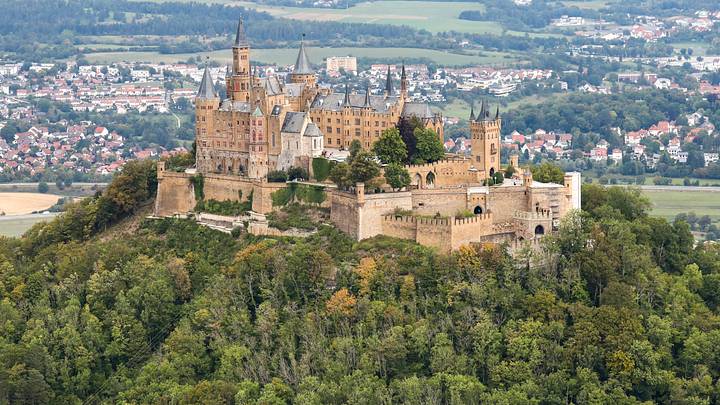
Hohenzollern Castle, Germany
Germany is filled with castles that could be part of a fairytale. Most famously is Neuschwanstein Castle, which inspired Disney's Cinderella Castle. But Hohenzollern Castle in Southwest Germany, while still palatial, has more similarities to Highgarden in the A Song of Ice and Fire books.
The castle was built atop Mount Hohenzollern in the mid 1200s and has gone through several renovations turning the fortress into a residence for the Prussian royal family.

Castle of Zafra, Spain
If you looked at the picture of Spain's Castle of Zafra and though that it seemed familiar, that's because it was used as the Tower of Joy in the Game of Thrones series. Its fictional history boasts it as the birthplace of Jon Snow, but the real castle was built in the late 12th or early 13th centuries and ownership was passed through a long line of Spanish noble families. It was a great defensive stronghold throughout the ages, and is now in the process of being restored.

Lovrjenac Fortress, Croatia
Lovrjenac Fortress (St. Lawrence Fortress) was another filming location for the Game of Thrones television series. Located in Dubrovnik, Croatia, the fortress was transformed into the Red Keep with the help of CGI. Other parts of Dubrovnik were used as King's Landing. The Lovrjenac Fortress was once the St. Lawrence church, before 1018, and part of the church can still be found within the fort's structure.

Castle of Trujillo, Spain
In Extremadura, Spain, lies the imposing Castillo de Trujillo (Castle of Trujillo). This castle became the House of Lannister's fortress, Casterly Rock, while Game of Thrones was filmed. The prequel series, House of the Dragon, also filmed in the castle and in Trujillo's plaza.
In real life, the Castle of Trujillo was built between the 9th and the 12th centuries on the highest point of the land, on a hill called Cabeza del Zorro (Fox's Head).

Doune Castle, Scotland
Scotland's Doune Castle is a popular filming location. In addition to serving as Winterfell in Game of Thrones, the castle was also used in Monty Python and the Holy Grail and Outlander. It was built around 1400 and is one of the best preserved medieval castles today. It makes sense that such a stronghold would inspire Martin and others interested in British history and legends.