%20%20--%3E%0A%3Csvg%20version%3D%221.1%22%20id%3D%22Layer_1%22%20xmlns%3D%22http%3A%2F%2Fwww.w3.org%2F2000%2Fsvg%22%20xmlns%3Axlink%3D%22http%3A%2F%2Fwww.w3.org%2F1999%2Fxlink%22%20x%3D%220px%22%20y%3D%220px%22%0A%09%20viewBox%3D%220%200%20684.6%2068.1%22%20style%3D%22enable-background%3Anew%200%200%20684.6%2068.1%3B%22%20xml%3Aspace%3D%22preserve%22%3E%0A%3Cg%3E%0A%09%3Cpath%20d%3D%22M444.1%2C29.3h-17.4v14.5h17.4V29.3z%20M36.4%2C68.1l29.3-50.8V0H50.4L32.9%2C36.8L15.5%2C0H0v68.1h16.7V45.8l12.4%2C22.3H36.4z%0A%09%09%20M49.1%2C68.1h16.6V23.4L49.1%2C52.1V68.1z%20M76.6%2C68.1h45V53.8H93.3V41.6h21V27.1h-21V14.8h28.3V0.1h-45V68.1z%20M175.6%2C68.1h17.3v-68%0A%09%09h-16.5v40.3L150%2C0.1h-17.6v68h16.7V27.7L175.6%2C68.1z%20M235.8%2C14.8h15.4V0.1h-47.4v14.7H219v53.2h16.8V14.8z%20M290.3%2C45.9h-17.1%0A%09%09l7.5-15.6h2L290.3%2C45.9z%20M298.7%2C68.1h18l-32.2-68h-5.7l-32%2C68h18l3.3-7.1h27.1L298.7%2C68.1z%20M325.2%2C68.1h46.2V53.8h-29.6V0.1h-16.7%0A%09%09V68.1z%20M423.7%2C14.8h27.2V0.1H407v68h16.7V14.8z%20M462%2C68.1h46.2V53.8h-29.6V0.1H462V68.1z%20M564.8%2C34.1c0%2C10.7-7.2%2C19.2-18.5%2C19.2%0A%09%09c-11.4%2C0-18.5-8.5-18.5-19.2s7.1-19.2%2C18.5-19.2C557.6%2C14.9%2C564.8%2C23.4%2C564.8%2C34.1%20M580.6%2C34.1c0-19-14.2-34-34.3-34%0A%09%09c-20.2%2C0-34.3%2C15-34.3%2C34c0%2C19%2C14.1%2C34%2C34.3%2C34C566.4%2C68.1%2C580.6%2C53.1%2C580.6%2C34.1%20M604.8%2C20.5c0-4.1%2C3.3-6.2%2C6.7-6.2%0A%09%09c4.4%2C0%2C6.6%2C3%2C6.6%2C6.6h14.7C631.8%2C9.1%2C625.1%2C0.1%2C611%2C0.1c-12%2C0-21.7%2C9.3-21.7%2C20.6c0%2C10.9%2C5.9%2C15.9%2C16.7%2C19.8%0A%09%09c5.2%2C1.8%2C11.5%2C3.2%2C11.5%2C8c0%2C3.3-2.4%2C5.5-6.4%2C5.5c-3.6%2C0-6.6-3-6.6-6.7h-15.2c0%2C11.5%2C7.9%2C20.8%2C21.8%2C20.8c12%2C0%2C21.6-9.3%2C21.6-20.6%0A%09%09c0-10-5.3-16.4-16.7-19.8C610.6%2C26.1%2C604.8%2C25.3%2C604.8%2C20.5%20M670%2C20.9h14.7C683.8%2C9.1%2C677.1%2C0.1%2C663%2C0.1c-12%2C0-21.7%2C9.3-21.7%2C20.6%0A%09%09c0%2C10.9%2C5.9%2C15.9%2C16.7%2C19.8c5.2%2C1.8%2C11.5%2C3.2%2C11.5%2C8c0%2C3.3-2.4%2C5.5-6.4%2C5.5c-3.6%2C0-6.6-3-6.6-6.7h-15.2c0%2C11.5%2C7.9%2C20.8%2C21.8%2C20.8%0A%09%09c12%2C0%2C21.6-9.3%2C21.6-20.6c0-10-5.3-16.4-16.7-19.8c-5.4-1.6-11.3-2.4-11.3-7.2c0-4.1%2C3.3-6.2%2C6.7-6.2C667.7%2C14.4%2C670%2C17.3%2C670%2C20.9%0A%09%09%22%2F%3E%0A%3C%2Fg%3E%0A%3C%2Fsvg%3E%0A)

J. R. R. Tolkien’s Lord of the Rings universe takes readers on an intrepid journey through Middle-earth, a realm filled with imposing mountains, lush forests, and idyllic towns inhabited by elves, dragons, and all manner of magical creatures. The series is widely beloved for its characters and incredible storytelling, but also for its vivid landscapes, which form one of the most beautifully developed fantasy worlds of all time.
The mountains and caverns of Middle-earth are characters in and of themselves, evolving alongside the story and holding countless secrets in their nooks and crannies. While Middle-earth may not be real, there are certainly places in our real world that resemble the majestic landscape Tolkien dreamed up.
Naturally, New Zealand may be the place on Earth that is most associated with Tolkien’s world, as it provided the backdrop for a great deal of Peter Jackson’s Lord of the Rings film trilogy. Still, there are other mystical places on Earth that fans have connected to Tolkien's Middle-earth. Read about some of them below.
- Mount Ngauruhoe, New Zealand
- Cheddar Gorge, UK
- The Cotswolds, UK
- Lauterbrunnen Valley, Switzerland
- Isle of Skye, Scotland
Mount Ngauruhoe, New Zealand

If there’s anywhere on Earth that’s synonymous with Middle-earth, it’s New Zealand. The soaring, snow-capped peaks and mystic valleys of this nation are filled with places used in Jackson’s Lord of the Rings films—but one site that fans of the films will find particularly recognizable is Mount Ngauruhoe, which was the filming location for Mount Doom in the movie.
This stratovolcano stands 7,500 feet tall and last erupted in 1975, but still remains one of the country’s most active volcanoes. The mountain was digitally altered in the films to resemble the seething volcanic landscape where the Dark Lord Sauron forged the One Ring to Rule Them All, but fans will still recognize Mount Ngauruhoe’s imposing shape even amidst all the digitally manufactured magma and monsters that appear in the films.
Cheddar Gorge, UK

J. R. R. Tolkien himself left very few hints about what real-world locales might have inspired The Lord of the Rings, but we do know for sure that one particular place inspired one section of The Two Towers.
In 1916, Tolkien and his wife Edith honeymooned in the Somerset village of Clevedon. While there, they visited Cheddar Gorge, a stunning valley comprised of limestone cliffs that hide countless prehistoric caves filled with subterranean stalactites, stalagmites, and rock formations.
Tolkien visited again in 1940 before writing about them, and in a 1971 letter, he confirmed that the surreal formations and caverns of this valley inspired the Glittering Caves of Helm's Deep in The Lord of the Rings. Interestingly, in 1903, researchers unearthed a 9,000-year-old skeleton in the caves. Later named Cheddar Man, the specimen is the oldest nearly intact skeleton ever found in Britain.
The Cotswolds, UK

If you want to catch a glimpse of the Shire as it appears in The Lord of the Rings movies, you’ll probably want to visit New Zealand’s Hobbiton Movie Set, where the hobbit houses and props used in the movies remain a well-preserved tourist attraction today. Yet if you want to visit an authentic village that happens to look quite a lot like the Shire, the Cotswolds might scratch that itch.
Tolkien himself often visited the Cotswolds, often taking his family on road trips to his brother’s fruit farm there. His aunt also lived there, and had a cottage called Bag End—which fans might recognize as the name of Bilbo and Frodo Baggins’s home in Hobbiton.
Specific Cotswolds locations that scream LOTR include St. Edward’s Church, a medieval church whose door is guarded by two imposing yew trees. Some fans believe the door inspired the Door of Durin, which is the entrance to the Dwarven city of Khazad-dum. Additionally, the Cotswolds are home to the Four Shire Stone, a pillar that once marked the place where four English counties—Gloucestershire, Warwickshire, Oxfordshire, and Worcestershire—all met. Tolkien’s Shire is also divided into four farthings, and three of them meet at a stone called the Three Farthing Stone.
In general, the quaint and quintessentially English charm of the Cotswolds—with their rolling hills and limestone villages that seem to be lost in time—is sure to please fans looking for a real-world hint of the Shire.
Lauterbrunnen Valley, Switzerland

Nestled between towering cliffs, this idyllic village is a real-world location believed to have helped inspire Tolkien’s Rivendell, the hidden Elven settlement that played a foundational role in The Hobbit and The Lord of the Rings.
In 1911, a 19-year-old Tolkien himself hiked through this valley with his aunt, and the landscape helped shape his vision of Rivendell. In a 1967 letter, Tolkien wrote that “the hobbit’s (Bilbo’s) journey from Rivendell to the other side of the Misty Mountains, including the glissade down the slithering stones into the pine woods, is based on my adventures in 1911,” confirming what many fans had speculated.
With its flowing waterfalls, stunning mountains, and quaint village nestled in the heart of it all, it’s not hard to see the parallels between this valley and Rivendell. Of course, the entirety of the Swiss Alps also look like they could be right out of The Lord of the Rings.
Isle of Skye, Scotland

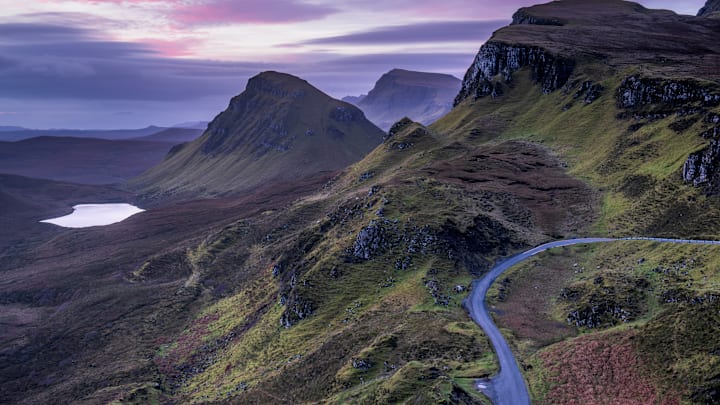
Scotland’s Isle of Skye looks quite a lot like a fantasy realm, so it’s no surprise that this Scottish island has been linked to Lord of the Rings. Studded with majestic lochs, castles, and mystical pools, this locale has long drawn tourists to its shores with its stunning, rugged landscape and rich history.
Stretching almost 50 miles long, this island was inhabited by Scots in the first century BCE and was later ruled by Norsemen from the 9th to the 12th century. Some castles from this period remain, such as Dunvegan Castle, a majestic 13th-century structure that certainly feels like something out of a medieval fantasy novel.
Tolkien fans might find themselves drawn to the island’s fairy pools, a patchwork of mystical blue pools and waterfalls resting beneath vast mountains that certainly seem like landscapes that Frodo and his compatriots may have wandered by on their long journey away from the Shire. Another famous location, the Old Man of Storr Walk, is a basalt rock formation that—with its jagged, black cliffs that loom over emerald-green valleys—definitely resembles the kind of landscape that the Bilbo or the Fellowship may have stumbled upon when nearing Mordor.