%20%20--%3E%0A%3Csvg%20version%3D%221.1%22%20id%3D%22Layer_1%22%20xmlns%3D%22http%3A%2F%2Fwww.w3.org%2F2000%2Fsvg%22%20xmlns%3Axlink%3D%22http%3A%2F%2Fwww.w3.org%2F1999%2Fxlink%22%20x%3D%220px%22%20y%3D%220px%22%0A%09%20viewBox%3D%220%200%20684.6%2068.1%22%20style%3D%22enable-background%3Anew%200%200%20684.6%2068.1%3B%22%20xml%3Aspace%3D%22preserve%22%3E%0A%3Cg%3E%0A%09%3Cpath%20d%3D%22M444.1%2C29.3h-17.4v14.5h17.4V29.3z%20M36.4%2C68.1l29.3-50.8V0H50.4L32.9%2C36.8L15.5%2C0H0v68.1h16.7V45.8l12.4%2C22.3H36.4z%0A%09%09%20M49.1%2C68.1h16.6V23.4L49.1%2C52.1V68.1z%20M76.6%2C68.1h45V53.8H93.3V41.6h21V27.1h-21V14.8h28.3V0.1h-45V68.1z%20M175.6%2C68.1h17.3v-68%0A%09%09h-16.5v40.3L150%2C0.1h-17.6v68h16.7V27.7L175.6%2C68.1z%20M235.8%2C14.8h15.4V0.1h-47.4v14.7H219v53.2h16.8V14.8z%20M290.3%2C45.9h-17.1%0A%09%09l7.5-15.6h2L290.3%2C45.9z%20M298.7%2C68.1h18l-32.2-68h-5.7l-32%2C68h18l3.3-7.1h27.1L298.7%2C68.1z%20M325.2%2C68.1h46.2V53.8h-29.6V0.1h-16.7%0A%09%09V68.1z%20M423.7%2C14.8h27.2V0.1H407v68h16.7V14.8z%20M462%2C68.1h46.2V53.8h-29.6V0.1H462V68.1z%20M564.8%2C34.1c0%2C10.7-7.2%2C19.2-18.5%2C19.2%0A%09%09c-11.4%2C0-18.5-8.5-18.5-19.2s7.1-19.2%2C18.5-19.2C557.6%2C14.9%2C564.8%2C23.4%2C564.8%2C34.1%20M580.6%2C34.1c0-19-14.2-34-34.3-34%0A%09%09c-20.2%2C0-34.3%2C15-34.3%2C34c0%2C19%2C14.1%2C34%2C34.3%2C34C566.4%2C68.1%2C580.6%2C53.1%2C580.6%2C34.1%20M604.8%2C20.5c0-4.1%2C3.3-6.2%2C6.7-6.2%0A%09%09c4.4%2C0%2C6.6%2C3%2C6.6%2C6.6h14.7C631.8%2C9.1%2C625.1%2C0.1%2C611%2C0.1c-12%2C0-21.7%2C9.3-21.7%2C20.6c0%2C10.9%2C5.9%2C15.9%2C16.7%2C19.8%0A%09%09c5.2%2C1.8%2C11.5%2C3.2%2C11.5%2C8c0%2C3.3-2.4%2C5.5-6.4%2C5.5c-3.6%2C0-6.6-3-6.6-6.7h-15.2c0%2C11.5%2C7.9%2C20.8%2C21.8%2C20.8c12%2C0%2C21.6-9.3%2C21.6-20.6%0A%09%09c0-10-5.3-16.4-16.7-19.8C610.6%2C26.1%2C604.8%2C25.3%2C604.8%2C20.5%20M670%2C20.9h14.7C683.8%2C9.1%2C677.1%2C0.1%2C663%2C0.1c-12%2C0-21.7%2C9.3-21.7%2C20.6%0A%09%09c0%2C10.9%2C5.9%2C15.9%2C16.7%2C19.8c5.2%2C1.8%2C11.5%2C3.2%2C11.5%2C8c0%2C3.3-2.4%2C5.5-6.4%2C5.5c-3.6%2C0-6.6-3-6.6-6.7h-15.2c0%2C11.5%2C7.9%2C20.8%2C21.8%2C20.8%0A%09%09c12%2C0%2C21.6-9.3%2C21.6-20.6c0-10-5.3-16.4-16.7-19.8c-5.4-1.6-11.3-2.4-11.3-7.2c0-4.1%2C3.3-6.2%2C6.7-6.2C667.7%2C14.4%2C670%2C17.3%2C670%2C20.9%0A%09%09%22%2F%3E%0A%3C%2Fg%3E%0A%3C%2Fsvg%3E%0A)

Watch almost any film by Wes Anderson, and you'll notice the same unmistakable details: perfectly centered shots, pastel color palettes, vintage placards, and buildings and streets with symmetry so striking it feels staged.
While elements of Anderson's films are mostly built on set, from the pleasing pink hues of The Grand Budapest Hotel to the yellow-tinted coastal scenes of Moonrise Kingdom, his visual style also references real-world locations.
There are a handful of historic towns scattered across Europe with aesthetic elements that make them appear hand-picked for a Wes Anderson masterpiece. Before these films were released, architects crafted symmetrical squares, tiled buildings in bright colors, and gave homes soft, pastel street fronts preserved so spectacularly they resembled scenes from a movie.
What really makes these towns feel Wes Anderson-esque isn't just the colors or the charming buildings; it's the harmony of all the elements working together to bring the scene to life in the uniquely meticulous way Wes Anderson creates, down to the uniform shutters and the warm glow of the street lights.
Let's explore five European towns that look straight out of a Wes Anderson movie.
Karlovy Vary, Czech Republic

Situated in a narrow valley along the Teplá River, the spa town of Karlovy Vary appears intentionally arranged for a movie scene. Rows of pastel spa houses line the hillsides in neat layers, creating the kind of consistency and color palette Wes Anderson would likely find inspiration in. The graceful colonnades, especially the detailed Mill Colonnade and the airy Market Colonnade, add a theatrical rhythm to the streets, where visitors stroll between springs. Nearby, the hilltop GrandHotel Pupp enhances the town's cinematic charm with its majestic exterior and old-world spa culture, making the entire setting feel as if it were transported from a film set.
Procida, Italy

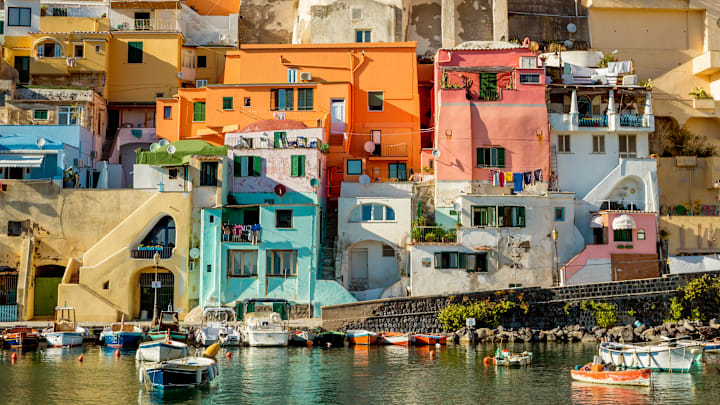
Perched in the Bay of Naples, the volcanic island town of Procida is basically tailor-made for a Wes Anderson film. Stacked houses in soft pinks, yellows, and blues rise above the marina in subtle layers, creating a cheerful harmony that seamlessly echoes the director’s signature "invented reality" aesthetic. The postcard-famous harbor of Marina Corricella is especially captivating, where fishermen's homes curve around the water in a vibrant semicircle. The streets are so narrow in Marina Corricella that cars are not permitted. In fact, non-resident vehicles aren't allowed in Procida from April 6 to October 31. Above it, the historic fortress complex of Terra Murata and the panoramic terraces near Abbey of San Michele Arcangelo add intensity and symmetry to an already mesmerizing film-ready landscape.
Menton, France

Located between the mountains and the Mediterranean, the seaside town of Menton has a lively charm that seems effortlessly scene-worthy. Its old town rises in a succession of sun-washed yellows, oranges, and peach tones, creating a layered backdrop reminiscent of the artfully-ordered color palettes seen in Wes Anderson films. At the heart of the scene, the grand staircase leading to the Basilica of Saint-Michel-Archange forms a dramatic focal point above the harbor. Just below, the quiet curve of Plage des Sablettes (where you literally look up and see the brightest array of buildings imaginable) and the palm tree-lined Promenade du Soleil complete the town's flawlessly staged coastal panorama.
Lisbon, Portugal

Built across seven hills overlooking the Tagus River, Lisbon blends history and color in a way that makes you feel like you're the main character in a movie, no matter which way you turn. Pastel buildings, patterned tiled exteriors evocative of Portugal, and vivid yellow trams create visuals that mirror the moments in Wes Anderson's handiwork. In the historic Alfama district, narrow streets and balconies stacked with laundry add texture and movement to the landscape. Miradouro de Santa Catarina showcases the city’s rooftops and the Tagus River in the distance, while the arches and harmonious layout of Praça do Comércio create a square worthy of a director’s lens. Even the trams weaving through the streets offer a window into Anderson’s imaginative mind and filmmaking approach.
Görlitz, Germany

On Germany’s eastern edge, the historic town of Görlitz stands as a living time capsule, where different eras merge into one, walkable setting. Lining its streets are Renaissance-era townhouses featuring Baroque exteriors, along with decorative shopfronts that contribute to the kind of visual order and architectural character often admired in Wes Anderson films. The animated square of Untermarkt anchors the old town with colorful buildings and arcades. Nearby, the distinctive towers of St. Peter and Paul Church rise above the skyline, while the Görlitz Department Store (the real Grand Budapest Hotel) enchants travelers with a nostalgic hint of timelessness.