%20%20--%3E%0A%3Csvg%20version%3D%221.1%22%20id%3D%22Layer_1%22%20xmlns%3D%22http%3A%2F%2Fwww.w3.org%2F2000%2Fsvg%22%20xmlns%3Axlink%3D%22http%3A%2F%2Fwww.w3.org%2F1999%2Fxlink%22%20x%3D%220px%22%20y%3D%220px%22%0A%09%20viewBox%3D%220%200%20684.6%2068.1%22%20style%3D%22enable-background%3Anew%200%200%20684.6%2068.1%3B%22%20xml%3Aspace%3D%22preserve%22%3E%0A%3Cg%3E%0A%09%3Cpath%20d%3D%22M444.1%2C29.3h-17.4v14.5h17.4V29.3z%20M36.4%2C68.1l29.3-50.8V0H50.4L32.9%2C36.8L15.5%2C0H0v68.1h16.7V45.8l12.4%2C22.3H36.4z%0A%09%09%20M49.1%2C68.1h16.6V23.4L49.1%2C52.1V68.1z%20M76.6%2C68.1h45V53.8H93.3V41.6h21V27.1h-21V14.8h28.3V0.1h-45V68.1z%20M175.6%2C68.1h17.3v-68%0A%09%09h-16.5v40.3L150%2C0.1h-17.6v68h16.7V27.7L175.6%2C68.1z%20M235.8%2C14.8h15.4V0.1h-47.4v14.7H219v53.2h16.8V14.8z%20M290.3%2C45.9h-17.1%0A%09%09l7.5-15.6h2L290.3%2C45.9z%20M298.7%2C68.1h18l-32.2-68h-5.7l-32%2C68h18l3.3-7.1h27.1L298.7%2C68.1z%20M325.2%2C68.1h46.2V53.8h-29.6V0.1h-16.7%0A%09%09V68.1z%20M423.7%2C14.8h27.2V0.1H407v68h16.7V14.8z%20M462%2C68.1h46.2V53.8h-29.6V0.1H462V68.1z%20M564.8%2C34.1c0%2C10.7-7.2%2C19.2-18.5%2C19.2%0A%09%09c-11.4%2C0-18.5-8.5-18.5-19.2s7.1-19.2%2C18.5-19.2C557.6%2C14.9%2C564.8%2C23.4%2C564.8%2C34.1%20M580.6%2C34.1c0-19-14.2-34-34.3-34%0A%09%09c-20.2%2C0-34.3%2C15-34.3%2C34c0%2C19%2C14.1%2C34%2C34.3%2C34C566.4%2C68.1%2C580.6%2C53.1%2C580.6%2C34.1%20M604.8%2C20.5c0-4.1%2C3.3-6.2%2C6.7-6.2%0A%09%09c4.4%2C0%2C6.6%2C3%2C6.6%2C6.6h14.7C631.8%2C9.1%2C625.1%2C0.1%2C611%2C0.1c-12%2C0-21.7%2C9.3-21.7%2C20.6c0%2C10.9%2C5.9%2C15.9%2C16.7%2C19.8%0A%09%09c5.2%2C1.8%2C11.5%2C3.2%2C11.5%2C8c0%2C3.3-2.4%2C5.5-6.4%2C5.5c-3.6%2C0-6.6-3-6.6-6.7h-15.2c0%2C11.5%2C7.9%2C20.8%2C21.8%2C20.8c12%2C0%2C21.6-9.3%2C21.6-20.6%0A%09%09c0-10-5.3-16.4-16.7-19.8C610.6%2C26.1%2C604.8%2C25.3%2C604.8%2C20.5%20M670%2C20.9h14.7C683.8%2C9.1%2C677.1%2C0.1%2C663%2C0.1c-12%2C0-21.7%2C9.3-21.7%2C20.6%0A%09%09c0%2C10.9%2C5.9%2C15.9%2C16.7%2C19.8c5.2%2C1.8%2C11.5%2C3.2%2C11.5%2C8c0%2C3.3-2.4%2C5.5-6.4%2C5.5c-3.6%2C0-6.6-3-6.6-6.7h-15.2c0%2C11.5%2C7.9%2C20.8%2C21.8%2C20.8%0A%09%09c12%2C0%2C21.6-9.3%2C21.6-20.6c0-10-5.3-16.4-16.7-19.8c-5.4-1.6-11.3-2.4-11.3-7.2c0-4.1%2C3.3-6.2%2C6.7-6.2C667.7%2C14.4%2C670%2C17.3%2C670%2C20.9%0A%09%09%22%2F%3E%0A%3C%2Fg%3E%0A%3C%2Fsvg%3E%0A)

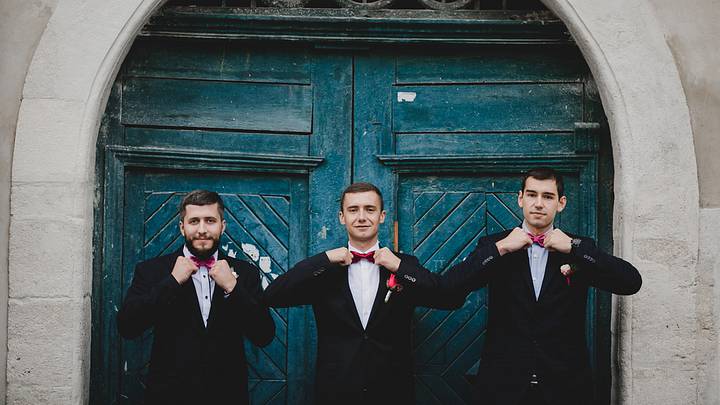
A common aspect of a wedding party is the groomsmen. Also known as the ushers, these are the male companions who assist the man or men getting married. One of these men is often chosen as the groom's best man.
However, the origins of this tradition are not as benign and friendly as they might seem based on the role of groomsmen today. Here is a look back at the disturbing origins of the custom of groomsmen at weddings.
The Unsettling Origins of Groomsmen

The tradition of having groomsmen dates back to ancient times, and originates from a practice known as “bride capture.”
In these ancient societies, a groom would often ask his closest male friends and relatives to help him physically abduct a woman from her family or her home village if her parents were refusing to give the necessary permission for the marriage, or if the groom wanted to bypass the traditional process by which men were expected to court women. These “groomsmen” were also tasked with protecting the groom from angry family members of the bride. Unfortunately, this practice still exists in some places in the world today.
Another early form of the groomsman tradition can also be found in ancient Rome, where weddings required 10 people to witness the ceremony (in contrast to the smaller number of witnesses required at most weddings today). As women were subject to misogynistic laws that did not view them as being as valuable as men, this meant these witnesses could only be men. This factor also led to the tradition of having multiple groomsmen.
The Origins of the Best Man

The tradition of the “best man” amongst the groomsmen also has unsettling origins. This role is believed to stem from 16th-century Gothic traditions in which the “best” man was often the one assigned to kidnap the bride. The reason he stood next to the groom during the ceremony was not just to support the groom, but to protect the bridal party from attackers—and to prevent the bride from attempting to leave.
The origins of this tradition are therefore deeply disturbing. They are rooted in the objectification and subjugation of women, and in systems in which women are treated as property available for the taking regardless of their own wishes.
Groomsmen were in many ways accomplices in an act of kidnapping, treating the bride as a prize to be seized and not viewing her as an individual with her own agency.
Today, for the most part, things are very different. Groomsmen are usually tasked with providing helpful support to the groom, and certainly not with causing harm to the bride or anyone else. But a glance at the history that lies behind the innocuous nature of the role today reminds us that not every tradition began in a positive way.