%20%20--%3E%0A%3Csvg%20version%3D%221.1%22%20id%3D%22Layer_1%22%20xmlns%3D%22http%3A%2F%2Fwww.w3.org%2F2000%2Fsvg%22%20xmlns%3Axlink%3D%22http%3A%2F%2Fwww.w3.org%2F1999%2Fxlink%22%20x%3D%220px%22%20y%3D%220px%22%0A%09%20viewBox%3D%220%200%20684.6%2068.1%22%20style%3D%22enable-background%3Anew%200%200%20684.6%2068.1%3B%22%20xml%3Aspace%3D%22preserve%22%3E%0A%3Cg%3E%0A%09%3Cpath%20d%3D%22M444.1%2C29.3h-17.4v14.5h17.4V29.3z%20M36.4%2C68.1l29.3-50.8V0H50.4L32.9%2C36.8L15.5%2C0H0v68.1h16.7V45.8l12.4%2C22.3H36.4z%0A%09%09%20M49.1%2C68.1h16.6V23.4L49.1%2C52.1V68.1z%20M76.6%2C68.1h45V53.8H93.3V41.6h21V27.1h-21V14.8h28.3V0.1h-45V68.1z%20M175.6%2C68.1h17.3v-68%0A%09%09h-16.5v40.3L150%2C0.1h-17.6v68h16.7V27.7L175.6%2C68.1z%20M235.8%2C14.8h15.4V0.1h-47.4v14.7H219v53.2h16.8V14.8z%20M290.3%2C45.9h-17.1%0A%09%09l7.5-15.6h2L290.3%2C45.9z%20M298.7%2C68.1h18l-32.2-68h-5.7l-32%2C68h18l3.3-7.1h27.1L298.7%2C68.1z%20M325.2%2C68.1h46.2V53.8h-29.6V0.1h-16.7%0A%09%09V68.1z%20M423.7%2C14.8h27.2V0.1H407v68h16.7V14.8z%20M462%2C68.1h46.2V53.8h-29.6V0.1H462V68.1z%20M564.8%2C34.1c0%2C10.7-7.2%2C19.2-18.5%2C19.2%0A%09%09c-11.4%2C0-18.5-8.5-18.5-19.2s7.1-19.2%2C18.5-19.2C557.6%2C14.9%2C564.8%2C23.4%2C564.8%2C34.1%20M580.6%2C34.1c0-19-14.2-34-34.3-34%0A%09%09c-20.2%2C0-34.3%2C15-34.3%2C34c0%2C19%2C14.1%2C34%2C34.3%2C34C566.4%2C68.1%2C580.6%2C53.1%2C580.6%2C34.1%20M604.8%2C20.5c0-4.1%2C3.3-6.2%2C6.7-6.2%0A%09%09c4.4%2C0%2C6.6%2C3%2C6.6%2C6.6h14.7C631.8%2C9.1%2C625.1%2C0.1%2C611%2C0.1c-12%2C0-21.7%2C9.3-21.7%2C20.6c0%2C10.9%2C5.9%2C15.9%2C16.7%2C19.8%0A%09%09c5.2%2C1.8%2C11.5%2C3.2%2C11.5%2C8c0%2C3.3-2.4%2C5.5-6.4%2C5.5c-3.6%2C0-6.6-3-6.6-6.7h-15.2c0%2C11.5%2C7.9%2C20.8%2C21.8%2C20.8c12%2C0%2C21.6-9.3%2C21.6-20.6%0A%09%09c0-10-5.3-16.4-16.7-19.8C610.6%2C26.1%2C604.8%2C25.3%2C604.8%2C20.5%20M670%2C20.9h14.7C683.8%2C9.1%2C677.1%2C0.1%2C663%2C0.1c-12%2C0-21.7%2C9.3-21.7%2C20.6%0A%09%09c0%2C10.9%2C5.9%2C15.9%2C16.7%2C19.8c5.2%2C1.8%2C11.5%2C3.2%2C11.5%2C8c0%2C3.3-2.4%2C5.5-6.4%2C5.5c-3.6%2C0-6.6-3-6.6-6.7h-15.2c0%2C11.5%2C7.9%2C20.8%2C21.8%2C20.8%0A%09%09c12%2C0%2C21.6-9.3%2C21.6-20.6c0-10-5.3-16.4-16.7-19.8c-5.4-1.6-11.3-2.4-11.3-7.2c0-4.1%2C3.3-6.2%2C6.7-6.2C667.7%2C14.4%2C670%2C17.3%2C670%2C20.9%0A%09%09%22%2F%3E%0A%3C%2Fg%3E%0A%3C%2Fsvg%3E%0A)

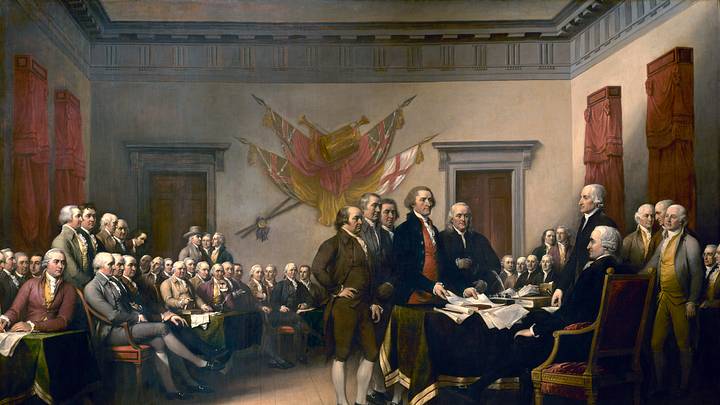
The Fourth of July is a heavily mythologized holiday, and for good reason. It’s a celebration of the day that America officially declared its independence from Britain, after all…or is it?
As with much of American history, the reality is a bit more complicated and nuanced. Here are seven myths about July 4, perfect for adding some sparkles of truth to your local Fourth of July fireworks show.
- Myth: American independence was declared on July 4
- Myth: The Declaration of Independence was signed on July 4
- Myth: George Washington signed the Declaration of Independence
- Myth: The Liberty Bell rang in celebration of American independence
- Myth: The Declaration holds secret messages
- Myth: All Americans wanted independence from the British
- Myth: All Native Americans supported the British
Myth: American independence was declared on July 4

Technically, American independence from Britain was declared on July 2, 1776. That was the day that Congress voted in favor of Richard Henry Lee’s resolution for independence, and that evening, the Pennsylvania Evening Post published the sentence, ”This day the Continental Congress declared the United Colonies Free and Independent States.”
So what occurred on July 4? That was the day that Thomas Jefferson’s Declaration of Independence was adopted. The first Independence Day was not actually formally celebrated until July 8 of that year. George Washington’s army heard the news on July 9 and celebrated then, and British Londoners finally heard about the declaration…in late August.
Myth: The Declaration of Independence was signed on July 4

The Declaration of Independence was adopted by the Continental Congress on July 4, 1776. However, it was not actually signed by Congress until August 2 of that year.
So how did it all go down? Thomas Jefferson had worked on the document between June 11 and 28. Congress worked to revise it on July 2, 3, and 4, adopted it on the 4, and printed it on July 5.
On July 19, Congress ordered the Declaration to be reprinted and signed by Congress, and that eventually happened on August 2. John Hancock was the first to sign, followed by 55 delegates. But a unified signing event on July 4 followed by nationwide celebrations? Never happened.
Myth: George Washington signed the Declaration of Independence

When the Declaration was finally signed, 56 delegates wrote their names down. Yet not even all the Congressional delegates signed it—and neither did many famous Founding Fathers.
Among those who also did not sign the Declaration were George Washington, Alexander Hamilton, James Madison, and John Jay. These Founding Fathers all played integral roles in the development of America, but none were signatories on the Declaration for various reasons.
Washington had his hands full at the time as the Commander of the Continental Army and was still defending New York City when the Declaration was signed. Meanwhile, Hamilton was just 19 and was a soldier in Washington’s Continental Army at the time, and Madison was also just 25 and a member of the Virginia state legislature.
Jay, on the other hand, had retired from Congress because he refused to sign the Declaration, and instead still believed in reconciliation with Britain at the time.
Myth: The Liberty Bell rang in celebration of American independence

The idea that the Liberty Bell rang out in honor of America’s freedom on July 4, 1776 does sound quite poetic and fitting—so perhaps that’s why, according to the Constitution Center, a magazine writer fabricated a story about it doing just that in 1847.
In reality, there’s no evidence that the Liberty Bell rang on July 4 or 8. However, there is evidence that it rang to mark the passage of the Stamp Act in 1765 and its repeal in 1766.
Myth: The Declaration holds secret messages

People have generally always loved searching for secret messages in old texts and classic art, and the Declaration of Independence is no exception. The idea that the document might have secrets encoded in it was fueled by the 2004 movie National Treasure, which revolves around a message written on the back of the document.
There is indeed a message written on the back of the real Declaration—but it’s not quite as climactic as the film made it seem. Instead, the document is emblazoned with the words, “Original Declaration of Independence dated 4th July 1776.”
Myth: All Americans wanted independence from the British
It’s easy to imagine that Americans were cleanly united against the British, but this actually wasn’t the case. About 15 to 20 percent of Americans were British loyalists who supported the crown, and many more stayed out of the conflict entirely. Also, around 50,000 Americans are believed to have served in Loyalist military units during the war.
Myth: All Native Americans supported the British

The Declaration of Independence was not kind to Native Americans, referring to them as “merciless Indian savages” in one passage. The majority of Native Americans did indeed either join forces with the British or stayed out of the conflict.
However, many fought with the Continentals due to religious beliefs, personal connections, or shared animosity against the British, and this often led to significant division among the Iroquois Confederacy and other Native American groups. Many joined the war because they believed that alliances with colonists or the British would be their best chances at protecting their homelands. This ultimately wound up not being the case, with tragic consequences.
The 2027 Mental Floss Amazing Facts Calendar is now on sale! Order yours today.