%20%20--%3E%0A%3Csvg%20version%3D%221.1%22%20id%3D%22Layer_1%22%20xmlns%3D%22http%3A%2F%2Fwww.w3.org%2F2000%2Fsvg%22%20xmlns%3Axlink%3D%22http%3A%2F%2Fwww.w3.org%2F1999%2Fxlink%22%20x%3D%220px%22%20y%3D%220px%22%0A%09%20viewBox%3D%220%200%20684.6%2068.1%22%20style%3D%22enable-background%3Anew%200%200%20684.6%2068.1%3B%22%20xml%3Aspace%3D%22preserve%22%3E%0A%3Cg%3E%0A%09%3Cpath%20d%3D%22M444.1%2C29.3h-17.4v14.5h17.4V29.3z%20M36.4%2C68.1l29.3-50.8V0H50.4L32.9%2C36.8L15.5%2C0H0v68.1h16.7V45.8l12.4%2C22.3H36.4z%0A%09%09%20M49.1%2C68.1h16.6V23.4L49.1%2C52.1V68.1z%20M76.6%2C68.1h45V53.8H93.3V41.6h21V27.1h-21V14.8h28.3V0.1h-45V68.1z%20M175.6%2C68.1h17.3v-68%0A%09%09h-16.5v40.3L150%2C0.1h-17.6v68h16.7V27.7L175.6%2C68.1z%20M235.8%2C14.8h15.4V0.1h-47.4v14.7H219v53.2h16.8V14.8z%20M290.3%2C45.9h-17.1%0A%09%09l7.5-15.6h2L290.3%2C45.9z%20M298.7%2C68.1h18l-32.2-68h-5.7l-32%2C68h18l3.3-7.1h27.1L298.7%2C68.1z%20M325.2%2C68.1h46.2V53.8h-29.6V0.1h-16.7%0A%09%09V68.1z%20M423.7%2C14.8h27.2V0.1H407v68h16.7V14.8z%20M462%2C68.1h46.2V53.8h-29.6V0.1H462V68.1z%20M564.8%2C34.1c0%2C10.7-7.2%2C19.2-18.5%2C19.2%0A%09%09c-11.4%2C0-18.5-8.5-18.5-19.2s7.1-19.2%2C18.5-19.2C557.6%2C14.9%2C564.8%2C23.4%2C564.8%2C34.1%20M580.6%2C34.1c0-19-14.2-34-34.3-34%0A%09%09c-20.2%2C0-34.3%2C15-34.3%2C34c0%2C19%2C14.1%2C34%2C34.3%2C34C566.4%2C68.1%2C580.6%2C53.1%2C580.6%2C34.1%20M604.8%2C20.5c0-4.1%2C3.3-6.2%2C6.7-6.2%0A%09%09c4.4%2C0%2C6.6%2C3%2C6.6%2C6.6h14.7C631.8%2C9.1%2C625.1%2C0.1%2C611%2C0.1c-12%2C0-21.7%2C9.3-21.7%2C20.6c0%2C10.9%2C5.9%2C15.9%2C16.7%2C19.8%0A%09%09c5.2%2C1.8%2C11.5%2C3.2%2C11.5%2C8c0%2C3.3-2.4%2C5.5-6.4%2C5.5c-3.6%2C0-6.6-3-6.6-6.7h-15.2c0%2C11.5%2C7.9%2C20.8%2C21.8%2C20.8c12%2C0%2C21.6-9.3%2C21.6-20.6%0A%09%09c0-10-5.3-16.4-16.7-19.8C610.6%2C26.1%2C604.8%2C25.3%2C604.8%2C20.5%20M670%2C20.9h14.7C683.8%2C9.1%2C677.1%2C0.1%2C663%2C0.1c-12%2C0-21.7%2C9.3-21.7%2C20.6%0A%09%09c0%2C10.9%2C5.9%2C15.9%2C16.7%2C19.8c5.2%2C1.8%2C11.5%2C3.2%2C11.5%2C8c0%2C3.3-2.4%2C5.5-6.4%2C5.5c-3.6%2C0-6.6-3-6.6-6.7h-15.2c0%2C11.5%2C7.9%2C20.8%2C21.8%2C20.8%0A%09%09c12%2C0%2C21.6-9.3%2C21.6-20.6c0-10-5.3-16.4-16.7-19.8c-5.4-1.6-11.3-2.4-11.3-7.2c0-4.1%2C3.3-6.2%2C6.7-6.2C667.7%2C14.4%2C670%2C17.3%2C670%2C20.9%0A%09%09%22%2F%3E%0A%3C%2Fg%3E%0A%3C%2Fsvg%3E%0A)

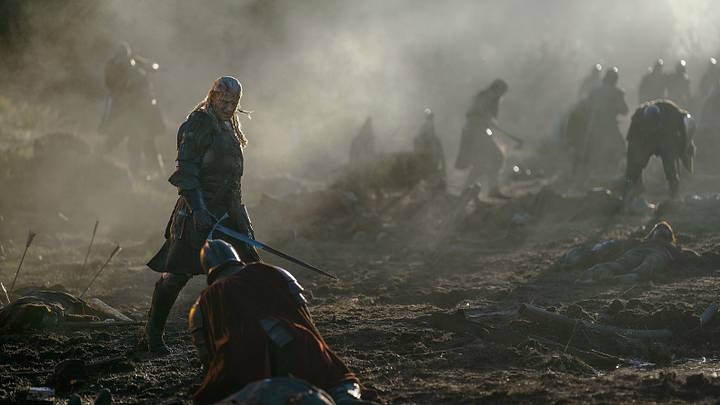
The Targaryens are the feuding family whom readers (and later TV viewers) first encountered in George R.R. Martin’s A Song of Ice and Fire series of fantasy books, and later in its acclaimed HBO adaptation, Game of Thrones. Now, the family has its own dedicated spinoff in the shape of the long-running saga’s prequel series, House of the Dragon.
Both series explore the Targaryen dynasty’s knotty and eternally feuding family tree—but their internal squabbles and civil wars are nothing compared to some of history’s real-life family feuds.
- The Ptolemaic Dynasty
- The House of Lancaster and the House of York
- The Pazzi Conspiracy
- The Dassler Brothers
The Ptolemaic Dynasty

The Ptolemaic rule of Ancient Egypt was established in 305 BCE, when the Macedonian-born ruler Ptolemy I Soter named himself king following years of internal wrangling and international campaigns. His dynasty would go on to rule for almost the next three centuries, throughout which it was rife with internal bitter and bloody feuding, politics, and treachery.
Perhaps most notable of all was the rule of the penultimate Ptolemaic king, Ptolemy XII, who was driven out of Egypt, ousted from power, and replaced by his own daughter, Berenice IV, in 58 BCE. Having fled to Rome, Ptolemy bribed and coerced his way into returning to Egypt with a Roman army behind him, whereupon he declared himself king again and had his own daughter beheaded for her treasonousness.
When Ptolemy himself died seven years later, he was succeeded by his eldest surviving daughter, Cleopatra, who wed her own brother to ensure she had a male co-ruler, who ultimately became Ptolemy XIII. He, however, later plotted to overthrow his sister and seize control alone, further plunging the Egyptian throne into chaos and Egypt itself into civil war—a situation that only worsened when the siblings became embroiled in Rome’s own civil war, albeit on opposing sides.
The House of Lancaster and the House of York

Medieval England’s famous Wars of the Roses were fought by two rival dynasties, the House of Lancaster and the House of York. Both were attempting to secure control of the English throne for their respective bloodlines, so it’s easy to forget that these two great royal houses were related to one another: both were so-called “cadet” branches (i.e. lines of lineage descended from a monarch’s younger sons) of the earlier House of Plantagenet, and in particular, many were descendants of the 14th-century Plantagenet king Edward III.
As such, the House of Lancaster was comprised of the descendants of Edward III’s third surviving son, John of Gaunt, while the House of York was made up of a mixture of the descendants of Edward’s fourth son, Edmund of Langley, and more distantly, of his second son, Lionel of Antwerp.
These two great families’ attempts to seize power in England effectively kept the country in a state of civil war for over thirty years, with the Wars rumbling on from 1455 until 1487.
The Pazzi Conspiracy

The legendary Medici family was far and away the wealthiest and most powerful family in Renaissance Florence, and together they dominated the city’s politics and culture for some 400 years, from the 15th to 18th centuries. But throughout that long rule, various other families made repeated attempts to rival the Medici for power and influence in the city-state—including the infamous Pazzi dynasty.
The Pazzi family first rose to prominence in Florence in the 14th century, around the same time that the Medici likewise first grew in power and influence under their great patriarch, Cosimo de’ Medici. Both families made their names and their fortunes in banking, yet while the Pazzi family gradually carved out a niche for themselves among some of the city’s elite and upper classes, Cosimo instead courted the Church, and eventually took over the lucrative management of the papal accounts.
This arrangement gave the Medici an almost untouchable level of power and influence, which the Pazzis had little chance of rivaling. So, instead, an alliance was organized: in 1459, Cosimo de’ Medici and the Pazzi family’s figurehead, Antonio de’ Pazzi, orchestrated a wedding between Antonio’s son, Guglielmo, and Cosimo’s granddaughter, Bianca. The two grand families were now united as a single all-powerful dynasty. The unity, however, would not last long.
By the 1470s, Cosimo was dead, his son and successor Piero had also died after just five years in charge, and Florence was now effectively under the increasingly tyrannical control of Bianca’s elder brothers, Lorenzo and Giuliano de’ Medici. In that time too, the Pazzi bank had gradually utilized their growing power and influence to wrest control of the papal accounts from the Medici’s—while the papacy itself, under Pope Sixtus IV, had grown resentful of the Medici’s rule and long-time hunger for power.
Eventually, a conspiracy was hatched that would see the Pazzi, with the backing of members of the papal court, launch an assassination attempt on the Medici brothers. The attack took place during Mass in the Cathedral of Florence on Easter Sunday, 1478. Unfortunately for the Pazzi, however, while Giuliano was slain, Lorenzo survived.
The people of Florence rallied to Lorenzo’s side, killed several of the conspirators, and drove the Pazzi from the city. Such was the Pazzi’s unpopularity in the aftermath of the attack, in fact, that when one of the surviving conspirators, Jacopo de’ Pazzi, was hanged and buried in the Pazzi crypt, he was reportedly later exhumed and reburied outside the city walls in disgrace after the locals objected to him being buried on holy ground.
This reburial didn’t last long, though, as his corpse was later dug up again by a band of children, dragged through the city by the noose still around its neck, and thrown into the river.
The Dassler Brothers

If the name of German cobbler and inventor Adolf “Adi” Dassler sounds familiar, it’s because he used his own name for that of the sportswear company he founded in 1949, which became known as Adidas.
Despite being one of the world’s biggest sportswear brands today (second only to Nike), Adidas had somewhat humble beginnings, having been founded by Adolf Dassler in his mother’s kitchen in the town of Herzogenaurach, near Nuremberg, following his service in World War I.
As the business grew larger, Adolf’s elder brother Rudolf, known as Rudi, joined the endeavor, and in 1924 they founded the Dassler Brothers’ Sports Shoe Factory—which, despite its rather grand name, was little more than a cobbler’s workshop, with just three employees, from where they made studded football boots. The company grew massively over the years, eventually supplying Jesse Owens’ shoes at the 1936 Olympics in Berlin.
After World War II, however, the relationship between Adi and Rudi soured. Allegedly, personal and political differences were to blame for this, and the rift eventually became so great that Rudi left the company in 1948—only to found his own rival sports shoe brand in the same town, working out of a factory on the opposite side of the river in Herzogenaurach. It was after this that Adi Dassler renamed his brand “Adidas,” while Rudi’s company, though originally named “Ruda,” became Puma.
Incredibly, the rivalry between the two brothers, and the two companies, eventually infected the entire town, with employees of the two rival factories opting for various local businesses based on their loyalty to one business or the other. The situation was never resolved during the brothers’ lifetimes, moreover, and today they are buried at opposite ends of the Herzogenaurach cemetery.