%20%20--%3E%0A%3Csvg%20version%3D%221.1%22%20id%3D%22Layer_1%22%20xmlns%3D%22http%3A%2F%2Fwww.w3.org%2F2000%2Fsvg%22%20xmlns%3Axlink%3D%22http%3A%2F%2Fwww.w3.org%2F1999%2Fxlink%22%20x%3D%220px%22%20y%3D%220px%22%0A%09%20viewBox%3D%220%200%20684.6%2068.1%22%20style%3D%22enable-background%3Anew%200%200%20684.6%2068.1%3B%22%20xml%3Aspace%3D%22preserve%22%3E%0A%3Cg%3E%0A%09%3Cpath%20d%3D%22M444.1%2C29.3h-17.4v14.5h17.4V29.3z%20M36.4%2C68.1l29.3-50.8V0H50.4L32.9%2C36.8L15.5%2C0H0v68.1h16.7V45.8l12.4%2C22.3H36.4z%0A%09%09%20M49.1%2C68.1h16.6V23.4L49.1%2C52.1V68.1z%20M76.6%2C68.1h45V53.8H93.3V41.6h21V27.1h-21V14.8h28.3V0.1h-45V68.1z%20M175.6%2C68.1h17.3v-68%0A%09%09h-16.5v40.3L150%2C0.1h-17.6v68h16.7V27.7L175.6%2C68.1z%20M235.8%2C14.8h15.4V0.1h-47.4v14.7H219v53.2h16.8V14.8z%20M290.3%2C45.9h-17.1%0A%09%09l7.5-15.6h2L290.3%2C45.9z%20M298.7%2C68.1h18l-32.2-68h-5.7l-32%2C68h18l3.3-7.1h27.1L298.7%2C68.1z%20M325.2%2C68.1h46.2V53.8h-29.6V0.1h-16.7%0A%09%09V68.1z%20M423.7%2C14.8h27.2V0.1H407v68h16.7V14.8z%20M462%2C68.1h46.2V53.8h-29.6V0.1H462V68.1z%20M564.8%2C34.1c0%2C10.7-7.2%2C19.2-18.5%2C19.2%0A%09%09c-11.4%2C0-18.5-8.5-18.5-19.2s7.1-19.2%2C18.5-19.2C557.6%2C14.9%2C564.8%2C23.4%2C564.8%2C34.1%20M580.6%2C34.1c0-19-14.2-34-34.3-34%0A%09%09c-20.2%2C0-34.3%2C15-34.3%2C34c0%2C19%2C14.1%2C34%2C34.3%2C34C566.4%2C68.1%2C580.6%2C53.1%2C580.6%2C34.1%20M604.8%2C20.5c0-4.1%2C3.3-6.2%2C6.7-6.2%0A%09%09c4.4%2C0%2C6.6%2C3%2C6.6%2C6.6h14.7C631.8%2C9.1%2C625.1%2C0.1%2C611%2C0.1c-12%2C0-21.7%2C9.3-21.7%2C20.6c0%2C10.9%2C5.9%2C15.9%2C16.7%2C19.8%0A%09%09c5.2%2C1.8%2C11.5%2C3.2%2C11.5%2C8c0%2C3.3-2.4%2C5.5-6.4%2C5.5c-3.6%2C0-6.6-3-6.6-6.7h-15.2c0%2C11.5%2C7.9%2C20.8%2C21.8%2C20.8c12%2C0%2C21.6-9.3%2C21.6-20.6%0A%09%09c0-10-5.3-16.4-16.7-19.8C610.6%2C26.1%2C604.8%2C25.3%2C604.8%2C20.5%20M670%2C20.9h14.7C683.8%2C9.1%2C677.1%2C0.1%2C663%2C0.1c-12%2C0-21.7%2C9.3-21.7%2C20.6%0A%09%09c0%2C10.9%2C5.9%2C15.9%2C16.7%2C19.8c5.2%2C1.8%2C11.5%2C3.2%2C11.5%2C8c0%2C3.3-2.4%2C5.5-6.4%2C5.5c-3.6%2C0-6.6-3-6.6-6.7h-15.2c0%2C11.5%2C7.9%2C20.8%2C21.8%2C20.8%0A%09%09c12%2C0%2C21.6-9.3%2C21.6-20.6c0-10-5.3-16.4-16.7-19.8c-5.4-1.6-11.3-2.4-11.3-7.2c0-4.1%2C3.3-6.2%2C6.7-6.2C667.7%2C14.4%2C670%2C17.3%2C670%2C20.9%0A%09%09%22%2F%3E%0A%3C%2Fg%3E%0A%3C%2Fsvg%3E%0A)

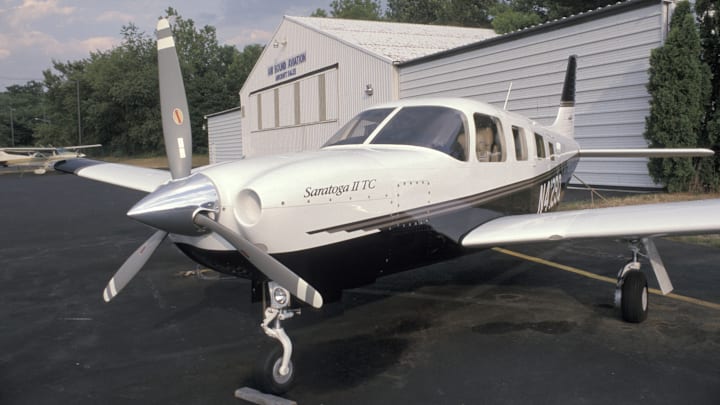
Not every Love Story has a happy ending—even that of one of the most admired couples of the ’90s, John F. Kennedy Jr. and Carolyn Bessette-Kennedy. On a muggy midsummer evening in 1999, they and Carolyn’s sister, Lauren Bessette, boarded a small plane for what should have been a routine flight to Massachusetts. Instead, Kennedy’s Piper Saratoga went down off Martha’s Vineyard, ending all three lives.
The nation was stunned, and Sen. Ted Kennedy captured the family’s sorrow: “We are filled with unspeakable grief and sadness by the loss of John and Carolyn and Lauren Bessette. John was a shining light in all our lives and in the lives of the nation and the world that first came to know him as a little boy.” More than two decades later, their tragic flight still keeps the public up at night. Here’s everything to know about the crash that claimed JFK Jr. and Carolyn Bessette—and what followed.

The Crash
A foggy Friday night, a late start, and a coastal shortcut all factored into the outcome of their final flight. On July 16, 1999, just a day after having a cast removed from his broken ankle, Kennedy met his wife, Carolyn, and her sister, Lauren, at Essex County Airport in Caldwell, New Jersey. They were headed to Hyannis Port for Rory Kennedy’s wedding, with a planned stop to drop Lauren off at Martha’s Vineyard.
The trio took off at 8:39 p.m.—later than planned and just 13 minutes after sunset—aboard Kennedy’s Piper Saratoga. Just over an hour later, their lives changed instantly and irreparably. Kennedy likely became disoriented while flying through thick fog near Martha’s Vineyard, sending the plane into a steep, uncontrolled spiral into the Atlantic Ocean in about 30 seconds. Radar data showed the aircraft dropping far beyond a safe rate, and no distress call was made, suggesting the situation unfolded quickly. The final radar reading came at 9:40 p.m., when the plane was 1,100 feet above sea level and descending at about 53 mph.
Investigators found no evidence of mechanical failure, noting the plane had recently passed inspection. Kennedy was 38, Carolyn 33, and Lauren 34 when they died. Navy divers recovered the three from the wreckage about 7.5 miles off Martha’s Vineyard on July 21, 1999; all had been wearing seatbelts and died on impact. So what caused the fatal descent—and why did the flight end so abruptly?

The Cause
What goes up must come down—but in aviation, how and why that happens can depend on split-second conditions. Investigators determined the cause was spatial disorientation, which likely set in as Kennedy flew at night over the ocean, where haze and darkness can erase the horizon. Because he wasn't certified to fly solely by instruments, he relied on visual cues, which are far less reliable in such conditions.
According to the National Transportation Safety Board, pilot error was the most likely cause of the crash. Kennedy had logged around 350 total flight hours, with roughly 100 solo and fewer than 10 at night in his newly purchased Saratoga. Despite this, he declined an offer from instructor Bob Merena to accompany him, telling him he “wanted to do it alone.”
Investigators believe the disorientation led to a rapid, uncontrolled descent, likely without Kennedy or his passengers fully realizing what was happening. In the final moments, the plane entered a steep nose-dive—often referred to as a “graveyard spiral.” Experts say any sensations felt on board would have been brief, before the aircraft struck the ocean.
The official findings and expert accounts point to the same conclusion: the crash was not the result of mechanical failure, but a combination of limited visual conditions and pilot error.

The Aftermath
News of the disappearance—and soon after, the confirmed crash—sent shockwaves across the country. Tributes poured in, with flags lowered to half-staff and memorials held in honor of the victims. The tragedy also revived long-standing references to the so-called “Kennedy Curse,” as the family once again faced an unexpected and devastating loss.
Carole Radziwill, the wife of Kennedy’s cousin Anthony—whom the couple was scheduled to meet later that night—was among the first to raise the alarm after they failed to arrive as expected. When she couldn’t locate them, Radziwill contacted the Coast Guard, setting off a five-day search that cost more than $500K.
Search teams combed a vast stretch of ocean near Martha’s Vineyard, but it quickly became clear how difficult the recovery effort would be. As the days passed, debris began to wash ashore, offering the first tangible signs of what had occurred. Among the items recovered was Lauren’s black suitcase, which washed up on Philbin Beach on July 17, 1999.
At a public memorial, Sen. Edward M. Kennedy reflected on his nephew’s life, noting, "We dared to think, in that other Irish phrase, that this John Kennedy would live to comb gray hair, with his beloved Carolyn by his side. But, like his father, he had every gift but length of years."