%20%20--%3E%0A%3Csvg%20version%3D%221.1%22%20id%3D%22Layer_1%22%20xmlns%3D%22http%3A%2F%2Fwww.w3.org%2F2000%2Fsvg%22%20xmlns%3Axlink%3D%22http%3A%2F%2Fwww.w3.org%2F1999%2Fxlink%22%20x%3D%220px%22%20y%3D%220px%22%0A%09%20viewBox%3D%220%200%20684.6%2068.1%22%20style%3D%22enable-background%3Anew%200%200%20684.6%2068.1%3B%22%20xml%3Aspace%3D%22preserve%22%3E%0A%3Cg%3E%0A%09%3Cpath%20d%3D%22M444.1%2C29.3h-17.4v14.5h17.4V29.3z%20M36.4%2C68.1l29.3-50.8V0H50.4L32.9%2C36.8L15.5%2C0H0v68.1h16.7V45.8l12.4%2C22.3H36.4z%0A%09%09%20M49.1%2C68.1h16.6V23.4L49.1%2C52.1V68.1z%20M76.6%2C68.1h45V53.8H93.3V41.6h21V27.1h-21V14.8h28.3V0.1h-45V68.1z%20M175.6%2C68.1h17.3v-68%0A%09%09h-16.5v40.3L150%2C0.1h-17.6v68h16.7V27.7L175.6%2C68.1z%20M235.8%2C14.8h15.4V0.1h-47.4v14.7H219v53.2h16.8V14.8z%20M290.3%2C45.9h-17.1%0A%09%09l7.5-15.6h2L290.3%2C45.9z%20M298.7%2C68.1h18l-32.2-68h-5.7l-32%2C68h18l3.3-7.1h27.1L298.7%2C68.1z%20M325.2%2C68.1h46.2V53.8h-29.6V0.1h-16.7%0A%09%09V68.1z%20M423.7%2C14.8h27.2V0.1H407v68h16.7V14.8z%20M462%2C68.1h46.2V53.8h-29.6V0.1H462V68.1z%20M564.8%2C34.1c0%2C10.7-7.2%2C19.2-18.5%2C19.2%0A%09%09c-11.4%2C0-18.5-8.5-18.5-19.2s7.1-19.2%2C18.5-19.2C557.6%2C14.9%2C564.8%2C23.4%2C564.8%2C34.1%20M580.6%2C34.1c0-19-14.2-34-34.3-34%0A%09%09c-20.2%2C0-34.3%2C15-34.3%2C34c0%2C19%2C14.1%2C34%2C34.3%2C34C566.4%2C68.1%2C580.6%2C53.1%2C580.6%2C34.1%20M604.8%2C20.5c0-4.1%2C3.3-6.2%2C6.7-6.2%0A%09%09c4.4%2C0%2C6.6%2C3%2C6.6%2C6.6h14.7C631.8%2C9.1%2C625.1%2C0.1%2C611%2C0.1c-12%2C0-21.7%2C9.3-21.7%2C20.6c0%2C10.9%2C5.9%2C15.9%2C16.7%2C19.8%0A%09%09c5.2%2C1.8%2C11.5%2C3.2%2C11.5%2C8c0%2C3.3-2.4%2C5.5-6.4%2C5.5c-3.6%2C0-6.6-3-6.6-6.7h-15.2c0%2C11.5%2C7.9%2C20.8%2C21.8%2C20.8c12%2C0%2C21.6-9.3%2C21.6-20.6%0A%09%09c0-10-5.3-16.4-16.7-19.8C610.6%2C26.1%2C604.8%2C25.3%2C604.8%2C20.5%20M670%2C20.9h14.7C683.8%2C9.1%2C677.1%2C0.1%2C663%2C0.1c-12%2C0-21.7%2C9.3-21.7%2C20.6%0A%09%09c0%2C10.9%2C5.9%2C15.9%2C16.7%2C19.8c5.2%2C1.8%2C11.5%2C3.2%2C11.5%2C8c0%2C3.3-2.4%2C5.5-6.4%2C5.5c-3.6%2C0-6.6-3-6.6-6.7h-15.2c0%2C11.5%2C7.9%2C20.8%2C21.8%2C20.8%0A%09%09c12%2C0%2C21.6-9.3%2C21.6-20.6c0-10-5.3-16.4-16.7-19.8c-5.4-1.6-11.3-2.4-11.3-7.2c0-4.1%2C3.3-6.2%2C6.7-6.2C667.7%2C14.4%2C670%2C17.3%2C670%2C20.9%0A%09%09%22%2F%3E%0A%3C%2Fg%3E%0A%3C%2Fsvg%3E%0A)

The tale of Lizzie Borden has been immortalized in film, television, and even a children's rhyme. The latest version comes from the fourth season of Ryan Murphy and Ian Brennan's series Monster, which released on Netflix on September 17. According to the season's star, Ella Beatty, Borden's alleged murder of her parents in 1892 is "an American crime that feels almost mythic in proportion."
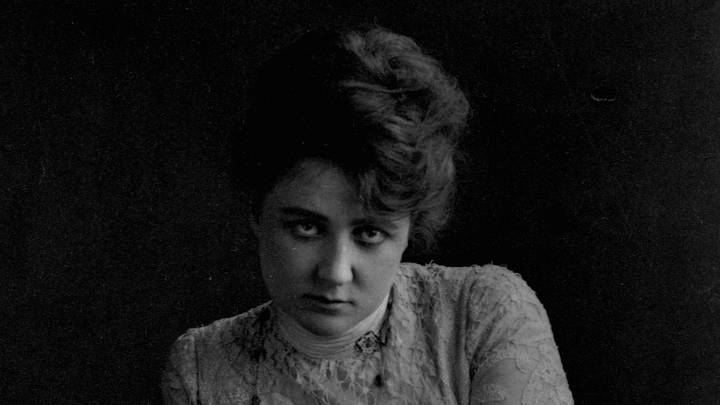
But there is more to Borden's story than the question of whether or not she wielded the hatchet. The Netflix series sees Jessica Barden playing Nance O'Neil, an actress who became one of Borden's closest friends after the murders. This inclusion will likely please true crime fans, who have been trying to understand how O'Neil fit into Borden's life for the last century—though we’re guessing many creative liberties are taken in the show. Let’s get into the real-life story.
The question that many Borden experts want to know is whether the relationship between Borden and O'Neil was romantic. Rumors flew when the two first became friends, and they have not stopped in the decades since. There are so many questions to grapple with when trying to understand Borden. Was she a killer? Was she a victim? Who was she in her personal life? The key to unlocking her psyche very well might be found in her intimate dynamic with Boston's favorite actress.
The Borden Murders

The Borden murders have been sensationalized from the moment they took place, so it's important to begin with a brief accounting of what we actually know about the case. On August 4, 1892, Lizzie Borden allegedly discovered her father and stepmother brutally murdered. Records indicate that her stepmother died from blunt-force trauma (with 18 or 19 hits) and her father was likely killed by a hatchet, which struck him 10 or 11 times. When the police arrived, Borden had no signs of blood on her.
The only other people home at the time of the murders were Lizzie Borden and the family's maid, Bridget Sullivan, but the police initially believed that the murderer had to be a man. However, when they heard a witness’s account that Borden had allegedly tried to purchase poison days before and had burned one of her dresses a few days after the murders—plus her strange behavior during the inquest—she was arrested and charged with murder.
Although many people believed that Borden was responsible for her parents' deaths, she was acquitted on June 20, 1893. A primary reason for her acquittal was that the all-male jury didn't believe a woman from her social class could have been emotionally or physically capable of committing such a brutal crime.
Of course, being found "not guilty" didn't stop the rumors. Borden was plagued by speculation for the remainder of her life, and later depictions nearly all cast her as the killer. These stories push back on the idea that a woman wouldn't have been capable of the crime, either staging her as a calculated psychopath or as an empowering woman who refused to be mistreated by her family. Unfortunately, we will likely never know what really happened.
Building a New Life Beyond the Legend

After being acquitted of her parents' murders, Borden tried to build a new life. She and her sister Emma bought a new property that they named Maplecroft, which was a welcome refuge from the prison cells she had resided in for months. However, the people of Fall River, Massachusetts, didn't let her move on from the murders. She became a recluse in her own town, changing her name to Lizbeth and visiting New York and Boston to reclaim her anonymity and freedom.
In 1904, Borden met Nance O'Neil, an actress who had taken Boston by storm. After witnessing one of O'Neil's most celebrated performances, Borden sent a note backstage asking to meet with her. We don't know what was said in that first encounter, but the most infamous woman in New England soon found a fierce friend in the beloved tragedienne.
They spent what was considered an unusual amount of time together, which some have interpreted as a romantic relationship. That is likely to be expanded on in Monster, where the writers have chosen to depict an intimate relationship between Borden and her maid as well. Whether her bond with O’Neil was romantic or platonic, it had a strong impact on Borden, who was accustomed to a life of isolation and ostracization.
One of the biggest impacts of this relationship came in 1905, when Lizzie had a massive fight with her sister. We don't know exactly what caused the dispute, but Emma told the Altoona Tribune that "conditions had become absolutely unbearable." Many reporters speculated that this was due to Lizzie's relationship with O'Neil. Whatever its source, the fight resulted in Emma moving out of Maplecroft. The sisters remained estranged for the rest of their lives.
Who Was Nance O'Neil?

Nance O'Neil was born in 1874 as Gertrude Lamson. She began working as a stage actress at age 19, making a splash in the San Francisco theater scene before touring internationally. Knowing precisely who she wanted to become, she took the stage name "Nance O'Neil" to honor actresses Nance Oldfield and Eliza O'Neil. Over the course of her life, she played nearly every major role available for a woman on the stage, in addition to several performances in both silent films and early talkies.
A theater critic from the New York Times wrote in 1908 that, while she occasionally delivered lines monotonously, "There is no actress on the stage at present who has a more remarkable gift for emotional expression, nor is there a single one who has been more lavishly endowed by nature with the physical gifts which enter into the equipment of great actresses." Others agreed, and she became known as one of the best actresses in the country.
Despite her celebrity, little is known about O'Neil's personal life. Some assumed that she was in a relationship with her manager McKee Rankin, but this rumor seemed to be based on little more than the stereotype of young actresses that prevailed at the time. Her only confirmed relationship was with actor Alfred Hickman, whom she married in 1917. Otherwise, she was known to travel and live with other actresses, such as Julia Duncan, whom she lived with after her husband's passing.
What was the relationship betwen Lizzie Borden and Nance O'Neil?

One theory that has gained attention in recent years suggests that Borden killed her father and stepmother because they had discovered that she was in a lesbian relationship. The salacious rumors about her "unnatural" friendship with O'Neil only added fuel to the fire. While a good, Christian woman surely could not have murdered her family so violently, the rumors said, perhaps a man-hating lesbian could.
But the fact is, we know very little about their relationship. After meeting in 1904, Borden spent a lot of time with O'Neil. She attended parties hosted by O'Neil and her friends and hosted theatre troupes at Maplecroft when they were performing locally. According to a 1905 article in the San Francisco Call, Borden may have been in the process of writing a play for O'Neil, though neither woman confirmed this and no script emerged.
There were rumors over the years that O'Neil was only friends with Borden due to her wealth. Borden did reportedly give money to O'Neil and her friends multiple times to repay their debts, and she was generally the one footing the bill for the group's extravagant parties. Those who follow this theory believe the friendship ended when O'Neil refused to pay her friend back. However, their estrangement coincided with O'Neil and her company leaving Boston, which would have made it difficult to maintain in the best of circumstances.
O'Neil did provide an interview to the New Bedford Standard shortly after Borden’s death, in which she explained her friendship with Borden and claimed that she believed in her former friend's innocence. For those who want to believe in a romantic dynamic between the two, the article includes O'Neil describing Borden as "distinctively attractive" and claiming, "We were like ships that pass in the night and speak [to] each other in passing."
The desire to see the women as lovers seems to derive primarily from their deviations from traditional gender roles. O'Neil had no known lovers by the time she met Borden, which she attributed to her dedication to the theatre. Likewise, Borden was described by the New York Herald as having "avoided the company of young men" before her parents' murder. She had few visitors at all after the murders—except O'Neil and her companions.
At the time, there was an emerging concept of a "Boston marriage," in which two financially independent women had the opportunity to live together without being supported by a father or husband. Some Boston marriages were indeed romantic, while others were platonic yet devoted friendships. It's entirely possible that Borden and O'Neil saw each other as potential partners, but we simply don't have enough information to be certain.
Neither woman kept a diary that revealed their true feelings toward one another, and no letters between the two survived to clarify their dynamic. Borden and O'Neil were two women who defied the roles society gave them, spent a great deal of time together, yet parted after no more than two years.
While not as captivating as the question of whether Borden killed her father and stepmother, the nature of her relationship with O'Neil will likely remain an enduring part of her overall mystery.