%20%20--%3E%0A%3Csvg%20version%3D%221.1%22%20id%3D%22Layer_1%22%20xmlns%3D%22http%3A%2F%2Fwww.w3.org%2F2000%2Fsvg%22%20xmlns%3Axlink%3D%22http%3A%2F%2Fwww.w3.org%2F1999%2Fxlink%22%20x%3D%220px%22%20y%3D%220px%22%0A%09%20viewBox%3D%220%200%20684.6%2068.1%22%20style%3D%22enable-background%3Anew%200%200%20684.6%2068.1%3B%22%20xml%3Aspace%3D%22preserve%22%3E%0A%3Cg%3E%0A%09%3Cpath%20d%3D%22M444.1%2C29.3h-17.4v14.5h17.4V29.3z%20M36.4%2C68.1l29.3-50.8V0H50.4L32.9%2C36.8L15.5%2C0H0v68.1h16.7V45.8l12.4%2C22.3H36.4z%0A%09%09%20M49.1%2C68.1h16.6V23.4L49.1%2C52.1V68.1z%20M76.6%2C68.1h45V53.8H93.3V41.6h21V27.1h-21V14.8h28.3V0.1h-45V68.1z%20M175.6%2C68.1h17.3v-68%0A%09%09h-16.5v40.3L150%2C0.1h-17.6v68h16.7V27.7L175.6%2C68.1z%20M235.8%2C14.8h15.4V0.1h-47.4v14.7H219v53.2h16.8V14.8z%20M290.3%2C45.9h-17.1%0A%09%09l7.5-15.6h2L290.3%2C45.9z%20M298.7%2C68.1h18l-32.2-68h-5.7l-32%2C68h18l3.3-7.1h27.1L298.7%2C68.1z%20M325.2%2C68.1h46.2V53.8h-29.6V0.1h-16.7%0A%09%09V68.1z%20M423.7%2C14.8h27.2V0.1H407v68h16.7V14.8z%20M462%2C68.1h46.2V53.8h-29.6V0.1H462V68.1z%20M564.8%2C34.1c0%2C10.7-7.2%2C19.2-18.5%2C19.2%0A%09%09c-11.4%2C0-18.5-8.5-18.5-19.2s7.1-19.2%2C18.5-19.2C557.6%2C14.9%2C564.8%2C23.4%2C564.8%2C34.1%20M580.6%2C34.1c0-19-14.2-34-34.3-34%0A%09%09c-20.2%2C0-34.3%2C15-34.3%2C34c0%2C19%2C14.1%2C34%2C34.3%2C34C566.4%2C68.1%2C580.6%2C53.1%2C580.6%2C34.1%20M604.8%2C20.5c0-4.1%2C3.3-6.2%2C6.7-6.2%0A%09%09c4.4%2C0%2C6.6%2C3%2C6.6%2C6.6h14.7C631.8%2C9.1%2C625.1%2C0.1%2C611%2C0.1c-12%2C0-21.7%2C9.3-21.7%2C20.6c0%2C10.9%2C5.9%2C15.9%2C16.7%2C19.8%0A%09%09c5.2%2C1.8%2C11.5%2C3.2%2C11.5%2C8c0%2C3.3-2.4%2C5.5-6.4%2C5.5c-3.6%2C0-6.6-3-6.6-6.7h-15.2c0%2C11.5%2C7.9%2C20.8%2C21.8%2C20.8c12%2C0%2C21.6-9.3%2C21.6-20.6%0A%09%09c0-10-5.3-16.4-16.7-19.8C610.6%2C26.1%2C604.8%2C25.3%2C604.8%2C20.5%20M670%2C20.9h14.7C683.8%2C9.1%2C677.1%2C0.1%2C663%2C0.1c-12%2C0-21.7%2C9.3-21.7%2C20.6%0A%09%09c0%2C10.9%2C5.9%2C15.9%2C16.7%2C19.8c5.2%2C1.8%2C11.5%2C3.2%2C11.5%2C8c0%2C3.3-2.4%2C5.5-6.4%2C5.5c-3.6%2C0-6.6-3-6.6-6.7h-15.2c0%2C11.5%2C7.9%2C20.8%2C21.8%2C20.8%0A%09%09c12%2C0%2C21.6-9.3%2C21.6-20.6c0-10-5.3-16.4-16.7-19.8c-5.4-1.6-11.3-2.4-11.3-7.2c0-4.1%2C3.3-6.2%2C6.7-6.2C667.7%2C14.4%2C670%2C17.3%2C670%2C20.9%0A%09%09%22%2F%3E%0A%3C%2Fg%3E%0A%3C%2Fsvg%3E%0A)

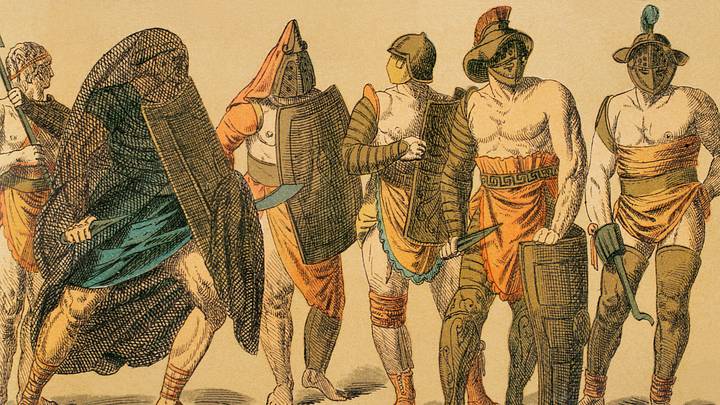
The image of the gladiator has endured over 2,000 years of history, but most knowledge of them originates from visual representations and only a handful from texts. It is therefore understandable that myths have circulated about them over the years, some of which have been reinforced in the 21st century through the success of the 2000 film Gladiator and its 2024 sequel.
However, the truth about these historical figures is more complex than their portrayals in popular cultural might make them appear. Here are five misconceptions which are sometimes held about the gladiators of Ancient Rome.
- Misconception: Only Men Were Gladiators
- Misconception: Gladiatorial Fights Were Unplanned Spectacles
- Misconception: All Gladiators Were Slaves
- Misconception: Every Fight Was Intended to Result in Death
- Misconception: People in Power Could Not Participate
Misconception: Only Men Were Gladiators
The common image of the gladiator is of a man in particular being in the arena, as emphasized by descriptions like the following one in the Cambridge Dictionary: “In ancient Rome, a man who fought another man or an animal, usually until one of them died, for public entertainment.” However, there are actually a number of references to women fighting as gladiators in classical texts too.
These references suggest that the idea of women fighting was controversial: one contemporary record states that emperor Domitian only allowed them to fight at night, while another emperor, Septimius Severus, banned them altogether. But the fact that measures were taken to stop them from fighting shows that there were female gladiators, too.
Misconception: Gladiatorial Fights Were Unplanned Spectacles

Battles between gladiators were much more complex than simply placing the two opponents in an arena and watching them duke it out. They actually involved a great deal of organization, and were planned with mass entertainment in mind. There were also sponsors involved in the staging of the events.
Despite the brutality of the violence involved, it was a meticulously organized show for the public of ancient Rome.
Misconception: All Gladiators Were Slaves

While most gladiators were slaves who had no choice about fighting, a number were actually free individuals who voluntarily fought in these battles, one of the reasons being that there was money to be made from being a successful fighter in those arenas. Historians have estimated that around half of all gladiators were free individuals participating in these combats.
Misconception: Every Fight Was Intended to Result in Death

One of the myths about gladiatorial combat was the idea that every fight was to the very end and would inevitably lead to the deaths of one of the participants. Merriam-Webster even defines the term “gladiator” as “a person engaged in a fight to the death as public entertainment for ancient Romans.” However, this was not always the case, as many gladiators were highly skilled fighters who knew how to win without inflicting fatal injuries, and it has been estimated that only 10-20% of gladiatorial fights ended with a fatality.
Misconception: People in Power Could Not Participate

The interest in gladiatorial combat extended to some of the most powerful politicians in Ancient Rome wanting to fight in the arena. Historical records show that the Emperor Commodus once fought as a gladiator, as did a number of Roman senators. However, not all senators who wanted to participate were given permission to do so: one who is noted as having made a request to fight in a complete set of armor was not allowed to be involved.