%20%20--%3E%0A%3Csvg%20version%3D%221.1%22%20id%3D%22Layer_1%22%20xmlns%3D%22http%3A%2F%2Fwww.w3.org%2F2000%2Fsvg%22%20xmlns%3Axlink%3D%22http%3A%2F%2Fwww.w3.org%2F1999%2Fxlink%22%20x%3D%220px%22%20y%3D%220px%22%0A%09%20viewBox%3D%220%200%20684.6%2068.1%22%20style%3D%22enable-background%3Anew%200%200%20684.6%2068.1%3B%22%20xml%3Aspace%3D%22preserve%22%3E%0A%3Cg%3E%0A%09%3Cpath%20d%3D%22M444.1%2C29.3h-17.4v14.5h17.4V29.3z%20M36.4%2C68.1l29.3-50.8V0H50.4L32.9%2C36.8L15.5%2C0H0v68.1h16.7V45.8l12.4%2C22.3H36.4z%0A%09%09%20M49.1%2C68.1h16.6V23.4L49.1%2C52.1V68.1z%20M76.6%2C68.1h45V53.8H93.3V41.6h21V27.1h-21V14.8h28.3V0.1h-45V68.1z%20M175.6%2C68.1h17.3v-68%0A%09%09h-16.5v40.3L150%2C0.1h-17.6v68h16.7V27.7L175.6%2C68.1z%20M235.8%2C14.8h15.4V0.1h-47.4v14.7H219v53.2h16.8V14.8z%20M290.3%2C45.9h-17.1%0A%09%09l7.5-15.6h2L290.3%2C45.9z%20M298.7%2C68.1h18l-32.2-68h-5.7l-32%2C68h18l3.3-7.1h27.1L298.7%2C68.1z%20M325.2%2C68.1h46.2V53.8h-29.6V0.1h-16.7%0A%09%09V68.1z%20M423.7%2C14.8h27.2V0.1H407v68h16.7V14.8z%20M462%2C68.1h46.2V53.8h-29.6V0.1H462V68.1z%20M564.8%2C34.1c0%2C10.7-7.2%2C19.2-18.5%2C19.2%0A%09%09c-11.4%2C0-18.5-8.5-18.5-19.2s7.1-19.2%2C18.5-19.2C557.6%2C14.9%2C564.8%2C23.4%2C564.8%2C34.1%20M580.6%2C34.1c0-19-14.2-34-34.3-34%0A%09%09c-20.2%2C0-34.3%2C15-34.3%2C34c0%2C19%2C14.1%2C34%2C34.3%2C34C566.4%2C68.1%2C580.6%2C53.1%2C580.6%2C34.1%20M604.8%2C20.5c0-4.1%2C3.3-6.2%2C6.7-6.2%0A%09%09c4.4%2C0%2C6.6%2C3%2C6.6%2C6.6h14.7C631.8%2C9.1%2C625.1%2C0.1%2C611%2C0.1c-12%2C0-21.7%2C9.3-21.7%2C20.6c0%2C10.9%2C5.9%2C15.9%2C16.7%2C19.8%0A%09%09c5.2%2C1.8%2C11.5%2C3.2%2C11.5%2C8c0%2C3.3-2.4%2C5.5-6.4%2C5.5c-3.6%2C0-6.6-3-6.6-6.7h-15.2c0%2C11.5%2C7.9%2C20.8%2C21.8%2C20.8c12%2C0%2C21.6-9.3%2C21.6-20.6%0A%09%09c0-10-5.3-16.4-16.7-19.8C610.6%2C26.1%2C604.8%2C25.3%2C604.8%2C20.5%20M670%2C20.9h14.7C683.8%2C9.1%2C677.1%2C0.1%2C663%2C0.1c-12%2C0-21.7%2C9.3-21.7%2C20.6%0A%09%09c0%2C10.9%2C5.9%2C15.9%2C16.7%2C19.8c5.2%2C1.8%2C11.5%2C3.2%2C11.5%2C8c0%2C3.3-2.4%2C5.5-6.4%2C5.5c-3.6%2C0-6.6-3-6.6-6.7h-15.2c0%2C11.5%2C7.9%2C20.8%2C21.8%2C20.8%0A%09%09c12%2C0%2C21.6-9.3%2C21.6-20.6c0-10-5.3-16.4-16.7-19.8c-5.4-1.6-11.3-2.4-11.3-7.2c0-4.1%2C3.3-6.2%2C6.7-6.2C667.7%2C14.4%2C670%2C17.3%2C670%2C20.9%0A%09%09%22%2F%3E%0A%3C%2Fg%3E%0A%3C%2Fsvg%3E%0A)

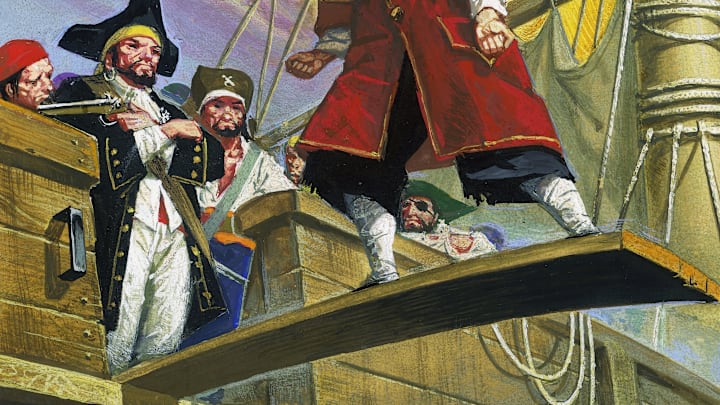
The sea is wild and unruly, much like the life of a scallywag aboard a pirate ship.
The floorboards creak, and the lanterns cast shadows that dance across the deck. Salt stings the air, and footsteps squeak on the slippery boards. Somewhere in the darkness, a sailor pleads for mercy. A pirate captain raises his hand, and in our imaginations, a traitor steps onto the plank and mentally prepares to plunge into the choppy, unforgiving waters below.
It's a scene so ingrained in our minds it seems like a fact. Yet the real story is infinitely more merciless.
Here's what really happened.
WALK THE PLANK

Despite its numerous references throughout history, the idea that pirates regularly forced captives to "walk the plank" is more fiction than fact. Historians have found little reliable evidence that this was a common, or even real, practice among pirates when they sailed the seven seas in search of treasure.
So where did this theatrical depiction come from, anyway? The earliest accounts of pirates mixed truth with exaggeration, forging their infamous reputation. Over time, authors and artists leaned into the gripping punishment that would capture an audience's attention.
In 1774, Daniel Defoe wrote about pirates walking the plank in his book, A General History of the Pyrates. The concept was then brought to life on the silver screen, with films like The Goonies, Disney's Peter Pan, and Pirates of the Caribbean enlivening the legend even more.
In other words, a wooden plank never rested on the edge of a pirate ship; it was built in the minds of readers.
The image of a condemned person taking a slow, fearful walk toward the sea was simply too captivating to resist. As these stories were told and retold in books and artworks, the plank transformed from an imagined act into a defining symbol of pirate life.
HOW PIRATES REALLY PUNISHED CAPTIVES

If pirates weren't actually making people walk the plank, what did they do to their captives? The reality was more short-lived and cruel. Violence was a tool, not a spectacle. Punishments kept the crew in line and were meant to strike terror or quickly put an end to mutiny before it could fester.
Whipping was commonly used to discipline. It didn't require an elaborate setup, just a crew willing to carry it out and a victim whose death ultimately served as a warning to others.
Even harsher was marooning. In this punishment, a person would be left behind on a remote island with little chance of survival. Sometimes they were given minimal supplies; sometimes they weren't. Either way, it turned isolation itself into a sentence, forcing the victim to face hunger and exposure to the elements (at the very least).
And when pirates wanted someone gone immediately, they didn't have time to fuss with a plank. They simply hurled the victim into the ocean. It was fast, efficient, and final. No dramatic speeches, no stepping onto a plank, just the cold reality of the open ocean.
These methods are not as drawn out and suspenseful as walking the plank, but you have to give pirates a little credit for being so practical. Their actions were driven by necessity and control, not by a desire to create a memorable scene.
A SWASHBUCKLING STORY

The popular notion of plank-walking highlights the myths humans have created and passed down, rather than the realities pirates faced. It turns a savage world into a structured performance, when real piracy was marked by chaos and unpredictability.
At the end of the day, perhaps it’s wiser to weave a sea story than to wind up as supper for the sharks!