%20%20--%3E%0A%3Csvg%20version%3D%221.1%22%20id%3D%22Layer_1%22%20xmlns%3D%22http%3A%2F%2Fwww.w3.org%2F2000%2Fsvg%22%20xmlns%3Axlink%3D%22http%3A%2F%2Fwww.w3.org%2F1999%2Fxlink%22%20x%3D%220px%22%20y%3D%220px%22%0A%09%20viewBox%3D%220%200%20684.6%2068.1%22%20style%3D%22enable-background%3Anew%200%200%20684.6%2068.1%3B%22%20xml%3Aspace%3D%22preserve%22%3E%0A%3Cg%3E%0A%09%3Cpath%20d%3D%22M444.1%2C29.3h-17.4v14.5h17.4V29.3z%20M36.4%2C68.1l29.3-50.8V0H50.4L32.9%2C36.8L15.5%2C0H0v68.1h16.7V45.8l12.4%2C22.3H36.4z%0A%09%09%20M49.1%2C68.1h16.6V23.4L49.1%2C52.1V68.1z%20M76.6%2C68.1h45V53.8H93.3V41.6h21V27.1h-21V14.8h28.3V0.1h-45V68.1z%20M175.6%2C68.1h17.3v-68%0A%09%09h-16.5v40.3L150%2C0.1h-17.6v68h16.7V27.7L175.6%2C68.1z%20M235.8%2C14.8h15.4V0.1h-47.4v14.7H219v53.2h16.8V14.8z%20M290.3%2C45.9h-17.1%0A%09%09l7.5-15.6h2L290.3%2C45.9z%20M298.7%2C68.1h18l-32.2-68h-5.7l-32%2C68h18l3.3-7.1h27.1L298.7%2C68.1z%20M325.2%2C68.1h46.2V53.8h-29.6V0.1h-16.7%0A%09%09V68.1z%20M423.7%2C14.8h27.2V0.1H407v68h16.7V14.8z%20M462%2C68.1h46.2V53.8h-29.6V0.1H462V68.1z%20M564.8%2C34.1c0%2C10.7-7.2%2C19.2-18.5%2C19.2%0A%09%09c-11.4%2C0-18.5-8.5-18.5-19.2s7.1-19.2%2C18.5-19.2C557.6%2C14.9%2C564.8%2C23.4%2C564.8%2C34.1%20M580.6%2C34.1c0-19-14.2-34-34.3-34%0A%09%09c-20.2%2C0-34.3%2C15-34.3%2C34c0%2C19%2C14.1%2C34%2C34.3%2C34C566.4%2C68.1%2C580.6%2C53.1%2C580.6%2C34.1%20M604.8%2C20.5c0-4.1%2C3.3-6.2%2C6.7-6.2%0A%09%09c4.4%2C0%2C6.6%2C3%2C6.6%2C6.6h14.7C631.8%2C9.1%2C625.1%2C0.1%2C611%2C0.1c-12%2C0-21.7%2C9.3-21.7%2C20.6c0%2C10.9%2C5.9%2C15.9%2C16.7%2C19.8%0A%09%09c5.2%2C1.8%2C11.5%2C3.2%2C11.5%2C8c0%2C3.3-2.4%2C5.5-6.4%2C5.5c-3.6%2C0-6.6-3-6.6-6.7h-15.2c0%2C11.5%2C7.9%2C20.8%2C21.8%2C20.8c12%2C0%2C21.6-9.3%2C21.6-20.6%0A%09%09c0-10-5.3-16.4-16.7-19.8C610.6%2C26.1%2C604.8%2C25.3%2C604.8%2C20.5%20M670%2C20.9h14.7C683.8%2C9.1%2C677.1%2C0.1%2C663%2C0.1c-12%2C0-21.7%2C9.3-21.7%2C20.6%0A%09%09c0%2C10.9%2C5.9%2C15.9%2C16.7%2C19.8c5.2%2C1.8%2C11.5%2C3.2%2C11.5%2C8c0%2C3.3-2.4%2C5.5-6.4%2C5.5c-3.6%2C0-6.6-3-6.6-6.7h-15.2c0%2C11.5%2C7.9%2C20.8%2C21.8%2C20.8%0A%09%09c12%2C0%2C21.6-9.3%2C21.6-20.6c0-10-5.3-16.4-16.7-19.8c-5.4-1.6-11.3-2.4-11.3-7.2c0-4.1%2C3.3-6.2%2C6.7-6.2C667.7%2C14.4%2C670%2C17.3%2C670%2C20.9%0A%09%09%22%2F%3E%0A%3C%2Fg%3E%0A%3C%2Fsvg%3E%0A)

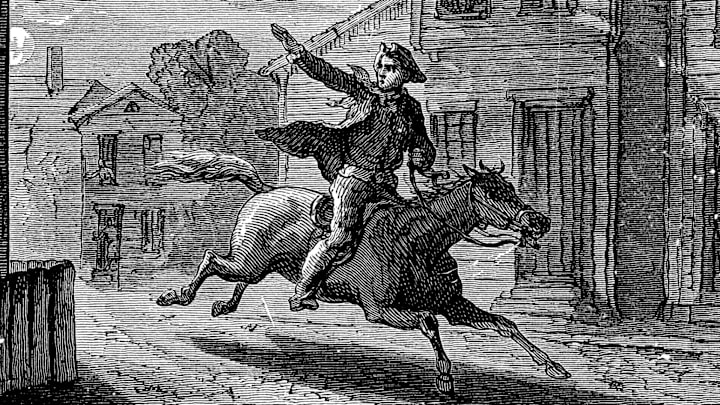
Tensions between Great Britain and its American colonies reached a breaking point on the night of April 18, 1775. British troops stationed in Boston prepared to march into the Massachusetts countryside to seize colonial and military supplies stored in Concord and potentially arrest Patriot leaders Samuel Adams and John Hancock in nearby Lexington. Patriot organizers needed to warn local militias quickly, so they turned to a trusted messenger.
Enter: Paul Revere.
It was Revere's legendary ride that helped alert colonial communities that British forces were on the move, enabling members of the militia (also called minutemen) to prepare for action. Within hours, the first shots of the American Revolution would be fired at Lexington and Concord.
Over time, the famous phrase "The British are coming!" was written into the story. Though it’s often referenced, historians believe this fabricated saying was likely never uttered by Revere during his midnight ride.
So, what did he really say?
THE HISTORY OF PAUL REVERE'S MIDNIGHT RIDE

Before Revere and his fellow warning riders even left Boston, the Patriots had already set up a signal system. Lanters were hung in the steeple of Boston's Old North Church to signify that the British troops were traveling. The signal followed the plan, "one if by land, two if by sea." One lantern meant the British would march out of Boston by land, while two lanterns meant they would cross the Charles River by boat. Two lanterns were displayed that night, confirming the troops were traveling by water.
And so begins the narrative of The Midnight Rider. Paul Revere was not just a random man sent out on a heroic mission. He was already well-known among patriots as an express rider and messenger, entrusted with delivering important information for colonial groups, including the Sons of Liberty and the Massachusetts Committee of Safety.
On April 18, Dr. Joseph Warren, a Patriot leader in Boston, summoned Revere and instructed him to ride to Lexington to warn Adams and Hancock that British troops were leaving the city. Revere first crossed the Charles River by boat to Charlestown and then began his ride on horseback through the towns of Medford and Menotomy (present-day Arlington).
Contrary to popular belief, Revere did not act alone. Another rider, William Dawes, traveled a different route out of Boston to deliver the same message. Later, they were joined by Dr. Samuel Prescott and continued towards Concord. Eventually, a British patrol apprehended the riders; Prescott escaped and completed the journey, while Revere was captured and questioned before being released.
Most importantly, Revere did not gallop through the town shouting, "The British are coming! The British are coming!" His mission was reliant on secrecy. Instead, he stopped at houses and quietly warned people along the way. Historians believe he delivered messages similar to "The Regulars are coming out," referring to British regular army troops.
The goal was to alert specific individuals and militia leaders so they could spread the warning themselves.
'THE BRITISH ARE COMING!'

The famous phrase most Americans associate with the event actually comes from literature, not eyewitness accounts. In 1860, 85 years after Revere set off on his famous ride, poet Henry Wadsworth Longfellow published the poem, "Paul Revere's Ride." The poem dramatically describes a lone hero racing through the countryside and shouting warnings to the people.
Longfellow wrote his poem to stir patriotic feelings on the verge of the American Civil War, rather than to provide a precise historical record. Because it became exceedingly popular, many of its details, including the idea that Revere rode alone and shouted loudly, were recollected in American folklore.
The phrase "The British are coming!" would also have been somewhat unusual in 1775. At the time, many colonists still considered themselves British citizens, so a more practical warning would have referred to "regulars" or "troops."
Over time, the wording from Longfellow's poem replaced the quieter, more historically accurate message Revere likely delivered.
THE MAKING OF AN AMERICAN HERO

Paul Revere's midnight ride remains one of the most famous events of the American Revolution, but the story most people know today is a combination of historical fact and legend. In reality, Revere was part of a network of riders, working quietly to spread urgent news across Massachusetts. Rather than shouting, he secretly stopped at homes to warn them that the "regulars" were leaving Boston.
Longfellow’s poem may have immortalized an embellished version of Revere in American culture, but the truth behind his ride is just as impressive. His actions helped mobilize colonial resistance and played a key role in the events that led to the first battles of the American Revolution.