%20%20--%3E%0A%3Csvg%20version%3D%221.1%22%20id%3D%22Layer_1%22%20xmlns%3D%22http%3A%2F%2Fwww.w3.org%2F2000%2Fsvg%22%20xmlns%3Axlink%3D%22http%3A%2F%2Fwww.w3.org%2F1999%2Fxlink%22%20x%3D%220px%22%20y%3D%220px%22%0A%09%20viewBox%3D%220%200%20684.6%2068.1%22%20style%3D%22enable-background%3Anew%200%200%20684.6%2068.1%3B%22%20xml%3Aspace%3D%22preserve%22%3E%0A%3Cg%3E%0A%09%3Cpath%20d%3D%22M444.1%2C29.3h-17.4v14.5h17.4V29.3z%20M36.4%2C68.1l29.3-50.8V0H50.4L32.9%2C36.8L15.5%2C0H0v68.1h16.7V45.8l12.4%2C22.3H36.4z%0A%09%09%20M49.1%2C68.1h16.6V23.4L49.1%2C52.1V68.1z%20M76.6%2C68.1h45V53.8H93.3V41.6h21V27.1h-21V14.8h28.3V0.1h-45V68.1z%20M175.6%2C68.1h17.3v-68%0A%09%09h-16.5v40.3L150%2C0.1h-17.6v68h16.7V27.7L175.6%2C68.1z%20M235.8%2C14.8h15.4V0.1h-47.4v14.7H219v53.2h16.8V14.8z%20M290.3%2C45.9h-17.1%0A%09%09l7.5-15.6h2L290.3%2C45.9z%20M298.7%2C68.1h18l-32.2-68h-5.7l-32%2C68h18l3.3-7.1h27.1L298.7%2C68.1z%20M325.2%2C68.1h46.2V53.8h-29.6V0.1h-16.7%0A%09%09V68.1z%20M423.7%2C14.8h27.2V0.1H407v68h16.7V14.8z%20M462%2C68.1h46.2V53.8h-29.6V0.1H462V68.1z%20M564.8%2C34.1c0%2C10.7-7.2%2C19.2-18.5%2C19.2%0A%09%09c-11.4%2C0-18.5-8.5-18.5-19.2s7.1-19.2%2C18.5-19.2C557.6%2C14.9%2C564.8%2C23.4%2C564.8%2C34.1%20M580.6%2C34.1c0-19-14.2-34-34.3-34%0A%09%09c-20.2%2C0-34.3%2C15-34.3%2C34c0%2C19%2C14.1%2C34%2C34.3%2C34C566.4%2C68.1%2C580.6%2C53.1%2C580.6%2C34.1%20M604.8%2C20.5c0-4.1%2C3.3-6.2%2C6.7-6.2%0A%09%09c4.4%2C0%2C6.6%2C3%2C6.6%2C6.6h14.7C631.8%2C9.1%2C625.1%2C0.1%2C611%2C0.1c-12%2C0-21.7%2C9.3-21.7%2C20.6c0%2C10.9%2C5.9%2C15.9%2C16.7%2C19.8%0A%09%09c5.2%2C1.8%2C11.5%2C3.2%2C11.5%2C8c0%2C3.3-2.4%2C5.5-6.4%2C5.5c-3.6%2C0-6.6-3-6.6-6.7h-15.2c0%2C11.5%2C7.9%2C20.8%2C21.8%2C20.8c12%2C0%2C21.6-9.3%2C21.6-20.6%0A%09%09c0-10-5.3-16.4-16.7-19.8C610.6%2C26.1%2C604.8%2C25.3%2C604.8%2C20.5%20M670%2C20.9h14.7C683.8%2C9.1%2C677.1%2C0.1%2C663%2C0.1c-12%2C0-21.7%2C9.3-21.7%2C20.6%0A%09%09c0%2C10.9%2C5.9%2C15.9%2C16.7%2C19.8c5.2%2C1.8%2C11.5%2C3.2%2C11.5%2C8c0%2C3.3-2.4%2C5.5-6.4%2C5.5c-3.6%2C0-6.6-3-6.6-6.7h-15.2c0%2C11.5%2C7.9%2C20.8%2C21.8%2C20.8%0A%09%09c12%2C0%2C21.6-9.3%2C21.6-20.6c0-10-5.3-16.4-16.7-19.8c-5.4-1.6-11.3-2.4-11.3-7.2c0-4.1%2C3.3-6.2%2C6.7-6.2C667.7%2C14.4%2C670%2C17.3%2C670%2C20.9%0A%09%09%22%2F%3E%0A%3C%2Fg%3E%0A%3C%2Fsvg%3E%0A)

A century ago, the United States saw the beginning of what is sometimes regarded as the modern weekend when, in May 1926, businessman Henry Ford began giving his workers Saturdays and Sundays off. This was at the height of what is now known as the Roaring Twenties, a period of great prosperity in America (which would later come to a halt following the Wall Street Crash of 1929.
So what were the most popular jobs in America during this period? Here is a list of five of the most common occupations of that time.
Bricklayer

The 1920s saw a vast expansion of infrastructure in the United States, and the creation of many more buildings for a multitude of purposes. This meant a huge demand for manual labor to build these constructions, with bricklaying becoming a common occupation as bricks were one of the key materials used in these processes.
One of the most important developments in the use of bricks during this period was the creation of brickmaking machines, which were able to produce up to 12,000 a day. More bricks being available therefore meant an increased demand for workers who could use them to build the desired structures.
Domestic Service

The role of the domestic servant was still a common job in the 1920s: while it had gone into decline since the First World War, it was one of the most frequent occupations for women in particular during this period, including roles like housekeepers and maids.
However, as the decade progressed, demand for servants began to overtake the numbers of people who were willing to enter the profession, especially given the rise of other lines of work which had flourished in the expansion of the business world, like office work and retail work, and there was less interest in taking on the kind of roles which involved living with the employers in the way that servants had done in the past.
Lumberjack

Forests have been used for many purposes throughout American history, including the utilization of trees for making paper, furniture, houses and fuel, and the job of felling trees was therefore extremely common a hundred years ago.
Those who performed this task were known as lumberjacks, originally a Canadian term but one which began to be used across the whole of North America, and they went wherever there were trees and a corresponding demand for them to be turned into other things. Lumberjacks often formed important connections with each other, and surviving photographs indicate the strong sense of community within people in this line of work.
Salesperson

The economic prosperity of the 1920s meant even more businesses hoping to encourage consumers to buy things, and retail work therefore became a very common occupation for both men and women. It also led to the development of the role of traveling salesperson, who went from place to place to try and convince people to purchase items, as well as a major expansion of workers who performed the more traditional role of selling things within shops themselves.
Typist

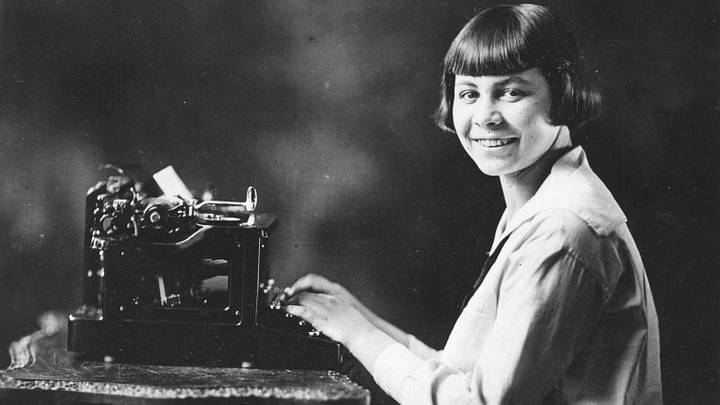
As a 1926 article in the New Republic noted, the workforce was changing, and so were women's roles in it. One of the most common occupations for women was as typists: the increase in offices for businesses meant more demand for people to take on jobs which helped these offices run smoothly. Typists often worked in conjunction with stenographers: the latter would take notes via shorthand, while the former would type them onto paper.