%20%20--%3E%0A%3Csvg%20version%3D%221.1%22%20id%3D%22Layer_1%22%20xmlns%3D%22http%3A%2F%2Fwww.w3.org%2F2000%2Fsvg%22%20xmlns%3Axlink%3D%22http%3A%2F%2Fwww.w3.org%2F1999%2Fxlink%22%20x%3D%220px%22%20y%3D%220px%22%0A%09%20viewBox%3D%220%200%20684.6%2068.1%22%20style%3D%22enable-background%3Anew%200%200%20684.6%2068.1%3B%22%20xml%3Aspace%3D%22preserve%22%3E%0A%3Cg%3E%0A%09%3Cpath%20d%3D%22M444.1%2C29.3h-17.4v14.5h17.4V29.3z%20M36.4%2C68.1l29.3-50.8V0H50.4L32.9%2C36.8L15.5%2C0H0v68.1h16.7V45.8l12.4%2C22.3H36.4z%0A%09%09%20M49.1%2C68.1h16.6V23.4L49.1%2C52.1V68.1z%20M76.6%2C68.1h45V53.8H93.3V41.6h21V27.1h-21V14.8h28.3V0.1h-45V68.1z%20M175.6%2C68.1h17.3v-68%0A%09%09h-16.5v40.3L150%2C0.1h-17.6v68h16.7V27.7L175.6%2C68.1z%20M235.8%2C14.8h15.4V0.1h-47.4v14.7H219v53.2h16.8V14.8z%20M290.3%2C45.9h-17.1%0A%09%09l7.5-15.6h2L290.3%2C45.9z%20M298.7%2C68.1h18l-32.2-68h-5.7l-32%2C68h18l3.3-7.1h27.1L298.7%2C68.1z%20M325.2%2C68.1h46.2V53.8h-29.6V0.1h-16.7%0A%09%09V68.1z%20M423.7%2C14.8h27.2V0.1H407v68h16.7V14.8z%20M462%2C68.1h46.2V53.8h-29.6V0.1H462V68.1z%20M564.8%2C34.1c0%2C10.7-7.2%2C19.2-18.5%2C19.2%0A%09%09c-11.4%2C0-18.5-8.5-18.5-19.2s7.1-19.2%2C18.5-19.2C557.6%2C14.9%2C564.8%2C23.4%2C564.8%2C34.1%20M580.6%2C34.1c0-19-14.2-34-34.3-34%0A%09%09c-20.2%2C0-34.3%2C15-34.3%2C34c0%2C19%2C14.1%2C34%2C34.3%2C34C566.4%2C68.1%2C580.6%2C53.1%2C580.6%2C34.1%20M604.8%2C20.5c0-4.1%2C3.3-6.2%2C6.7-6.2%0A%09%09c4.4%2C0%2C6.6%2C3%2C6.6%2C6.6h14.7C631.8%2C9.1%2C625.1%2C0.1%2C611%2C0.1c-12%2C0-21.7%2C9.3-21.7%2C20.6c0%2C10.9%2C5.9%2C15.9%2C16.7%2C19.8%0A%09%09c5.2%2C1.8%2C11.5%2C3.2%2C11.5%2C8c0%2C3.3-2.4%2C5.5-6.4%2C5.5c-3.6%2C0-6.6-3-6.6-6.7h-15.2c0%2C11.5%2C7.9%2C20.8%2C21.8%2C20.8c12%2C0%2C21.6-9.3%2C21.6-20.6%0A%09%09c0-10-5.3-16.4-16.7-19.8C610.6%2C26.1%2C604.8%2C25.3%2C604.8%2C20.5%20M670%2C20.9h14.7C683.8%2C9.1%2C677.1%2C0.1%2C663%2C0.1c-12%2C0-21.7%2C9.3-21.7%2C20.6%0A%09%09c0%2C10.9%2C5.9%2C15.9%2C16.7%2C19.8c5.2%2C1.8%2C11.5%2C3.2%2C11.5%2C8c0%2C3.3-2.4%2C5.5-6.4%2C5.5c-3.6%2C0-6.6-3-6.6-6.7h-15.2c0%2C11.5%2C7.9%2C20.8%2C21.8%2C20.8%0A%09%09c12%2C0%2C21.6-9.3%2C21.6-20.6c0-10-5.3-16.4-16.7-19.8c-5.4-1.6-11.3-2.4-11.3-7.2c0-4.1%2C3.3-6.2%2C6.7-6.2C667.7%2C14.4%2C670%2C17.3%2C670%2C20.9%0A%09%09%22%2F%3E%0A%3C%2Fg%3E%0A%3C%2Fsvg%3E%0A)

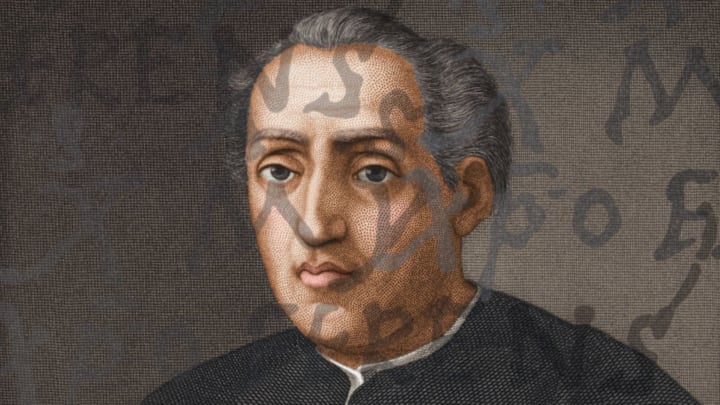
Christopher Columbus was both a maritime navigator and a living question mark. Many aspects of his life and discoveries remain the subject of debate well into the 21st century.
Born in Genoa, Italy, in 1451, Columbus had a bold and, at the time, highly questionable idea: sail west to reach Asia. After years of pitching the plan, Spain finally agreed to sponsor his travels, and in 1492, the explorer set off across the Atlantic (along with 90 men all loaded into the Niña, Pinta, and Santa María). As we know, he did not reach Asia, but his voyages connected Europe and the Americas in ways that changed history forever.
Despite a complicated legacy, Columbus is remembered for opening the door to global exploration and setting waves of colonization in motion, both productive for trade and harmful to indigenous populations.
And then, there's his signature. Columbus himself never explained this quirk, but scholars have several educated guesses.
Let’s take a closer look at Columbus's impact on globalization and the complexities of his puzzling signature, which may suggest a lesser-known motivation behind his journeys.
CHRISTOPHER COLUMBUS: THE NAVIGATOR

Columbus made four voyages across the Atlantic, exploring parts of the Caribbean (first landing in the Bahamas) and the coasts of Central and South America. Through it all, he remained convinced he had reached China, one of history’s most famous examples of being confidently, and enduringly, incorrect.
Still, his journeys transformed maps, trade, and cultural exchange on a global scale. They also redefined Spain’s role as a world power. So while Columbus may have misjudged his destination, his impact was anything but small.
Sometime after his first voyage, the navigator made a subtle but strange change: he reinvented how he signed his name on…well, everything.
HIS CRYPTIC SIGNATURE

Instead of his typical signature, Columbus began using a stacked arrangement of letters and symbols that resembled a coded diagram. He used it consistently for the rest of his life, and even instructed his family to keep using it after his death, which suggests it was deeply meaningful to him. Yet, he never explained why. Below is the signature, written out line by line.
Servus
Sum Altissimi Salvatoris
Xristus Maria Yosephus
Xristo—Ferens
Supposed translation: “Servant I am of the Most Exalted Savior; Christ, Mary, and Joseph; Christ-bearer.”
The bottom line (Xristo—Ferens) is the easiest part to interpret. It includes a version of his name linked to the meaning “Christ-bearer,” drawn from the Greek and Latin roots of “Christopher.” That much we know.
Above that, things become increasingly perplexing.
The upper portion is arranged in a pyramid-like format, featuring repeated letters, especially “S,” and various abbreviations. Many historians believe it forms some kind of religious statement. One common interpretation supposes it’s a declaration of devotion, referencing Christ as well as figures like Mary and Joseph. Others think the repeated letters (Sanctus, Sanctus, Sanctus) symbolize the Christian Trinity, echoing the phrase, “Holy, Holy, Holy.”
Some theories suggest that certain symbols nod to important figures in Columbus’s life, such as the Spanish monarchs (Queen Isabella and King Ferdinand II), who sponsored his voyages. But without any explanation from Columbus himself, these ideas remain educated guesses.
THE JOURNEY OF S-SAS-XMY-XPO-FERENS

The strongest theme running through most interpretations is religion. Columbus was deeply influenced by his Christian beliefs, and many scholars think he saw his voyages as part of a larger spiritual purpose, not just a geographical one.
Columbus’s signature is merely a small marker on the giant map of his life’s journey, yet it hints that the explorer was guided as much by faith (despite his complicated and continually debated impact) as by the geography he navigated.