%20%20--%3E%0A%3Csvg%20version%3D%221.1%22%20id%3D%22Layer_1%22%20xmlns%3D%22http%3A%2F%2Fwww.w3.org%2F2000%2Fsvg%22%20xmlns%3Axlink%3D%22http%3A%2F%2Fwww.w3.org%2F1999%2Fxlink%22%20x%3D%220px%22%20y%3D%220px%22%0A%09%20viewBox%3D%220%200%20684.6%2068.1%22%20style%3D%22enable-background%3Anew%200%200%20684.6%2068.1%3B%22%20xml%3Aspace%3D%22preserve%22%3E%0A%3Cg%3E%0A%09%3Cpath%20d%3D%22M444.1%2C29.3h-17.4v14.5h17.4V29.3z%20M36.4%2C68.1l29.3-50.8V0H50.4L32.9%2C36.8L15.5%2C0H0v68.1h16.7V45.8l12.4%2C22.3H36.4z%0A%09%09%20M49.1%2C68.1h16.6V23.4L49.1%2C52.1V68.1z%20M76.6%2C68.1h45V53.8H93.3V41.6h21V27.1h-21V14.8h28.3V0.1h-45V68.1z%20M175.6%2C68.1h17.3v-68%0A%09%09h-16.5v40.3L150%2C0.1h-17.6v68h16.7V27.7L175.6%2C68.1z%20M235.8%2C14.8h15.4V0.1h-47.4v14.7H219v53.2h16.8V14.8z%20M290.3%2C45.9h-17.1%0A%09%09l7.5-15.6h2L290.3%2C45.9z%20M298.7%2C68.1h18l-32.2-68h-5.7l-32%2C68h18l3.3-7.1h27.1L298.7%2C68.1z%20M325.2%2C68.1h46.2V53.8h-29.6V0.1h-16.7%0A%09%09V68.1z%20M423.7%2C14.8h27.2V0.1H407v68h16.7V14.8z%20M462%2C68.1h46.2V53.8h-29.6V0.1H462V68.1z%20M564.8%2C34.1c0%2C10.7-7.2%2C19.2-18.5%2C19.2%0A%09%09c-11.4%2C0-18.5-8.5-18.5-19.2s7.1-19.2%2C18.5-19.2C557.6%2C14.9%2C564.8%2C23.4%2C564.8%2C34.1%20M580.6%2C34.1c0-19-14.2-34-34.3-34%0A%09%09c-20.2%2C0-34.3%2C15-34.3%2C34c0%2C19%2C14.1%2C34%2C34.3%2C34C566.4%2C68.1%2C580.6%2C53.1%2C580.6%2C34.1%20M604.8%2C20.5c0-4.1%2C3.3-6.2%2C6.7-6.2%0A%09%09c4.4%2C0%2C6.6%2C3%2C6.6%2C6.6h14.7C631.8%2C9.1%2C625.1%2C0.1%2C611%2C0.1c-12%2C0-21.7%2C9.3-21.7%2C20.6c0%2C10.9%2C5.9%2C15.9%2C16.7%2C19.8%0A%09%09c5.2%2C1.8%2C11.5%2C3.2%2C11.5%2C8c0%2C3.3-2.4%2C5.5-6.4%2C5.5c-3.6%2C0-6.6-3-6.6-6.7h-15.2c0%2C11.5%2C7.9%2C20.8%2C21.8%2C20.8c12%2C0%2C21.6-9.3%2C21.6-20.6%0A%09%09c0-10-5.3-16.4-16.7-19.8C610.6%2C26.1%2C604.8%2C25.3%2C604.8%2C20.5%20M670%2C20.9h14.7C683.8%2C9.1%2C677.1%2C0.1%2C663%2C0.1c-12%2C0-21.7%2C9.3-21.7%2C20.6%0A%09%09c0%2C10.9%2C5.9%2C15.9%2C16.7%2C19.8c5.2%2C1.8%2C11.5%2C3.2%2C11.5%2C8c0%2C3.3-2.4%2C5.5-6.4%2C5.5c-3.6%2C0-6.6-3-6.6-6.7h-15.2c0%2C11.5%2C7.9%2C20.8%2C21.8%2C20.8%0A%09%09c12%2C0%2C21.6-9.3%2C21.6-20.6c0-10-5.3-16.4-16.7-19.8c-5.4-1.6-11.3-2.4-11.3-7.2c0-4.1%2C3.3-6.2%2C6.7-6.2C667.7%2C14.4%2C670%2C17.3%2C670%2C20.9%0A%09%09%22%2F%3E%0A%3C%2Fg%3E%0A%3C%2Fsvg%3E%0A)

The late Queen Elizabeth II was well known for her love of corgis, and she kept no less than 30 of them at various times throughout her life. Her great-great-grandmother Queen Victoria was equally known for her love of dogs, including her childhood companion Dash, a Cavalier King Charles Spaniel, and her later favorite, Turi the Pomeranian. And Henry VIII is known to have been so attached to his two favorite hounds, Cut and Ball, that he laid down immense amounts of money as a reward when they were lost.
Of all royal pets, however, perhaps the most extraordinary belonged to the medieval English king Henry III—who is known to have kept a live polar bear at the Tower of London.
The Tower of London’s strange history as a zoo

Although it is perhaps best known today as the home of the British Crown Jewels (and, before that, as a prison whose inmates included everyone from Anne Boleyn to the Kray Twins), throughout its long history the Tower of London has been put to a number of different uses, including a public records office, an arsenal and ammunition store, a treasury, and the home of the royal mint. Beginning in the 13th century, and enduring right through to the early Victorian era, however, the Tower of London was effectively repurposed as a zoo, and as such, became home to an extraordinary menagerie of animals.
Lions, tigers, zebras, baboons, monkeys, jackals, wolves, ostriches, and even an African elephant have all been housed at the Tower at some point in its history, establishing an extraordinarily longstanding royal collection going back more than 800 years. Although the origins of the Tower’s menagerie are somewhat hazy (King John is known to have relocated at least some animals there from another royal connection sometime in the early 1200s), it is thought that it truly came into its own in 1235, when the Plantagenet king Henry III was gifted three “leopards” (which were in truth more likely lions) by the Holy Roman Emperor, Frederick II, on his marriage to Henry’s sister Isabella.
This remarkable gesture—a nod to the three lions on the royal coat of arms—inspired Henry to begin amassing a larger and more permanent collection of exotic animals, and in 1252 he received perhaps an even more outlandish addition.
How a polar bear entered the scene

Records show that King Haakon IV of Norway gifted Henry a “white bear” sometime in 1252. Although it has been suggested the bear might have simply been a paler Eurasian brown bear, the general consensus is that it was a polar bear brought down either from the far north of Scandinavia, or from Norway’s expanding settlements in Greenland and Iceland. The king was understandably thrilled, and a request was made for the bear to have a muzzle and chain made so that it could be safely housed and put on display at the Tower.
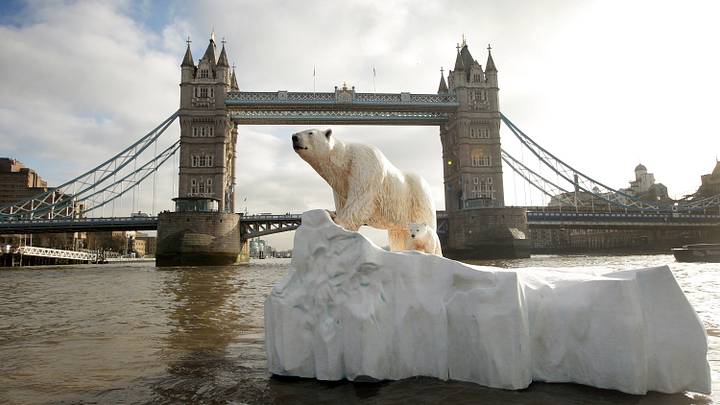
The bear proved a hit with spectators, but was perhaps less popular with the medieval sheriffs of London, who were now financially responsible for its maintenance—and that of the Norwegian handler who came with it. Before long, more than a shilling a week (equal to around £50/$67 today) was being spent on its upkeep; when it became clear that such an immense animal could not be kept restrained all day, the sheriffs also bore the expense of a leash and an outfit of waterproof overalls for its keeper, who, by royal order in 1253, was permitted to walk it down to the Thames to bathe and feed on fresh fish. Understandably, the bear’s parade through the city attracted a keen crowd every day.
Sadly, little else is known of King Henry’s bear, including whether it had a name, the fate of its Norwegian handler, and how long it remained at the Tower. Records show that a second white bear was shipped to the Tower in 1287, perhaps as a replacement for the first, which had by then likely passed away. Throughout its years in the Tower’s menagerie, however, King Henry’s bear presumably remained quite the attraction, perhaps matched only in size and spectacle by the elephant he was gifted by the King of France, Louis IX, in 1255.