%20%20--%3E%0A%3Csvg%20version%3D%221.1%22%20id%3D%22Layer_1%22%20xmlns%3D%22http%3A%2F%2Fwww.w3.org%2F2000%2Fsvg%22%20xmlns%3Axlink%3D%22http%3A%2F%2Fwww.w3.org%2F1999%2Fxlink%22%20x%3D%220px%22%20y%3D%220px%22%0A%09%20viewBox%3D%220%200%20684.6%2068.1%22%20style%3D%22enable-background%3Anew%200%200%20684.6%2068.1%3B%22%20xml%3Aspace%3D%22preserve%22%3E%0A%3Cg%3E%0A%09%3Cpath%20d%3D%22M444.1%2C29.3h-17.4v14.5h17.4V29.3z%20M36.4%2C68.1l29.3-50.8V0H50.4L32.9%2C36.8L15.5%2C0H0v68.1h16.7V45.8l12.4%2C22.3H36.4z%0A%09%09%20M49.1%2C68.1h16.6V23.4L49.1%2C52.1V68.1z%20M76.6%2C68.1h45V53.8H93.3V41.6h21V27.1h-21V14.8h28.3V0.1h-45V68.1z%20M175.6%2C68.1h17.3v-68%0A%09%09h-16.5v40.3L150%2C0.1h-17.6v68h16.7V27.7L175.6%2C68.1z%20M235.8%2C14.8h15.4V0.1h-47.4v14.7H219v53.2h16.8V14.8z%20M290.3%2C45.9h-17.1%0A%09%09l7.5-15.6h2L290.3%2C45.9z%20M298.7%2C68.1h18l-32.2-68h-5.7l-32%2C68h18l3.3-7.1h27.1L298.7%2C68.1z%20M325.2%2C68.1h46.2V53.8h-29.6V0.1h-16.7%0A%09%09V68.1z%20M423.7%2C14.8h27.2V0.1H407v68h16.7V14.8z%20M462%2C68.1h46.2V53.8h-29.6V0.1H462V68.1z%20M564.8%2C34.1c0%2C10.7-7.2%2C19.2-18.5%2C19.2%0A%09%09c-11.4%2C0-18.5-8.5-18.5-19.2s7.1-19.2%2C18.5-19.2C557.6%2C14.9%2C564.8%2C23.4%2C564.8%2C34.1%20M580.6%2C34.1c0-19-14.2-34-34.3-34%0A%09%09c-20.2%2C0-34.3%2C15-34.3%2C34c0%2C19%2C14.1%2C34%2C34.3%2C34C566.4%2C68.1%2C580.6%2C53.1%2C580.6%2C34.1%20M604.8%2C20.5c0-4.1%2C3.3-6.2%2C6.7-6.2%0A%09%09c4.4%2C0%2C6.6%2C3%2C6.6%2C6.6h14.7C631.8%2C9.1%2C625.1%2C0.1%2C611%2C0.1c-12%2C0-21.7%2C9.3-21.7%2C20.6c0%2C10.9%2C5.9%2C15.9%2C16.7%2C19.8%0A%09%09c5.2%2C1.8%2C11.5%2C3.2%2C11.5%2C8c0%2C3.3-2.4%2C5.5-6.4%2C5.5c-3.6%2C0-6.6-3-6.6-6.7h-15.2c0%2C11.5%2C7.9%2C20.8%2C21.8%2C20.8c12%2C0%2C21.6-9.3%2C21.6-20.6%0A%09%09c0-10-5.3-16.4-16.7-19.8C610.6%2C26.1%2C604.8%2C25.3%2C604.8%2C20.5%20M670%2C20.9h14.7C683.8%2C9.1%2C677.1%2C0.1%2C663%2C0.1c-12%2C0-21.7%2C9.3-21.7%2C20.6%0A%09%09c0%2C10.9%2C5.9%2C15.9%2C16.7%2C19.8c5.2%2C1.8%2C11.5%2C3.2%2C11.5%2C8c0%2C3.3-2.4%2C5.5-6.4%2C5.5c-3.6%2C0-6.6-3-6.6-6.7h-15.2c0%2C11.5%2C7.9%2C20.8%2C21.8%2C20.8%0A%09%09c12%2C0%2C21.6-9.3%2C21.6-20.6c0-10-5.3-16.4-16.7-19.8c-5.4-1.6-11.3-2.4-11.3-7.2c0-4.1%2C3.3-6.2%2C6.7-6.2C667.7%2C14.4%2C670%2C17.3%2C670%2C20.9%0A%09%09%22%2F%3E%0A%3C%2Fg%3E%0A%3C%2Fsvg%3E%0A)

Dating back to pre-Christian times, eggs have long been considered a symbol of fertility, restoration, new life, and the seasonal regeneration that is springtime.
After Christianity began to spread among the pagan peoples of ancient Europe, the egg was repurposed as a symbol of the resurrection of Jesus Christ and the springtime festival of Easter. The chick emerging from its shell is said to symbolize Jesus emerging from the tomb three days after his crucifixion. As a result, eggs made the leap from pre-Christian tradition to Christian tradition and have remained a popular symbol of Eastertime ever since.
The story doesn’t end there, however, because it’s not just ordinary hens’ eggs that we’re used to seeing at Easter. Specially dyed and brightly colored eggs, for instance, have been incorporated into Easter festivities since the Middle Ages. Chocolate eggs are a recent invention, first popularized during the late Victorian era. British chocolatier JS Fry & Sons is credited with producing the first chocolate Easter egg in 1873, as a sweet indulgence to be enjoyed amid the day’s celebrations.
And then, there’s the bizarre custom of egg rolling.
EGGING IT ON

As Easter became more established in the Christian calendar of ancient Europe, so too did the forty-day period of privation and reflection before it, known as Lent. Various churches and traditions soon imposed their own rules on their followers during this pre-Easter period, and eggs—as both a nutritious luxury and a popular symbol of the Easter season—were one of the things to be promptly forbidden.
Just because it’s Easter doesn’t mean that chickens stop laying, of course. But, with eggs taken off the Lenten menu, that left people with rather a lot of perishable eggs that they couldn’t use. Consequently, people began to look for other ways to incorporate eggs into the Easter celebrations, besides just eating them. Surplus eggs were therefore boiled and dyed or painted, and utilized as Easter decorations—or handed out to friends and neighbors as gifts to be enjoyed when the long period of fasting was finally over.
The end of Lent and the loosening of the dietary rules that came with it ultimately became something of a festive occasion. And as such, various traditions began to emerge around cracking open these gifted colored eggs when the time finally came to enjoy them—including rolling them down a hill.
ROLL WITH IT

The earliest known egg-rolling traditions are believed to have emerged amid the Easter celebrations of northern and central England in the 1700s.
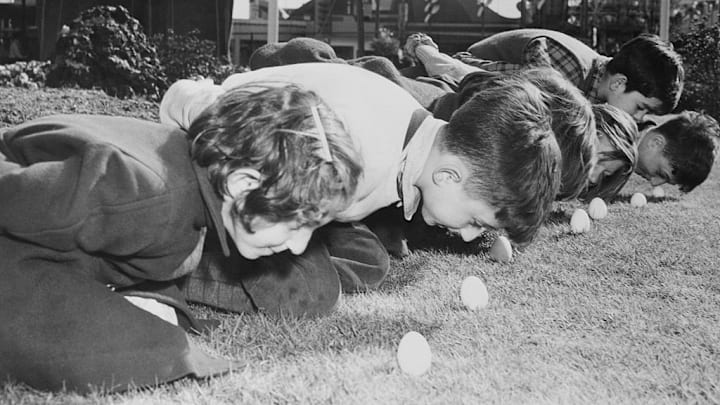
Traditional colored eggs, known locally as pace eggs (from the Old English word for Easter, pase), would typically be handed out to children, or else gifted to the performers of so-called “pace-egg plays”—old medieval-era mystery plays, long performed across rural England as part of the Easter Day celebrations. One of the highlights of the day’s festivities was the chance to at long last crack open these gifted pace eggs and enjoy them, and so children and players would often roll them along the ground, or down hills or slopes, to break off their colored shells. Games and competitions soon emerged to see whose egg could be rolled the furthest, or whose egg survived the roll down the hill the most intact. (It has even been theorized that these celebratory rolling games might have emerged as a symbol of the stone being rolled away from the entrance to Jesus’ tomb on Easter Sunday morning.)
From rural England, the traditional Eastern morning egg-rolling contest soon spread to the United States, with Dolley Madison—wife of America’s fourth president, James Madison—often popularly credited with establishing the now-annual egg roll down the South Lawn of the White House back in 1814. In fact, records suggest the very first White House egg rolling was held later, under President Hayes in 1878.