%20%20--%3E%0A%3Csvg%20version%3D%221.1%22%20id%3D%22Layer_1%22%20xmlns%3D%22http%3A%2F%2Fwww.w3.org%2F2000%2Fsvg%22%20xmlns%3Axlink%3D%22http%3A%2F%2Fwww.w3.org%2F1999%2Fxlink%22%20x%3D%220px%22%20y%3D%220px%22%0A%09%20viewBox%3D%220%200%20684.6%2068.1%22%20style%3D%22enable-background%3Anew%200%200%20684.6%2068.1%3B%22%20xml%3Aspace%3D%22preserve%22%3E%0A%3Cg%3E%0A%09%3Cpath%20d%3D%22M444.1%2C29.3h-17.4v14.5h17.4V29.3z%20M36.4%2C68.1l29.3-50.8V0H50.4L32.9%2C36.8L15.5%2C0H0v68.1h16.7V45.8l12.4%2C22.3H36.4z%0A%09%09%20M49.1%2C68.1h16.6V23.4L49.1%2C52.1V68.1z%20M76.6%2C68.1h45V53.8H93.3V41.6h21V27.1h-21V14.8h28.3V0.1h-45V68.1z%20M175.6%2C68.1h17.3v-68%0A%09%09h-16.5v40.3L150%2C0.1h-17.6v68h16.7V27.7L175.6%2C68.1z%20M235.8%2C14.8h15.4V0.1h-47.4v14.7H219v53.2h16.8V14.8z%20M290.3%2C45.9h-17.1%0A%09%09l7.5-15.6h2L290.3%2C45.9z%20M298.7%2C68.1h18l-32.2-68h-5.7l-32%2C68h18l3.3-7.1h27.1L298.7%2C68.1z%20M325.2%2C68.1h46.2V53.8h-29.6V0.1h-16.7%0A%09%09V68.1z%20M423.7%2C14.8h27.2V0.1H407v68h16.7V14.8z%20M462%2C68.1h46.2V53.8h-29.6V0.1H462V68.1z%20M564.8%2C34.1c0%2C10.7-7.2%2C19.2-18.5%2C19.2%0A%09%09c-11.4%2C0-18.5-8.5-18.5-19.2s7.1-19.2%2C18.5-19.2C557.6%2C14.9%2C564.8%2C23.4%2C564.8%2C34.1%20M580.6%2C34.1c0-19-14.2-34-34.3-34%0A%09%09c-20.2%2C0-34.3%2C15-34.3%2C34c0%2C19%2C14.1%2C34%2C34.3%2C34C566.4%2C68.1%2C580.6%2C53.1%2C580.6%2C34.1%20M604.8%2C20.5c0-4.1%2C3.3-6.2%2C6.7-6.2%0A%09%09c4.4%2C0%2C6.6%2C3%2C6.6%2C6.6h14.7C631.8%2C9.1%2C625.1%2C0.1%2C611%2C0.1c-12%2C0-21.7%2C9.3-21.7%2C20.6c0%2C10.9%2C5.9%2C15.9%2C16.7%2C19.8%0A%09%09c5.2%2C1.8%2C11.5%2C3.2%2C11.5%2C8c0%2C3.3-2.4%2C5.5-6.4%2C5.5c-3.6%2C0-6.6-3-6.6-6.7h-15.2c0%2C11.5%2C7.9%2C20.8%2C21.8%2C20.8c12%2C0%2C21.6-9.3%2C21.6-20.6%0A%09%09c0-10-5.3-16.4-16.7-19.8C610.6%2C26.1%2C604.8%2C25.3%2C604.8%2C20.5%20M670%2C20.9h14.7C683.8%2C9.1%2C677.1%2C0.1%2C663%2C0.1c-12%2C0-21.7%2C9.3-21.7%2C20.6%0A%09%09c0%2C10.9%2C5.9%2C15.9%2C16.7%2C19.8c5.2%2C1.8%2C11.5%2C3.2%2C11.5%2C8c0%2C3.3-2.4%2C5.5-6.4%2C5.5c-3.6%2C0-6.6-3-6.6-6.7h-15.2c0%2C11.5%2C7.9%2C20.8%2C21.8%2C20.8%0A%09%09c12%2C0%2C21.6-9.3%2C21.6-20.6c0-10-5.3-16.4-16.7-19.8c-5.4-1.6-11.3-2.4-11.3-7.2c0-4.1%2C3.3-6.2%2C6.7-6.2C667.7%2C14.4%2C670%2C17.3%2C670%2C20.9%0A%09%09%22%2F%3E%0A%3C%2Fg%3E%0A%3C%2Fsvg%3E%0A)

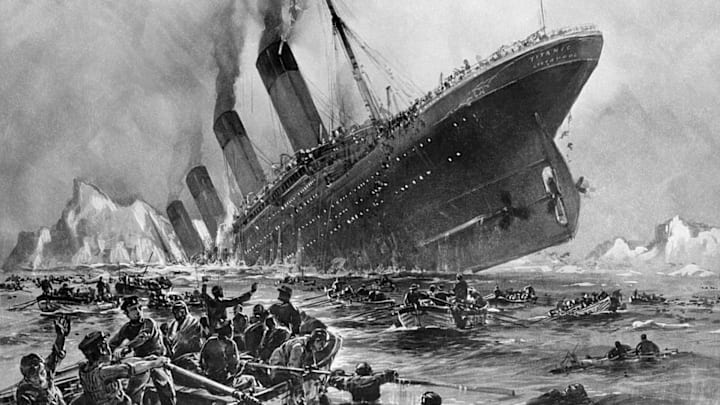
April 15, 2026, marks the 114th anniversary of the sinking of the RMS Titanic.
On April 10, 1912, an estimated 1,846 passengers boarded the Titanic in Southampton, England, setting off on the ship’s much-anticipated maiden voyage to New York. On April 14 (following stops in Cherbourg, France, and Queenstown, Ireland, with more than 2,200 people aboard, including 900 crew members), a lookout caught sight of an iceberg, but it was already too late.
During the early morning hours of April 15, passengers were awakened from their slumbers as distress signals were sent and lifeboats were filled and lowered. The "Unsinkable" Titanic, battered by the iceberg, sank into the icy waters of the Atlantic Ocean, resulting in the loss of more than 1,500 lives.
Only 705 people survived, rescued from lifeboats by the RMS Carpathia, which brought them safely to New York City on April 18.
Fortunately, technology has come a long way since the early 20th century. Modern ships now feature world-class navigation and detection systems, increasing the likelihood that the captain, crew, and coast guard would detect an iceberg well before it became a threat. With this advance notice, the crew could alter the ship’s course and avoid disaster.
Yet, if a catastrophe similar to the Titanic were to happen in the present day, what are the odds of survival?
MODERN TECHNOLOGY

Then:
Titanic Captain Edward Smith, who adhered to an uncompromising schedule, was not concerned with icebergs in 1912. When pressed about the topic ahead of the ship’s voyage, he said: "Modern shipbuilding has gone beyond that."
Many believe the disaster could have been avoided if the crew had taken proper precautions. Although lookouts were assigned to watch for icebergs, they were not provided with binoculars.
Another issue entirely; the Titanic’s radio operator dismissed iceberg warnings from four nearby ships. In 1912, radio operators were not required to remain on duty around the clock, so some may have been asleep when distress calls were received or occupied with handling passenger telegrams. Notably, the closest ship to the Titanic, the SS Californian’s radio operator was fired for missing the sinking ship’s distress signal.
Additionally, the distress signals transmitted by the Titanic’s radio operator contained incorrect coordinates, which hindered rescue operations and made it even harder to pinpoint the ship’s location in the expansive darkness of the Atlantic.
Now:
Iceberg detection has advanced tremendously over the past century. Modern ice patrols utilize radar-equipped aircraft to scan the seas from above, eliminating the need for binocular-laden crew members posted on deck. Continuous, detailed updates are supplied by global positioning satellites and communications from passing ships. Since the Titanic disaster, radar and sonar have transformed maritime safety, allowing vessels to identify and avoid hazards long before encountering them.
In 2026, ships are required to have a radio operator on duty at all times. Emergency radio communications are now standardized, and GPS technology provides precise coordinates, ensuring that rescue vessels can respond to the correct location. SOS messages are also received and acted upon much more reliably than in 1912.
The ocean is mysterious and unpredictable, yet an event like the Titanic is highly unlikely due to these increased safety precautions, improved construction, and technological advances.
The Costa Concordia’s 2012 accident is often considered the closest modern equivalent to the Titanic. The captain, distracted and certain in his knowledge of the route, disabled a crucial part of the navigation system, the collision avoidance arm, leading to a crash that was ultimately caused by human error.
LIFEBOATS

Then:
Because experts and engineers were so confident in the Titanic’s ability to stay afloat, the ship was equipped with fewer lifeboats than necessary. At the time, it was widely believed that in an emergency, another ship would arrive quickly to help, allowing passengers to transfer safely. As a result, the Titanic set sail with only 20 lifeboats, even though it was built to accommodate 64.
Now:
Today, safety regulations are much stricter. Ships must have enough lifeboats for everyone on board, and crews receive extensive training in evacuation procedures. As of 2026, any sign of distress triggers an immediate response, with the Coast Guard, nearby vessels, helicopters, and rescue boats dispatched without delay.
The circumstances of the Costa Concordia incident in 2012 were substantially different from those of the Titanic disaster. Unlike the Titanic, which sank in freezing, remote waters 400 miles from land, the Costa Concordia went down in warmer waters close to shore, allowing many passengers to use life jackets and swim safely to dry land.
WOMEN AND CHILDREN

Then:
After the Titanic struck the iceberg that fateful night, women and children were given priority to board the lifeboats. Many men, unable to secure a place, were forced to leap from the ship or cling to pieces of floating debris in a desperate attempt to escape the frigid waters.
Now:
In 2026, no maritime laws require women and children to be given priority over other passengers during evacuations. Researchers note that even in 1912, this was not a formal regulation; rather, the Titanic followed a chivalrous tradition, sometimes referred to as the "unwritten law of the sea."
Today, survival rates depend less on chivalry and more on circumstances and individual actions. In fact, modern research indicates men and crew members may have slightly higher odds of survival in maritime disasters, although the gap has narrowed since World War II.
In short, being a woman or child does not automatically provide a greater chance of survival than being a male passenger or crew member in the event of a catastrophe like the Titanic.
ODDS OF SURVIVAL

Everything considered, what would be your odds of surviving a modern-day Titanic disaster?
As a result of a century of technological advancements, including sonar, radar, and reliable radio communications, along with inflexible safety standards, it is extremely unlikely that an incident like the Titanic would occur in modern times.
However, if a ship were to strike an object and begin sinking in 2026, there would be more than enough motorized lifeboats and well-practiced evacuation protocols to ensure that every passenger could reach safety, despite the unpredictable nature of the sea and the possibility of human error.
Today, unlike in 1912, nearby ships would be promptly alerted and could swiftly reach the scene to rescue passengers from a sinking vessel. Thanks to these advancements, your odds of surviving a modern maritime disaster are excellent, regardless of your gender, age, position on the ship, or the vessel’s location at sea.